On this page (6)
Growing stores do not need another enterprise RFP deck. They need an ecommerce help desk that clears the queue when shoppers ask where the order is, whether the address can still change, or how to swap a size without burning a refund. Classic ticketing organises that work. AI helpdesk software for ecommerce should finish it.
This shortlist is for SMB and scaling DTC teams: ecommerce help desk software and help desk AI that can act on orders, not only draft replies. It is intentionally different from enterprise help desk comparisons. Minami AI leads on carrier-side and store-side execution. The others are proven ecommerce customer service software options with different inbox and AI models.
Ecommerce help desk options at a glance
Marks follow documented out-of-the-box capabilities. Carrier columns stay — unless the vendor’s own docs show direct carrier action.
| Tool | Inbox / helpdesk | Order status | Edit / cancel in store | Address change with the carrier | Delivery incidents with the carrier | Returns to exchange |
|---|---|---|---|---|---|---|
| 1. Minami AI | Agent-first | ✓ | ✓ | ✓ | ✓ | ✓ |
| 2. Gorgias | ✓ | ✓ | ✓ | — | — | — |
| 3. Yuma AI | On your helpdesk | ✓ | ✓ | — | — | ✓ |
| 4. Siena AI | On your helpdesk | ✓ | ✓ | — | — | — |
| 5. Richpanel | ✓ | ✓ | ✓ | — | — | — |
| 6. Tidio | ✓ | ✓ | — | — | — | — |
| 7. eesel AI | On your helpdesk | ✓ | — | — | — | — |
— means not native: needs extra setup, only updates the record, or hands off to a human/ticket.
What growing stores actually need from customer service in ecommerce
What is ecommerce customer service in practice? It is mostly logistics after the sale. Best customer service in ecommerce teams measure resolved order issues, not tickets touched. Ecommerce customer service best practices for a lean squad look the same: deflect clean WISMO, write to Shopify when the shopper needs a change, prefer exchanges, and keep humans for exceptions. Those exceptions are where trained people earn their keep, so the best customer service certifications pay off most on the cases your AI escalates. That is also where the roles and responsibilities of a customer support executive now sit.
An ecommerce help desk that only routes mail still leaves address fixes and carrier claims on people. Customer support for ecommerce store operators improves when the AI can change the order and, when needed, work the carrier in the same case.
AI helpdesk software for ecommerce stores
1. Minami AI
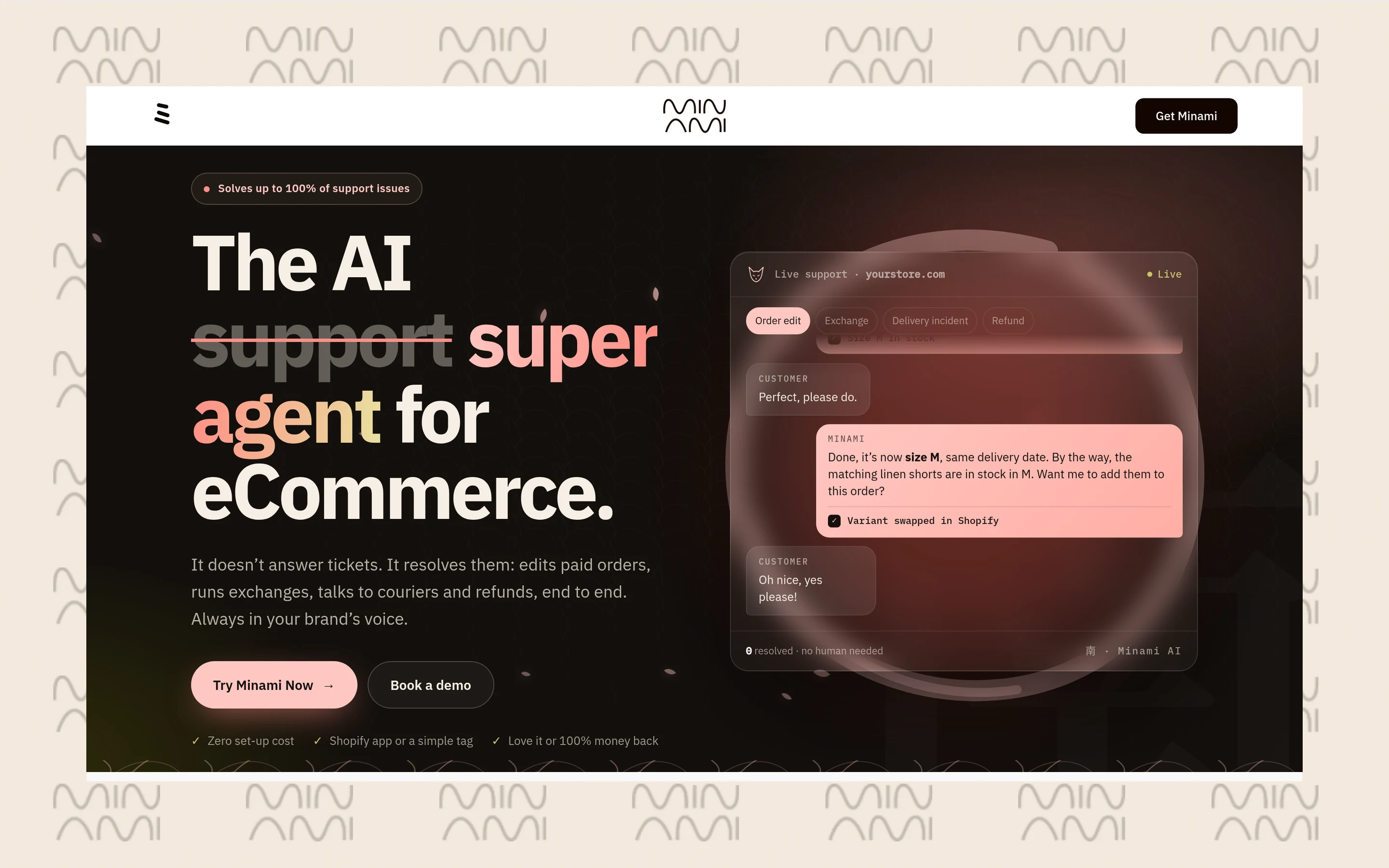
Minami AI is an autonomous AI agent for ecommerce brands that need logistics work done with the carrier and inside the store. It communicates directly with the carrier on address changes, holds, reroutes and delivery incidents. It executes those changes in the CMS end to end, alongside edits, cancellations, exchanges and product recommendations in the same case.
Concrete actions it runs:
- Change the delivery address with the carrier, not just in the order
- Resolve delivery incidents directly with the carrier
- Edit or cancel orders inside the store
- Turn returns into exchanges
- Recommend products in the same case
Minami automates logistics problem resolution end to end across ecommerce logistics. It keeps revenue through exchanges instead of defaulting to a refund. On AI for order management work after checkout, it runs the carrier action, the store write and product recommendations in the same thread.
Best for: growing DTC teams that want one agent for WISMO, carrier fixes and store-side changes without an enterprise help desk project.
Price: Custom.
2. Gorgias

Gorgias is the default Shopify helpdesk for many DTC brands: order data beside every ticket, macros, rules and a native AI Agent. It documents Shopify Action templates for cancelling an order, editing a shipping address on the order, removing or replacing items and reshipping a lost or damaged order inside Shopify. If you go with it, here is how to connect Gorgias to other apps, from fraud checks to CSAT surveys.
Those Actions update the store or duplicate an order. They do not document talking to the carrier to reroute, hold or fix the shipment, so carrier columns stay —. Returns-to-exchange after delivery typically sends the shopper into a return portal. Helpdesk ticket fees can also stack with AI interaction fees.
Best for: Shopify support teams that want ecommerce help desk software and AI on one invoice.
Price: Helpdesk from $10/month; combined plans with AI Agent from about $40/month on Starter. AI Agent about $0.90 per automated interaction on annual plans. Full math lives in Gorgias AI Agent pricing.
3. Yuma AI
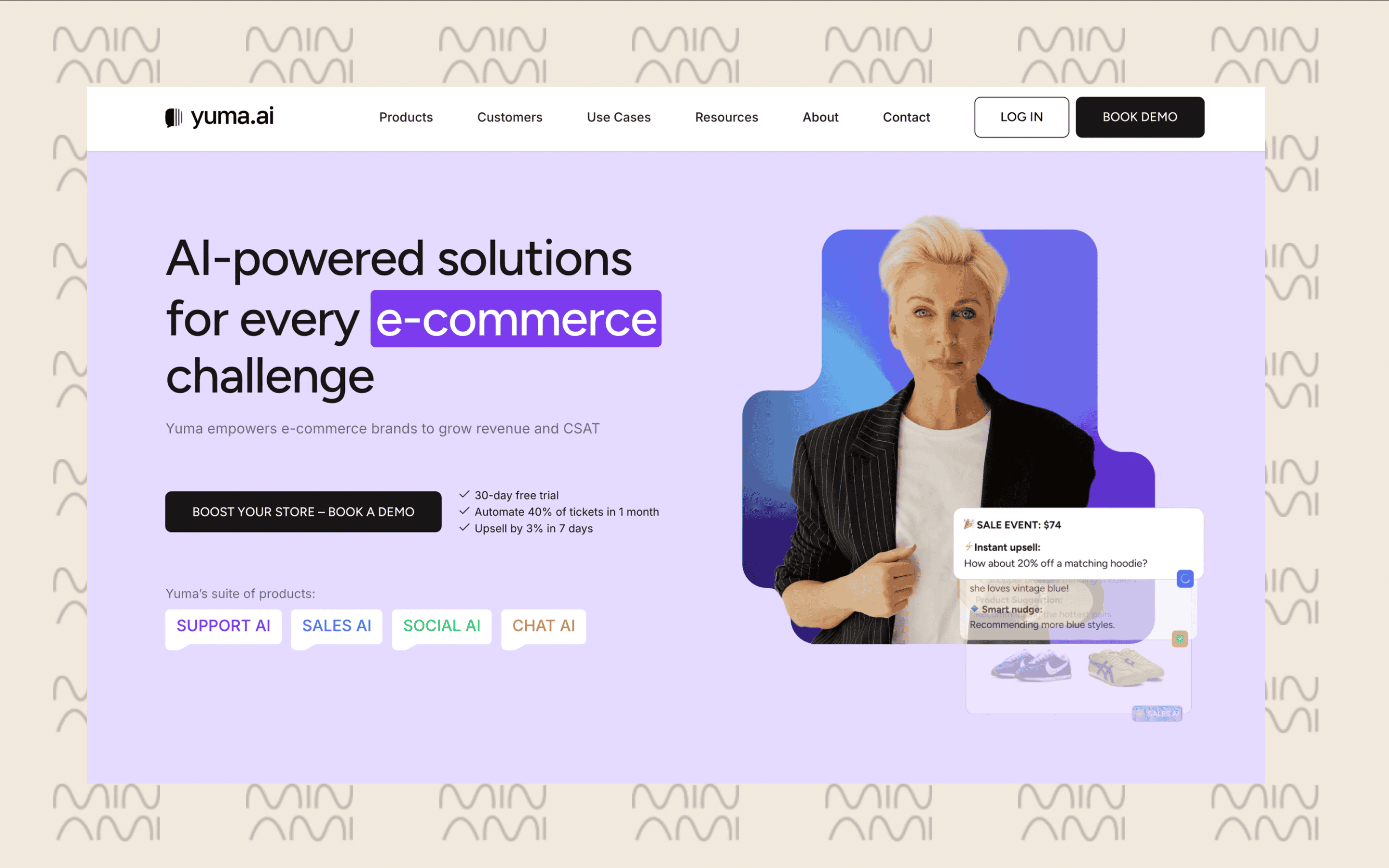
Yuma AI sits on your existing helpdesk and resolves tickets with live Shopify data. It documents a broad store-side set: order status, item edits, cancellations, refunds, size or color exchanges and Shopify reships for lost or damaged orders.
Those write actions update the store and helpdesk ticket. Yuma’s docs do not show direct carrier-side address changes, holds or incident resolution with the carrier, so those columns stay —. Pay-per-resolution pricing fits teams that already like their inbox. For the full feature tour, see what Yuma AI is and who it fits.
Best for: Shopify brands automating high-volume WISMO, refund and exchange tickets inside Gorgias or a similar desk.
Price: From about $0.75–$1.20 per resolution on annual plans (Starter, Growth, Scale).
4. Siena AI

Siena AI is built for consumer brands that want the agent to finish common jobs in Shopify: cancel orders, process refunds, send replacements, edit orders and update shipping addresses during the conversation. Order Tracking covers carrier lookups and store-side replacement flows when a package is stuck or damaged. Brands shopping the category can also scan Siena AI alternatives.
Updating the address on the Shopify order or sending a replacement is not the same as changing the delivery with the carrier, so carrier columns stay —. Returns-to-exchange after delivery depends on a returns-app connection.
Best for: Shopify brands that want store-side address edits, refunds and replacements with a strong brand voice.
Price: $750/month platform fee + $0.90 per automated ticket.
5. Richpanel

Richpanel is ecommerce customer service software with a full inbox (email, chat, social, SMS, WhatsApp, phone) and AI that can update orders and subscriptions. A self-service portal lets shoppers track, return or cancel without writing in.
Order and subscription writes are store-side. Direct carrier-side address changes and delivery incident resolution with the carrier are not documented as native carrier actions, so those columns stay —.
Best for: DTC teams that want a helpdesk where AI can change orders and subscriptions without buying a separate AI layer.
Price: Helpdesk $99/seat/month annual; AI from about $0.20 per handled conversation with a $200/month AI minimum (about $299/month combined entry on annual).
6. Tidio
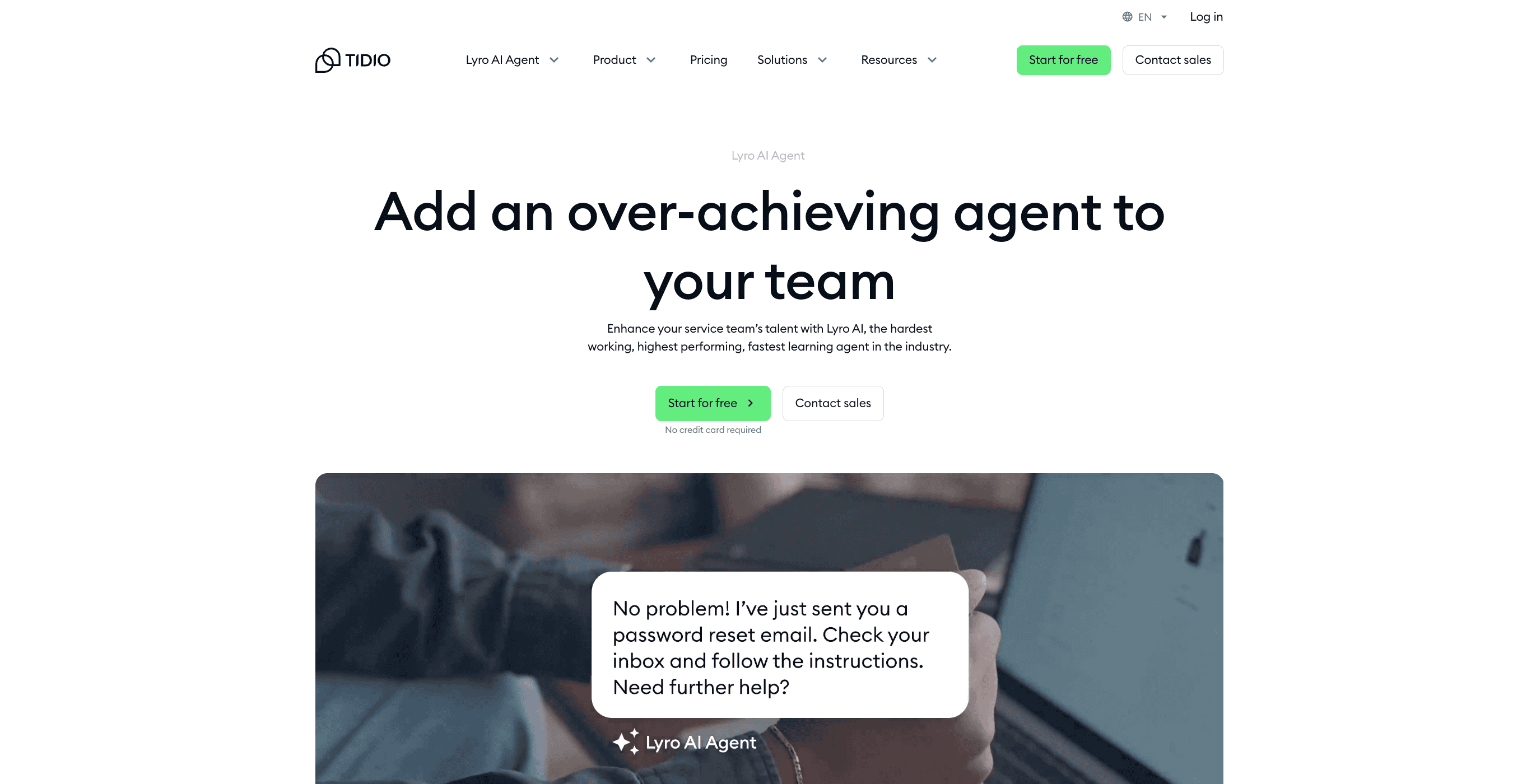
Tidio is often the first ecommerce help desk a small store installs: live chat, light ticketing, Flows and Lyro AI. It answers common questions from your FAQ and help content and covers web chat plus messaging channels on higher setups.
Native depth on cancellations, carrier-side address changes and returns-to-exchange is limited, so those columns stay —. It is a practical on-ramp before a heavier Shopify helpdesk.
Best for: early-stage stores that need customer support for an ecommerce store without a large CX payroll.
Price: Customer Service from about $24.17/month (Starter, annual); Lyro AI Agent from about $32.50/month for 50 conversations.
7. eesel AI
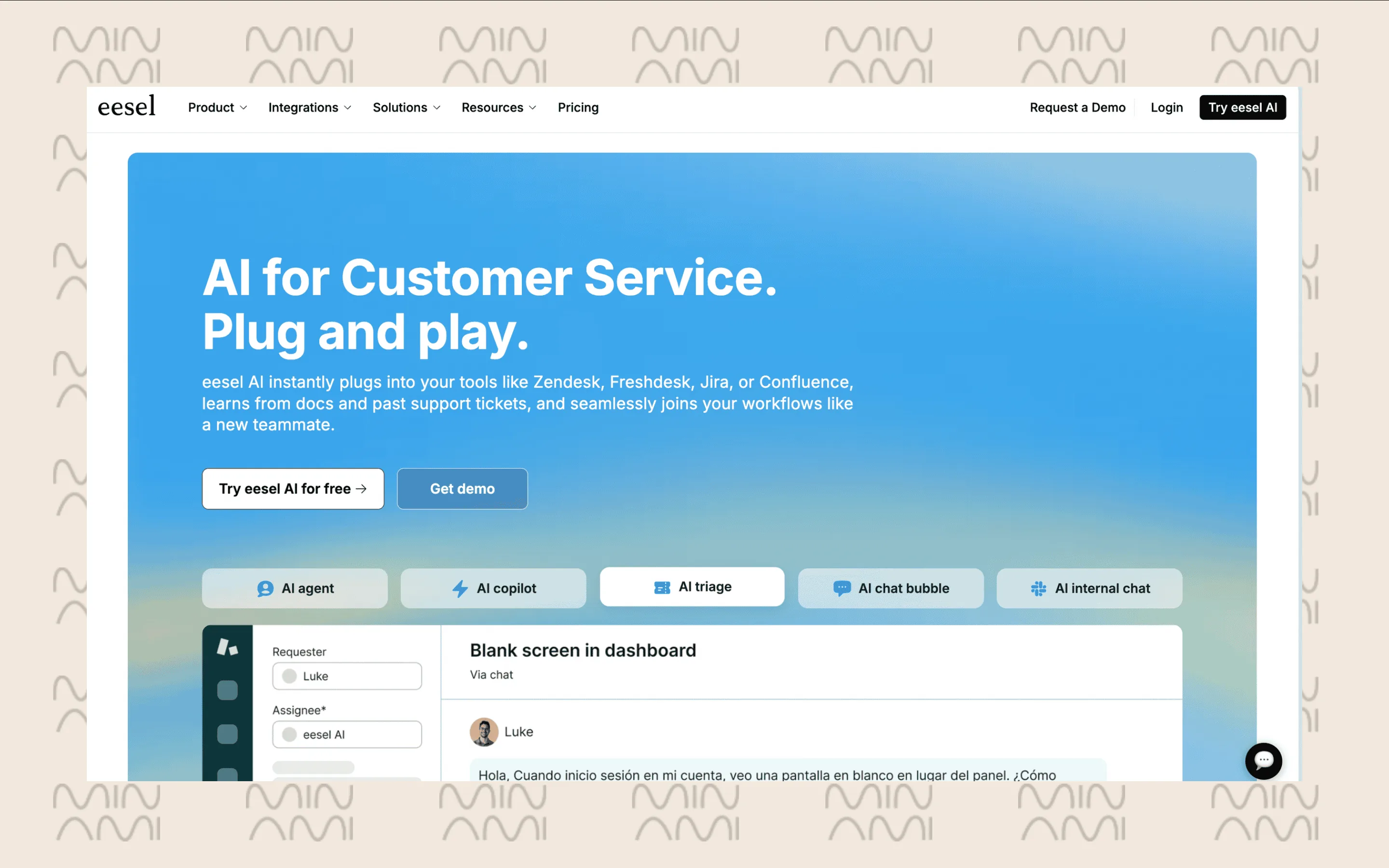
eesel AI plugs into the helpdesk you already run and learns from past tickets and help articles. It is a fit when you like Zendesk, Freshdesk or similar and want help desk AI without ripping out the inbox.
Order lookups and actions depend on the integrations you configure, so store edit and carrier columns stay — in this table. Treat it as an answer-and-assist layer unless you wire write tools carefully.
Best for: teams adding AI on top of an existing helpdesk instead of replacing it.
Price: Not published on a single public starter rate in the materials reviewed for this list; confirm on a demo.
Pricing snapshot for ecommerce help desk software
| Tool | Published price |
|---|---|
| Minami AI | Custom |
| Gorgias | Helpdesk from $10/month; AI Agent about $0.90 per automated interaction (annual) |
| Yuma AI | From about $0.75–$1.20 per resolution (annual tiers) |
| Siena AI | $750/month + $0.90 per automated ticket |
| Richpanel | From about $299/month combined entry (annual) |
| Tidio | From about $24.17/month + Lyro from about $32.50/month |
| eesel AI | Not published |
If your goal is to reduce customer support costs, compare cost per resolved post-purchase case. An agent that turns refunds into exchanges can beat a cheaper per-reply fee on paper.
How to pick AI helpdesk software for a growing store
Ignore enterprise feature matrices first. Pull last month’s tickets and tag WISMO, cancellations, address changes, refunds and exchanges. If more than half are logistics, pick an agent that changes things in the store and, when needed, with the carrier. Minami AI runs those actions natively above. Gorgias, Yuma, Siena and Richpanel cover most store-side writes. Tidio and eesel suit lighter or helpdesk-additive setups.
Match the operating model second. Keep Gorgias or Richpanel if your team still needs a human inbox every day. Layer Yuma, Siena or eesel if the desk stays and AI should clear volume. Run Minami AI when the goal is executed logistics, not another queue view.
Get Minami AI
Minami AI talks to the carrier, executes the change in the store and recommends products in the same case when an exchange is the better outcome.
Get Minami and turn your ecommerce help desk from a ticket pile into finished order work.
Minami AI agent
Automate 100% of your eCommerce support
Minami doesn't just chat. It takes the action inside your store and sells while it solves.
- Order edits and cancellations
- Address changes and delivery incidents
- Returns, exchanges and product recommendations