 Nobikage San
 Introducing
7 Best Siena AI Alternatives for 2026
Boost CX and automate real actions with the 7 best Siena AI alternatives for 2026. Smarter AI platforms built to drive results, not replies.
I understand first-hand how challenging it is to keep customer support running smoothly while trying to improve efficiency.
If you’re like many support team leaders I’ve spoken with, you might be using or considering Siena AI to automate support interactions – and you’re curious if there are other options out there.
In this article, I’ll walk you through what Siena AI offers, why you might seek a paid alternative, and then dive into some of the best premium alternatives
What is Siena AI?
Siena AI is an AI-driven customer service automation platform designed primarily for e-commerce and online brands.
In a nutshell, it acts as an “always-on” virtual support agent that can understand and resolve common customer issues across channels with a human-like, empathetic touch.
Why Look for Paid Alternatives to Siena AI?
Even though Siena AI is powerful, it may not fit every business perfectly. Some teams look for alternatives due to pricing, customization, integrations, or scalability needs.
Siena’s usage-based pricing can get expensive at scale, and its plug-and-play model offers limited control for companies with complex workflows. Others might need integrations beyond Siena’s ecosystem or prefer vendors with stronger enterprise support and multilingual capabilities.
In short, you might look for an alternative if you need more flexibility, predictable pricing, deeper integrations, or proven scalability for your specific use case.
Top alternatives to Siena AI
Below is a curated list of leading paid alternatives to Siena AI:
1. Minami AI
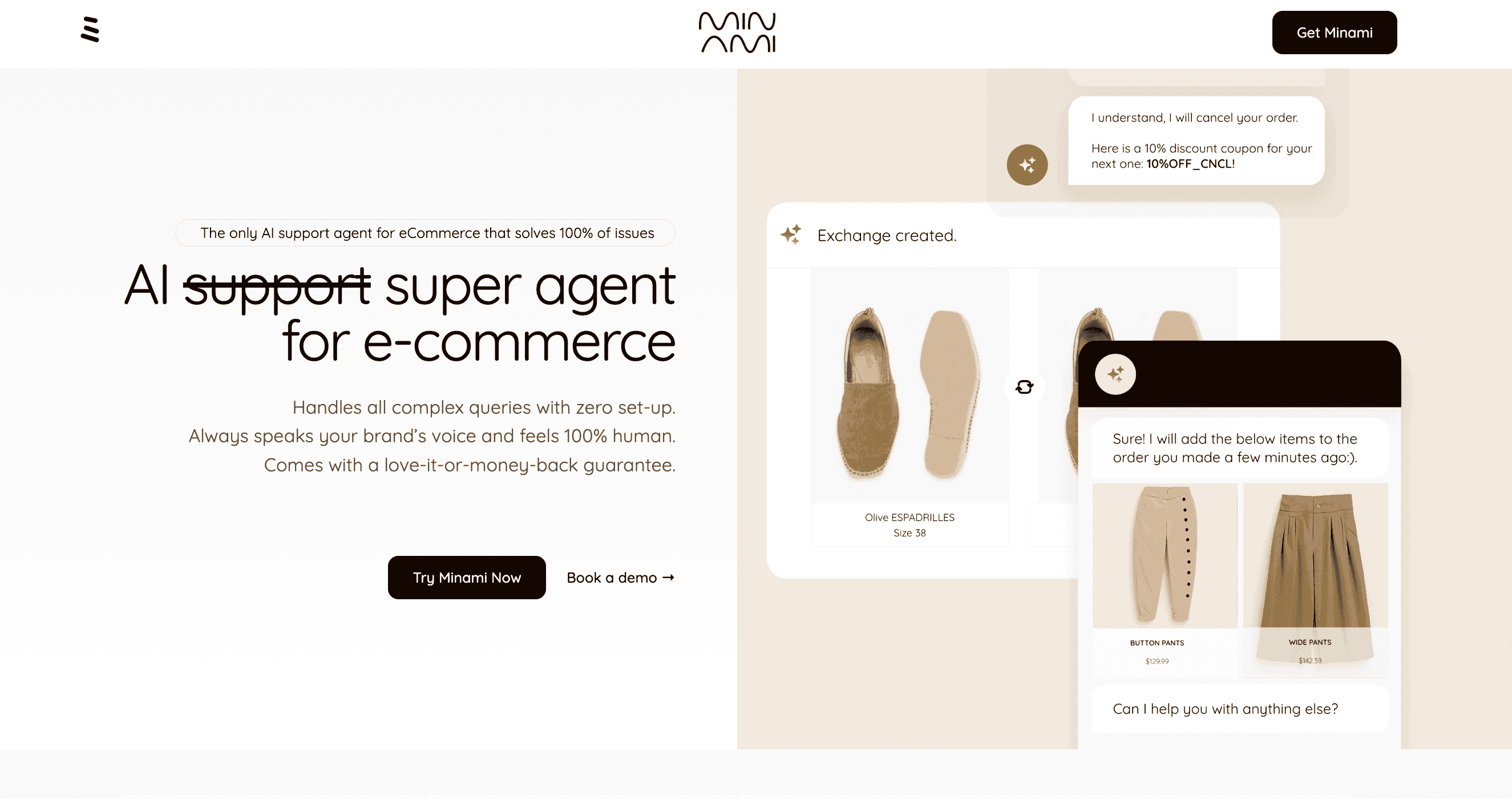
Minami AI is an autonomous support agent built specifically for ecommerce. If Siena focuses on empathy, Minami focuses on action. It doesn’t just answer — it resolves. Across every channel, it handles what your team used to manage manually: returns, refunds, exchanges, and order updates.
For growing ecommerce brands, that means your customer support no longer scales linearly with your sales. Whether you process 100 or 10,000 orders a day, Minami keeps response times instant and ticket volume under control
It integrates directly with your store and backend systems to execute real tasks: processing refunds, editing orders, approving exchanges, or filing shipping claims automatically. And because it understands context, tone, and intent, every interaction still feels personal and on-brand.
| Pros | Cons |
|---|---|
| Fully autonomous actions | Ecommerce specialization |
| Ecommerce expertise | Enterprise pricing |
| ROI focus | Newer market entrant |
| Enterprise-grade support | Limited self-service controls |
Comparison to Siena: Minami AI positions itself as a more complete and hands-off alternative to Siena. Both target ecommerce, but Minami aims to cover all major support cases (returns, exchanges, order tracking, even upselling) under one roof, without the lengthy setup
2. Gorgias AI Agent
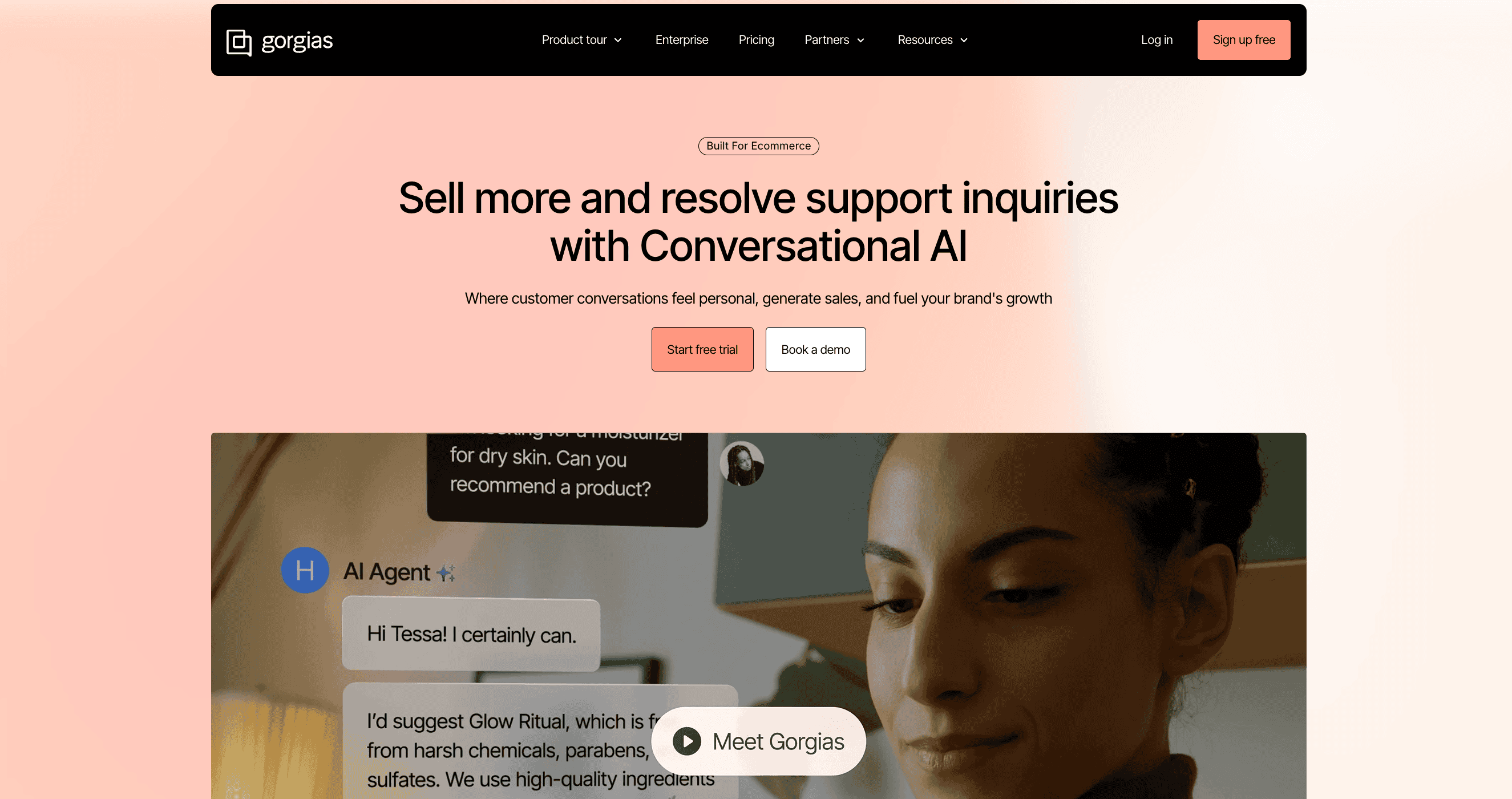
Gorgias AI Agent is the AI automation add-on within the popular Gorgias helpdesk platform. Gorgias is widely used as a customer service ticketing system by ecommerce brands, and with their AI Agent, they’ve infused automation into the helpdesk itself.
Unlike Siena (a standalone AI that you’d integrate with your existing helpdesk), Gorgias offers an all-in-one solution: you use Gorgias as your support inbox, and its built-in AI Agent will automatically resolve common tickets across email, live chat, social media DMs, and more
| Pros | Cons |
|---|---|
| Seamless platform integration | Tied to Gorgias ecosystem |
| Multi-channel support | Scaling costs by tickets |
| Affordable entry point | AI still maturing |
| Full helpdesk features | Limited outside retail |
Comparison to Siena: Gorgias’s AI Agent is a bit of a different beast. Siena is an AI layer that you integrate with your existing support channels, whereas Gorgias is a combined support platform + AI. If you value an integrated approach, Gorgias is compelling – it gives you a ticketing system and AI resolution in one.
3. Zowie
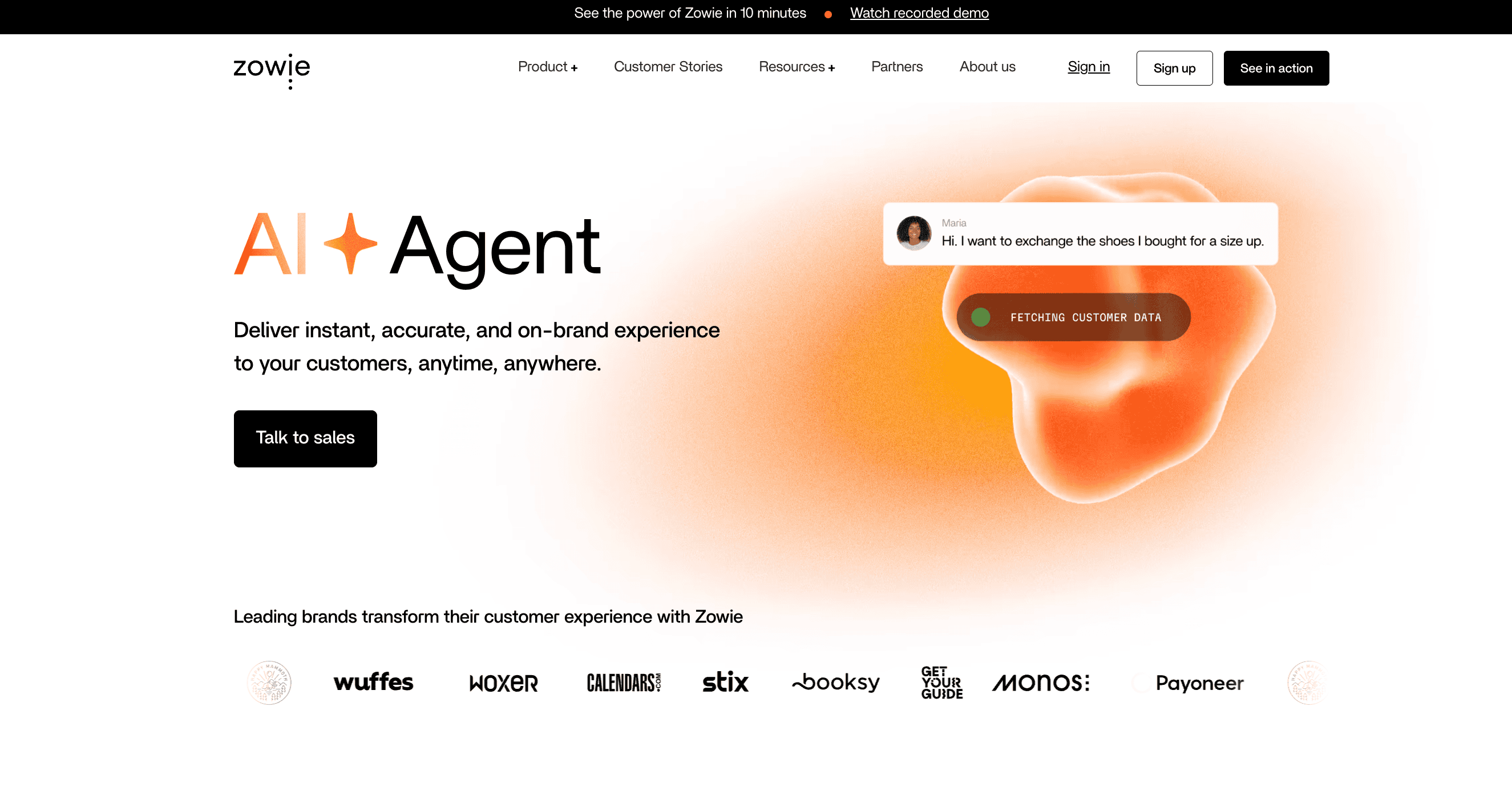
Zowie is an AI-powered customer support automation platform built for ecommerce and SaaS businesses. Think of Zowie as a smart AI chatbot that can work 24/7, but with more depth than a basic FAQ bot. It focuses on understanding the context of customer inquiries to deliver accurate, conversational answers and actions.
Zowie can operate on your website chat, in messaging apps, or even email to instantly assist customers without waiting for a human.
| Pros | Cons |
|---|---|
| Strong intent & tone detection | Initial training effort |
| Seamless integrations | Less focus on transactional actions |
| Immediate 24/7 responses | Enterprise pricing |
| Analytics and insights | Visibility of ROI |
Comparison to Siena: Zowie and Siena are both AI-driven support agents for ecommerce. The main difference is in their approach and depth. Siena focuses on empathy and full autonomy, handling complex flows like refunds end-to-end. Zowie, on the other hand, prioritizes contextual understanding and quick setup.
4. Ada AI
Ada is a well-known AI customer service platform that many enterprises use to automate support conversations. Founded in 2016, Ada has grown into a leader in the chatbot space, especially for large brands that need scalable, multilingual support.
Ada’s philosophy is to provide a proactive and personalized chatbot – one that can engage customers not only when they have issues, but even during the buying journey to boost conversions. It’s a bit like having a virtual concierge for your website or app.
| Pros | Cons |
|---|---|
| Enterprise-grade and proven | Higher cost |
| Multilingual support | Setup and maintenance effort |
| Deep integrations and actions | Overkill for simple needs |
| No-code builder | Dependent on AI training quality |
Comparison to Siena: Ada is broader and more customizable, while Siena is built specifically for ecommerce. Siena comes ready with flows like returns or order tracking. Ada needs more setup but offers full control and can be used for support, sales, or marketing.
5. Tidio Lyro
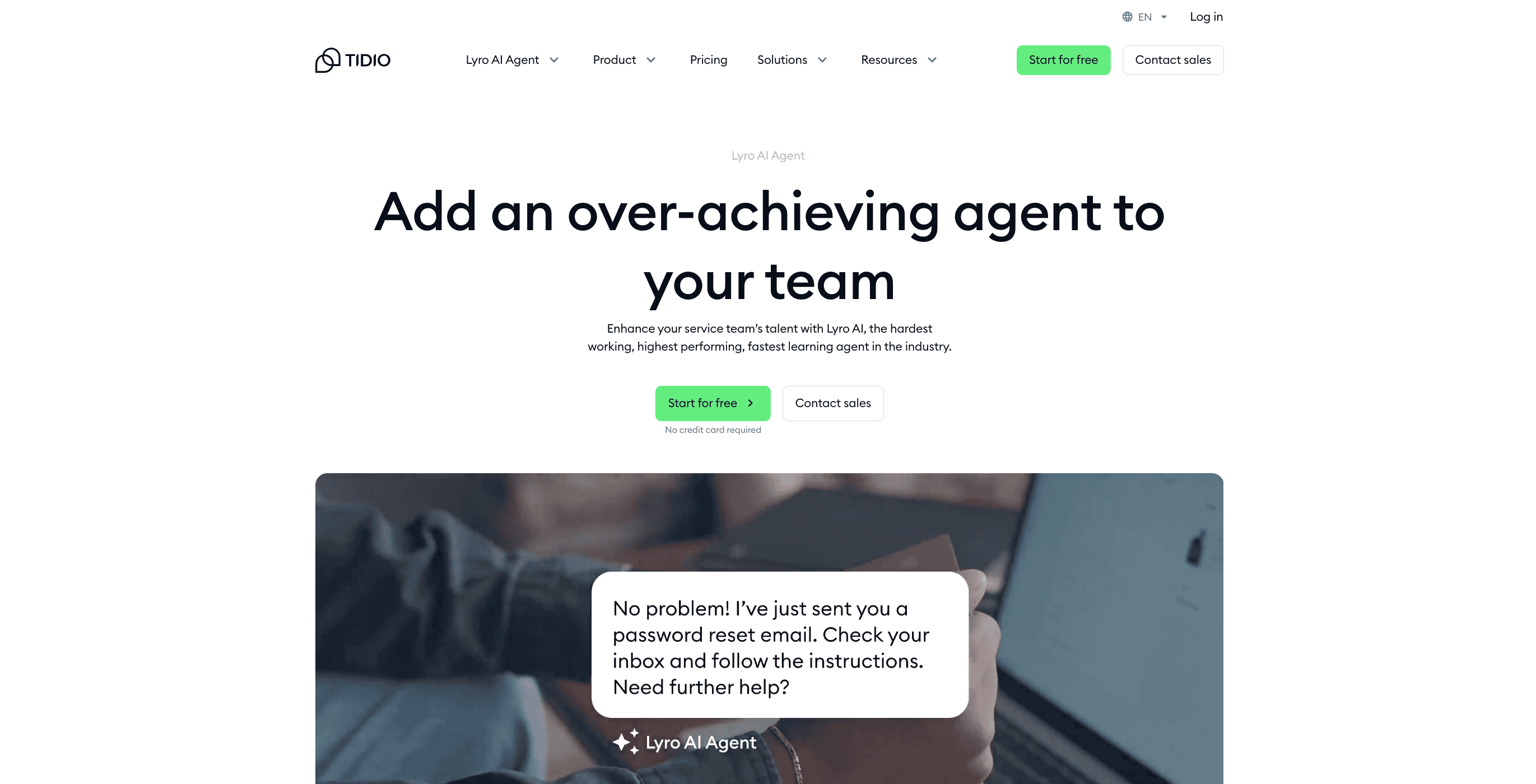
Tidio Lyro is the AI-powered virtual agent feature within Tidio, which is a customer communication platform popular with small and mid-sized businesses.
Tidio is known for live chat and chatbot tools, and recently they introduced Lyro, a GPT-based support agent designed to answer customer questions using your existing help center content. This makes advanced AI accessible even to smaller companies that use Tidio on their websites.
| Pros | Cons |
|---|---|
| Very fast setup | Limited complexity |
| Affordable for SMBs | No voice or outbound channels |
| Human+AI synergy | Relies on existing content quality |
| Multi-language and personalization | Less tailored to large enterprises |
Comparison to Siena: For SMBs needing affordable 24/7 automation, Lyro works well. For large ecommerce brands handling thousands of detailed tickets, Siena or Minami are better suited.
6. Netomi
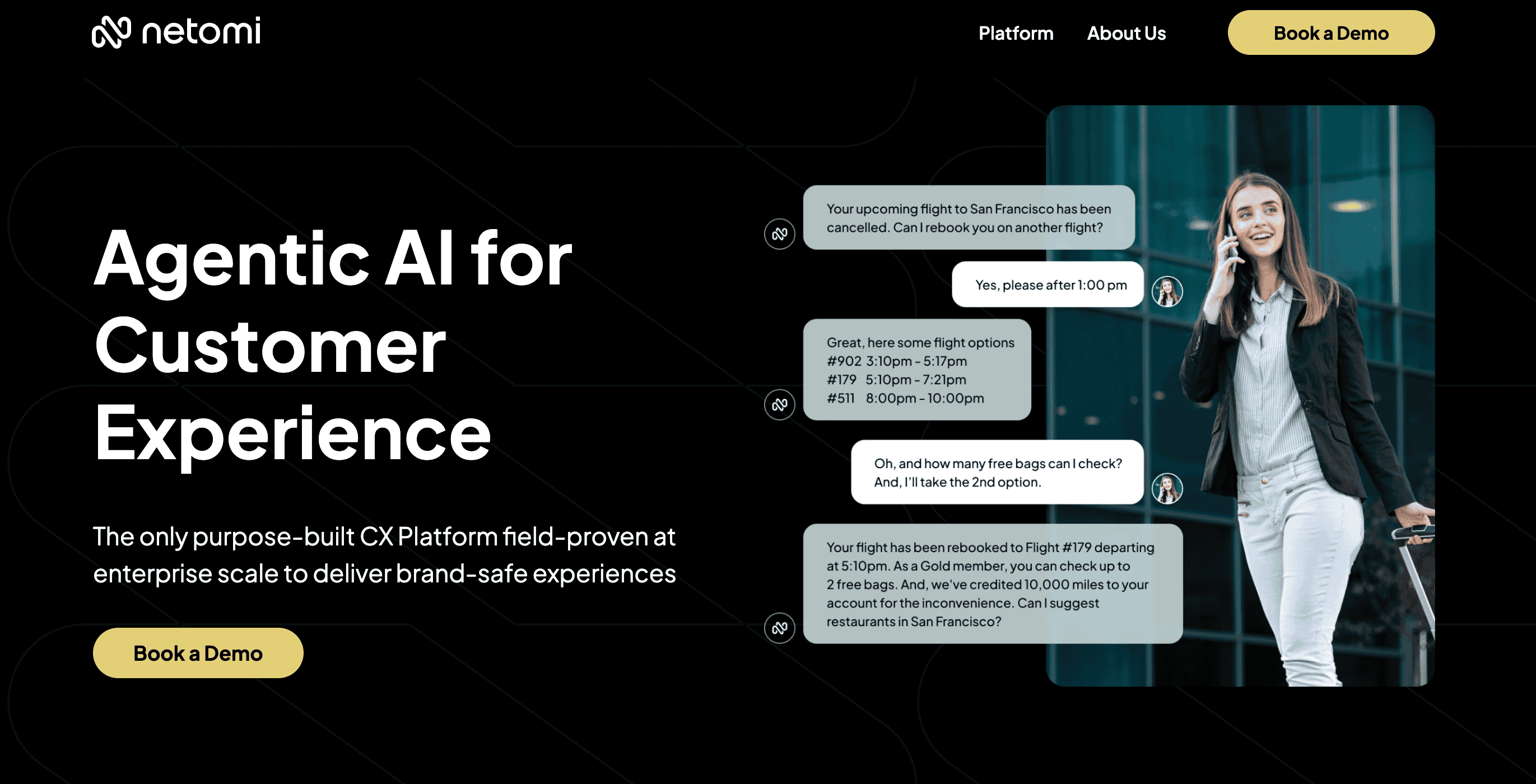
Netomi is an AI platform geared towards customer service automation in complex, enterprise environments. Netomi has made a name by delivering high-resolution virtual agents for industries like airlines, insurance, banking, and e-commerce – domains where customer requests can get complicated and often involve multiple backend systems.
If your support scenarios go beyond simple FAQs, Netomi is designed to handle those more challenging use cases with AI-assisted accuracy.
| Pros | Cons |
|---|---|
| Handles complexity and scale | Enterprise-level cost |
| Industry-specific expertise | Longer implementation |
| Agent assist mode | Resource intensive management |
| High accuracy with feedback loops | Potential overkill for basic tasks |
Compared to Siena: Netomi is a broader enterprise platform used across industries like travel and finance, while Siena focuses purely on ecommerce with empathy-driven automation. Siena fits brands wanting quick, retail-ready deployment; Netomi suits enterprises needing flexibility, precision, and strict compliance.
7. Yellow.ai
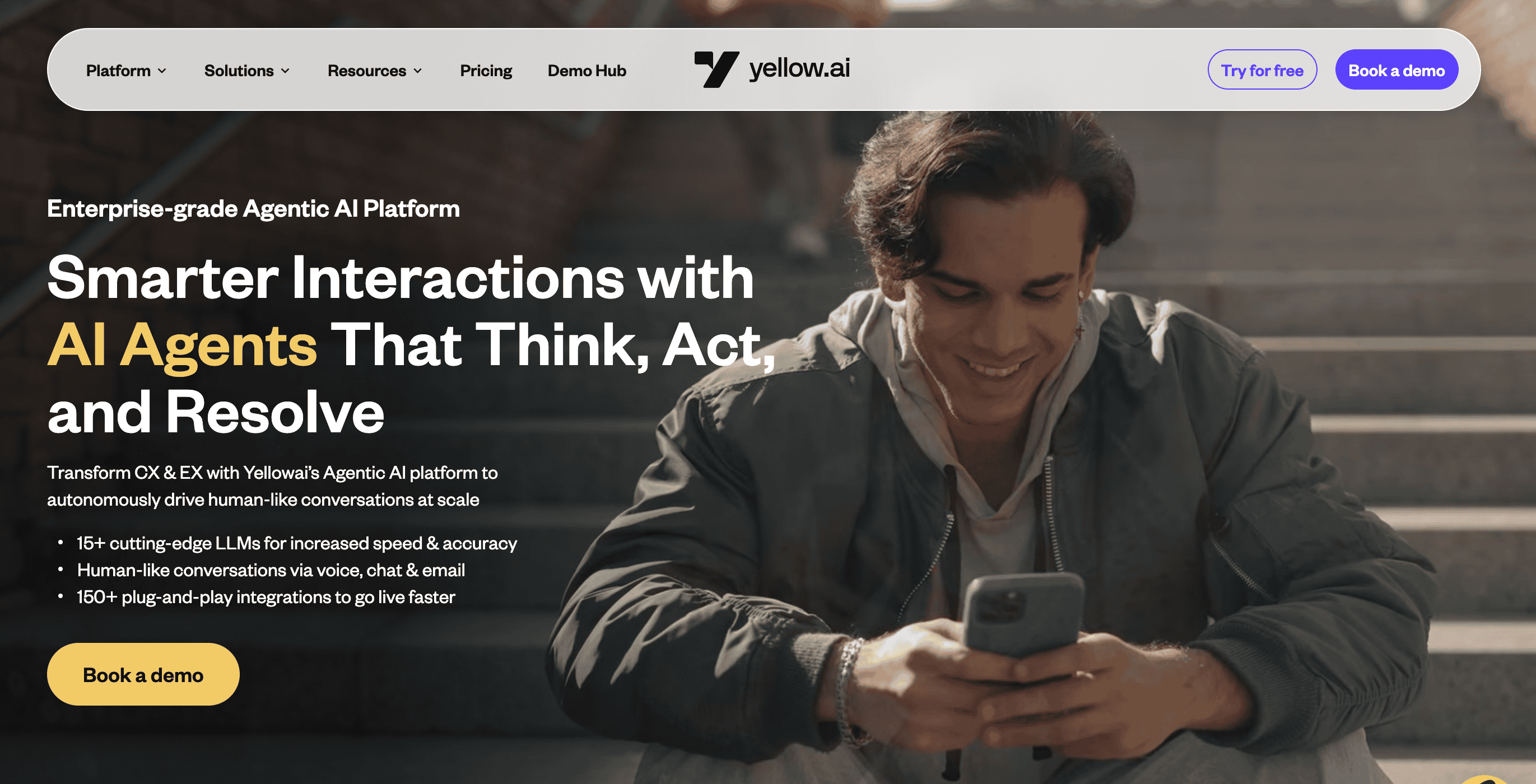
Yellow.ai (formerly known as Yellow Messenger) is a leading platform for building custom AI chatbots and voice bots.
It’s known for its flexibility – with Yellow.ai you can create your own AI agent tailored exactly to your business needs, whether it’s for customer support, HR, marketing, or anything else. Think of Yellow.ai as a toolkit to craft intelligent conversational agents that can be deployed across channels.
| Pros | Cons |
|---|---|
| Ultimate flexibility | Requires development effort |
| Omnichannel including voice | Steeper learning curve |
| Global and multilingual readiness | Quality depends on builder |
| Blend of rule-based and AI | Cost for usage can add up |
Comparison to Siena: Yellow.ai takes a very different approach. Siena gives you a ready-to-use ecommerce AI agent, while Yellow.ai offers a platform to build your own for any use case.
Why Minami AI may be the best Siena alternative for you
Let’s be honest — you don’t want another chatbot. You want an AI agent that actually runs your ecommerce support so you can stop burning money on tickets. That’s exactly what Minami does.
While Siena focuses on empathy, Minami focuses on impact. It doesn’t just reply — it handles everything: returns, exchanges, tracking updates, even personalized product suggestions. Your customers get instant answers, and you get a support cost that’s basically zero.
You don’t need to train it, connect a dozen tools, or write a single line of code. You just turn it on — and it works, in your brand’s tone and under your rules.
Frequently Asked Questions
Have more questions? Fill this form and our team will be in touch to answer them!
-
Can Minami handle complex requests, or just basic FAQs?
- It handles full workflows — not just answers. If a customer wants to exchange an item, track a delayed order, or get a refund, Minami can process it end-to-end without human help.
-
How fast can we actually see results after switching from Siena?
- Usually within days. You don’t need training or setup — once connected to your store Minami starts resolving real tickets instantly and learns from every interaction.
Get Started
Minami is available with zero setup
No integrations. No workflows. No dev time. Just power up Minami and let your AI agent cut refunds, manual labor, and losses