 Nobikage San
 Introducing
Autonomous AI Agents: Best platforms and software to automate your company
Meet the best autonomous AI agents of 2026 and see how they can run your operations, reduce manual work, and scale your business without adding headcount.
Scaling a business once meant hiring more people to handle growing volumes, complexity, and exceptions. Today, that model no longer holds. Demand keeps rising, expectations keep tightening, and labor and operating costs keep climbing—making headcount-driven growth increasingly fragile.
That pressure is accelerating the shift toward autonomous AI agents: software that operates inside real systems, monitors activity in real time, detects issues, coordinates with external partners, and takes corrective action without waiting for human input.
This guide explains what autonomous AI agents actually are, how they differ from traditional automation and conversational tools, and which platforms are defining the category in 2026.
What are the best autonomous AI agents in 2026?
| Tool | Best for | What it does | Pricing |
|---|---|---|---|
| Minami AI | Ecommerce ops | Runs post-purchase ops autonomously | Custom |
| OpenAI Operator | Web tasks | Executes multi-step actions in browser | $200/mo (Pro) |
| Lindy AI | Back-office work | Creates “AI employees” for daily tasks | $49.99 / $199.99 |
| CrewAI | Developers | Orchestrates multi-agent workflows | $25 + $0.50 per run |
| Agentforce | Salesforce users | Acts directly inside Salesforce CRM | $550/user/mo |
| NoimosAI | Marketing ops | Runs campaigns end-to-end with agent squad | $99 / $249 / $499 per user |
What is an autonomous AI agent? Definition
An autonomous AI agent is software that operates independently, without step-by-step human input. You set the objective, and the agent determines how to reach it—choosing tools, interacting with systems, taking actions, and adjusting based on results.
Rather than responding to prompts like a chatbot, an autonomous agent runs continuously in the background and functions like a digital employee embedded directly into your operations.
Features and capabilities an autonomous AI agent
-
Goal-driven autonomy: Autonomous AI agents operate around defined objectives, not reactive prompts. They decompose goals into steps, select execution paths, and adapt when conditions change—crossing the line from “assistant” to independent operator.
-
Ability to act in real systems: True autonomy requires direct action inside production environments. This includes working with APIs, navigating interfaces, triggering workflows, and executing changes in live business systems—not just generating responses
-
Advanced reasoning and decision-making: Autonomous AI agents evaluate context, data, and business rules to choose between alternatives. Decisions are made dynamically, based on logic and trade-offs, rather than predefined scripts.
-
Persistent memory and context awareness: Effective agents retain relevant state over time—past actions, customer history, policies, and preferences. This continuity enables consistent decisions and progressive improvement instead of restarting from scratch each interaction.
-
Guardrails, reliability, and control: Autonomy works within boundaries. Business rules, approval thresholds, and safety constraints ensure agents act predictably and responsibly while companies retain full operational control.
The best autonomous AI agents platforms, reviewed
1. Minami AI
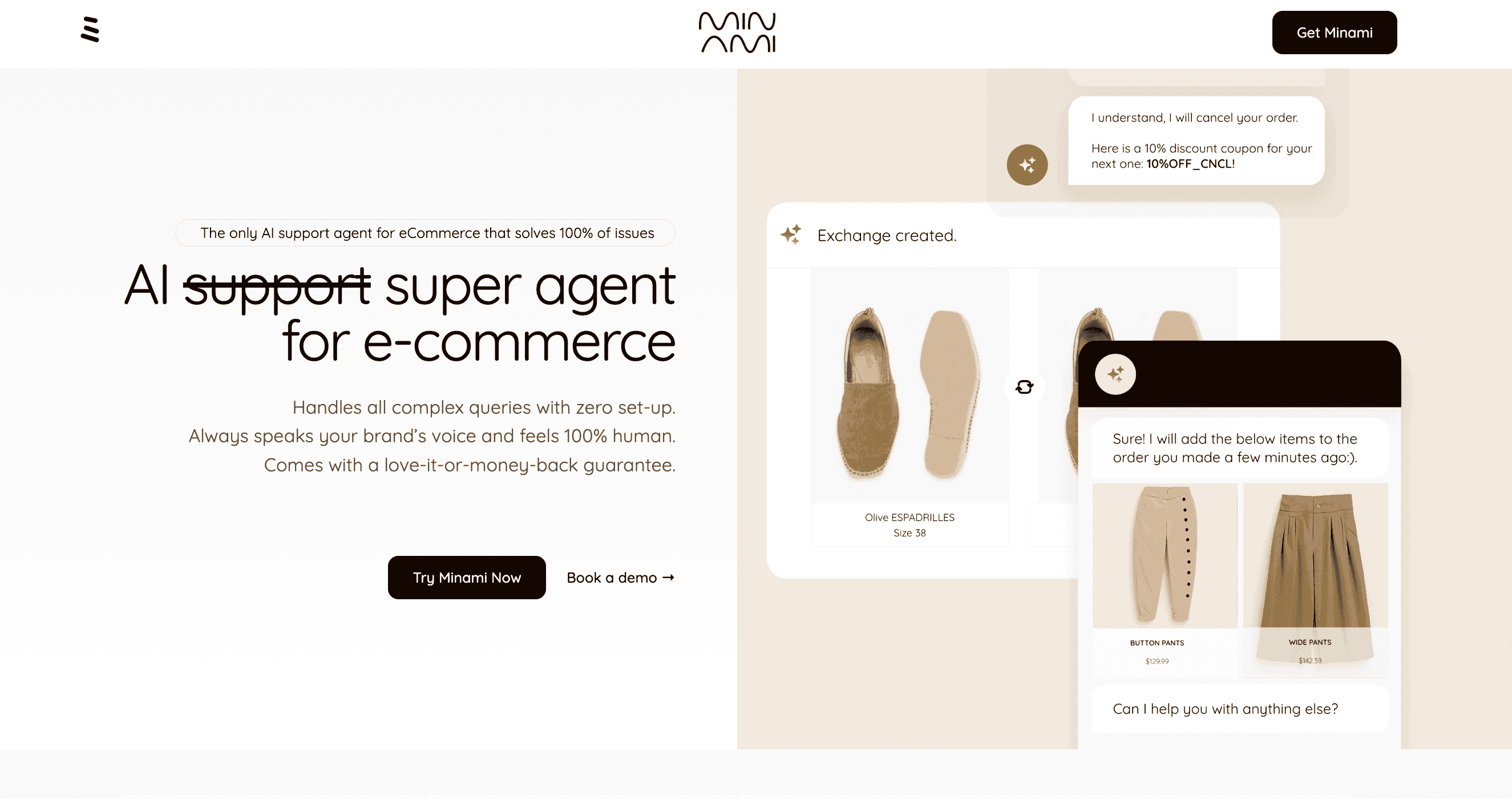
Minami AI is a fully autonomous ecommerce agent built to execute real post-purchase operations, not just conversations. It edits paid orders, resolves delivery incidents directly with carriers, and manages returns and exchanges end-to-end, all without manual intervention or complex setup.
By operating directly on orders, logistics, and returns, Minami functions as an AI operations employee for D2C and retail brands—handling the work that traditionally requires multiple tools and constant human oversight.
Key features
-
End‑to‑end ecommerce journey coverage from checkout to delivery, including order edits, shipping issues, and returns
-
Autonomous order modifications (add/remove items, cancellations) on paid but unshipped orders, reducing tickets and driving incremental upsells
-
Full delivery incident handling (lost, damaged, delayed, or falsely marked delivered), including liaising with couriers and filing claims
-
Built‑in AI returns and exchanges management, guiding customers through the flow and encouraging exchanges and new sales
-
Brand‑voice aligned responses that feel human, with a guarantee on experience quality
Pricing
2. OpenAI Operator
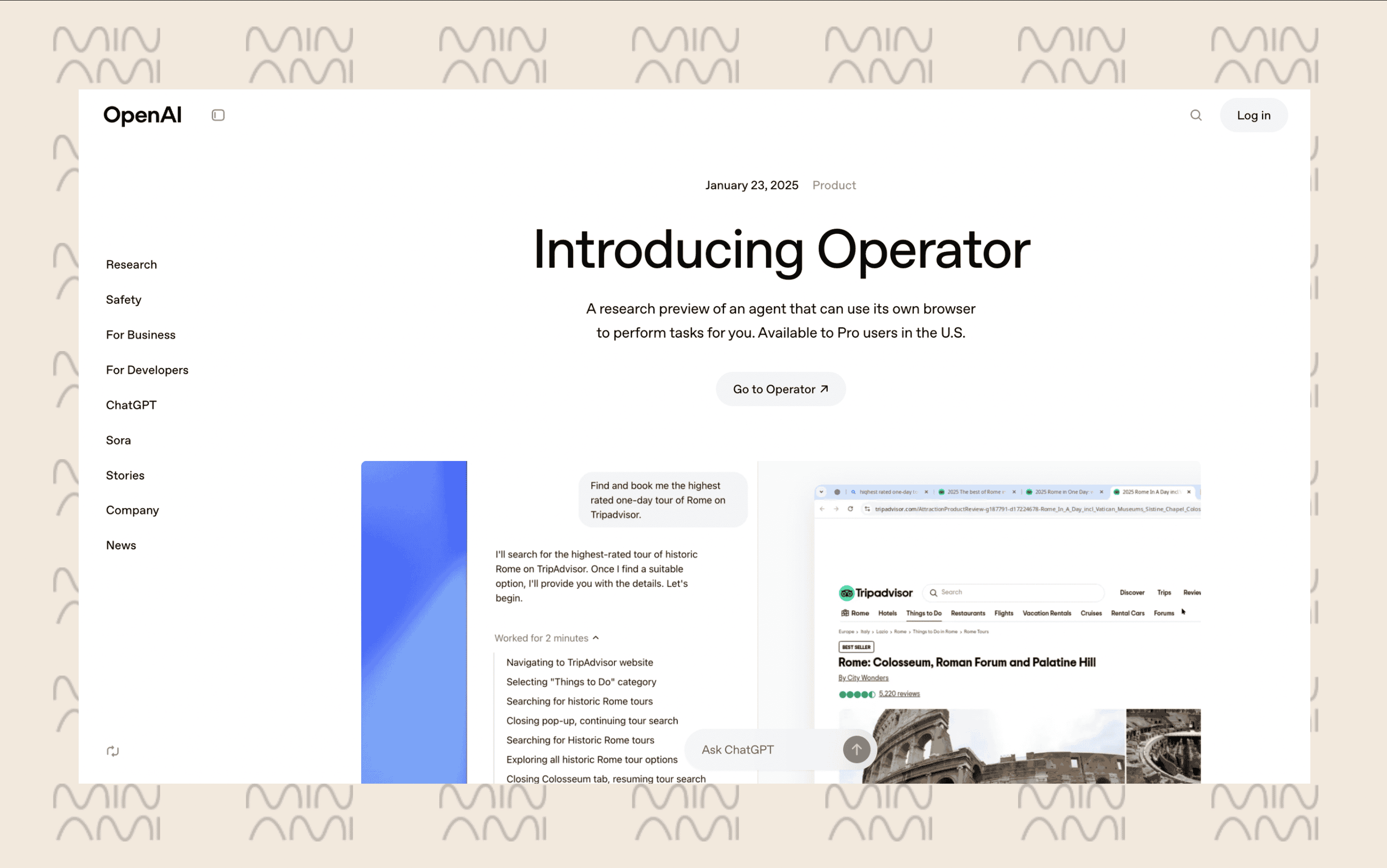
OpenAI Operator is a general-purpose autonomous agent designed to complete tasks directly in a web browser. It can navigate websites, fill out forms, and execute multi-step actions such as placing online orders or managing web-based workflows.
Its key distinction is its deep integration within OpenAI’s ecosystem and its ability to act as a true web “doer,” operating interfaces end-to-end rather than assisting through conversation alone.
Operator is built for knowledge workers and power users who want a single agent capable of handling complex, browser-based processes across a wide range of use cases.
Key features
-
Autonomous browser control, including navigation, clicking, filling forms, and completing transactional flows online
-
Advanced reasoning and self‑correction, enabling the agent to backtrack, fix mistakes, and adapt its plan mid‑task
-
Ability to orchestrate multi‑step workflows across different web apps and sites, not just a single domain
-
Tight integration with the OpenAI ecosystem, benefiting from the latest model capabilities and tool use features
-
Positioned as a research preview, giving early adopters access to cutting‑edge autonomous behavior
Pricing
- Available via ChatGPT Pro at $200/month (in supported regions / research preview contexts)
3. Lindy AI
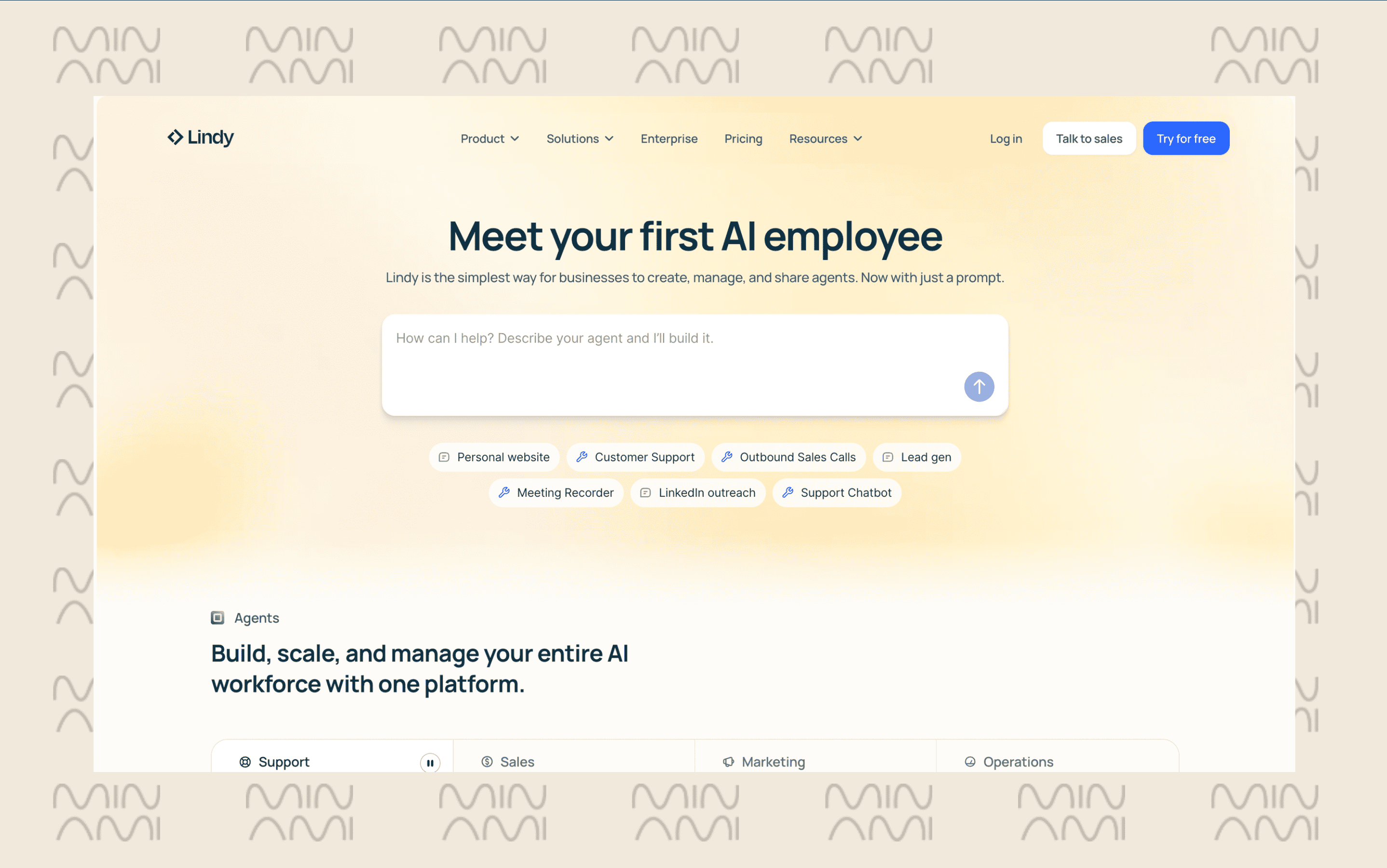
Lindy AI is an autonomous “AI employee” platform designed to automate everyday knowledge-work across teams. It allows businesses to create specialized digital workers that handle tasks such as email triage, scheduling, CRM updates, and basic customer support.
Lindy’s differentiation comes from combining an agentic reasoning engine with a no-code builder, enabling non-technical teams to deploy task-specific agents that run continuously in the background.
The platform excels as a general back-office automation layer, focused on reducing repetitive operational work rather than solving a single vertical-specific problem.
Key features
-
Autonomous AI agents that can navigate browsers, use thousands of apps, and correct their own mistakes through “agentic reasoning
-
No‑code agent builder with templates for roles like SDR, inbox assistant, or meeting scheduler, allowing setup in minutes
-
Deep integrations with 3,000+ tools (e.g., Gmail, Slack, Zoom, Twilio, CRMs), enabling cross‑app workflows
-
Autopilot modes that keep agents running 24/7, processing triggers like incoming emails or new leads without human supervision
-
Knowledge‑base support and conditional logic flows, so agents can answer questions and route edge cases appropriately
Pricing
- Offers Free, plus Pro at $49.99/month and Business at $199.99/month, with Enterprise custom pricing
4. CrewAI
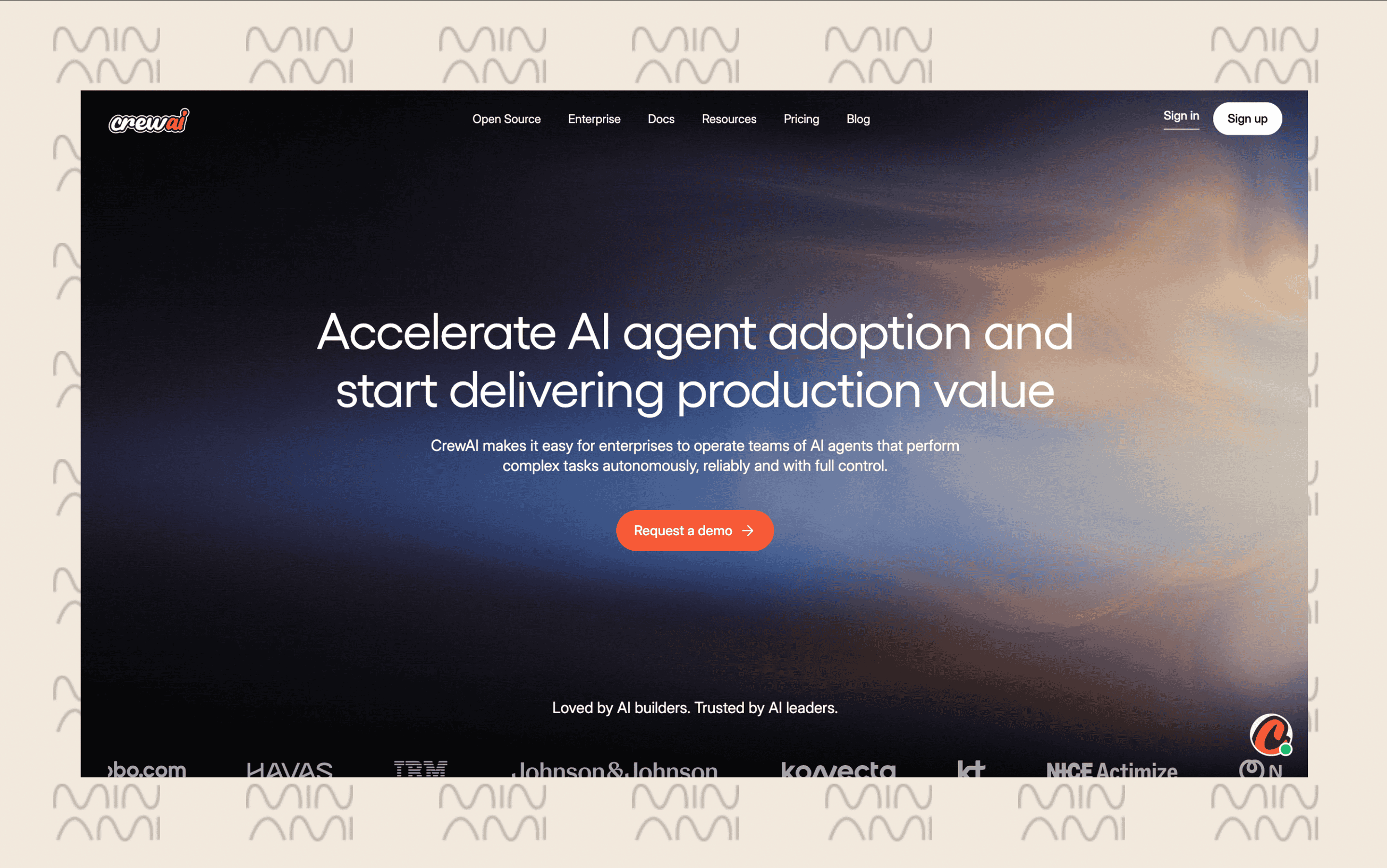
CrewAI is an open-source framework designed to orchestrate multiple autonomous agents—referred to as “crews”—that collaborate to complete complex tasks.
Its core differentiation is the Crews and Flows architecture, which combines agent autonomy with explicit workflow control, allowing teams to model multi-agent systems as coordinated AI teams rather than isolated bots.
CrewAI is aimed at developers and organizations that need production-grade, highly customizable agent orchestration, offering flexibility and control instead of a pre-packaged, single-agent solution.
Key features
-
Crews: groups of specialized agents with different roles working together on shared tasks, similar to human teams
-
Flows: structured workflows with conditional routing, enabling complex, branching automation pipelines
-
Standalone, lean framework not tightly coupled to LangChain, offering lighter resource usage and more flexibility
-
Deep customization of prompts, behaviors, tools, and state management, suitable for advanced and enterprise scenarios
-
Support for multiple LLM backends (OpenAI, local models via Ollama, etc.) and a large developer community with examples and docs
Pricing
- Free (Basic), $25/month (Professional), $0.50 per extra execution, and Enterprise custom pricing
5. Agentforce
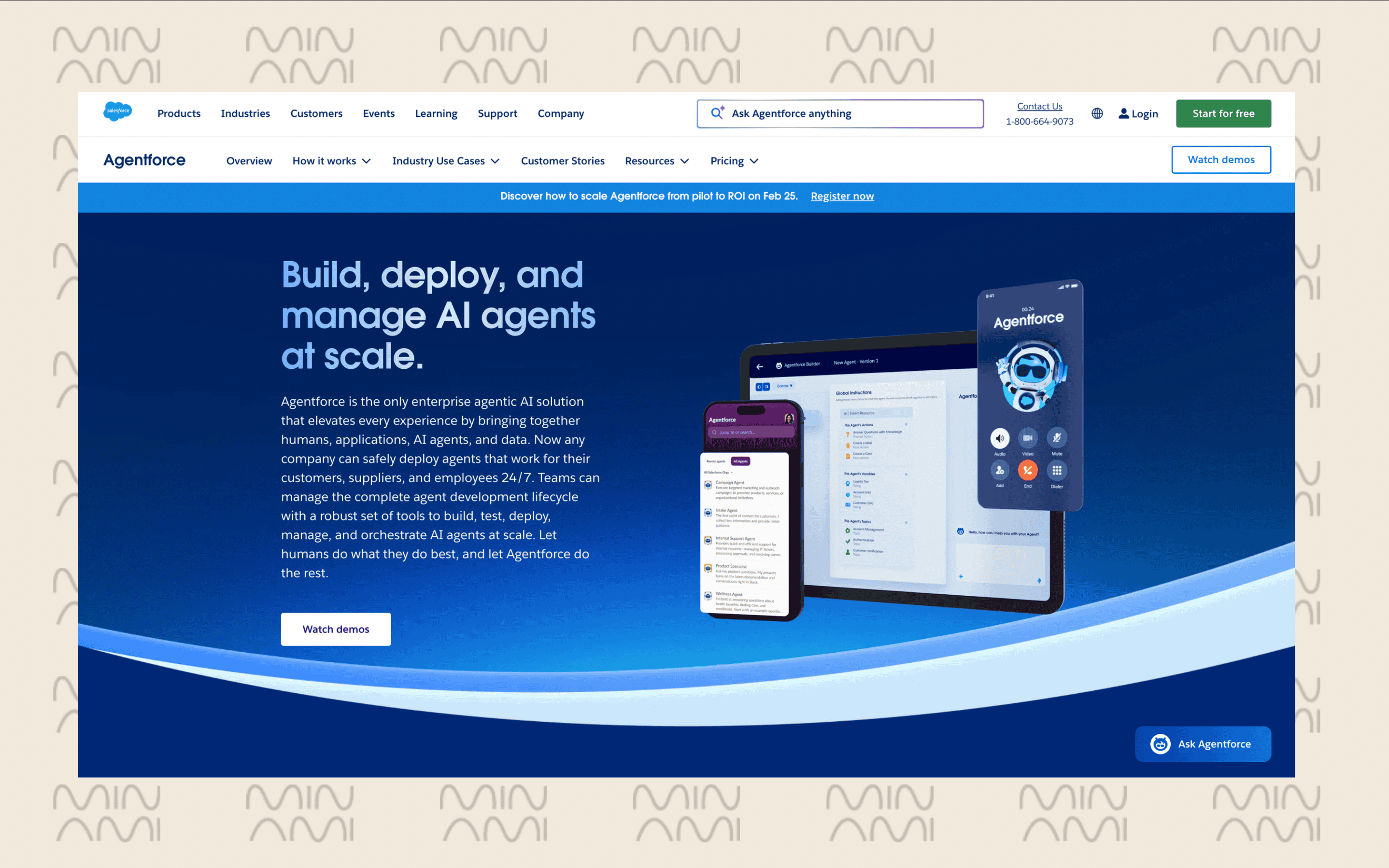
Agentforce is Salesforce’s autonomous AI agent layer built on Einstein, designed to execute CRM and customer-service workflows directly within the Salesforce ecosystem.
Its core differentiation is native access to Salesforce data and objects, allowing agents to act on leads, opportunities, and support cases under enterprise-grade governance, security, and compliance.
For organizations already standardized on Salesforce, Agentforce turns AI into an active CRM operator—moving beyond conversational assistance to real, in-platform execution.
Key features
-
Autonomous agents that can read and update CRM records, trigger workflows, and assist service agents in resolving cases
-
Deep Einstein and Salesforce integration for context‑aware actions across sales, service, and marketing objects
-
Enterprise‑grade controls around permissions, auditing, and compliance, critical for regulated industries
-
Orchestration of multi‑step service workflows, from triage to resolution, across channels like chat, email, and phone logs
-
Positioned as part of a larger AI suite, so it can combine predictive insights with autonomous execution
Pricing
- €500 per 100k Flex Credits (also shown as 500/100k), plus €5/user/month (requires Flex Credits), and Agentforce 1 Editions from $550/user/month
6. NoimosAI
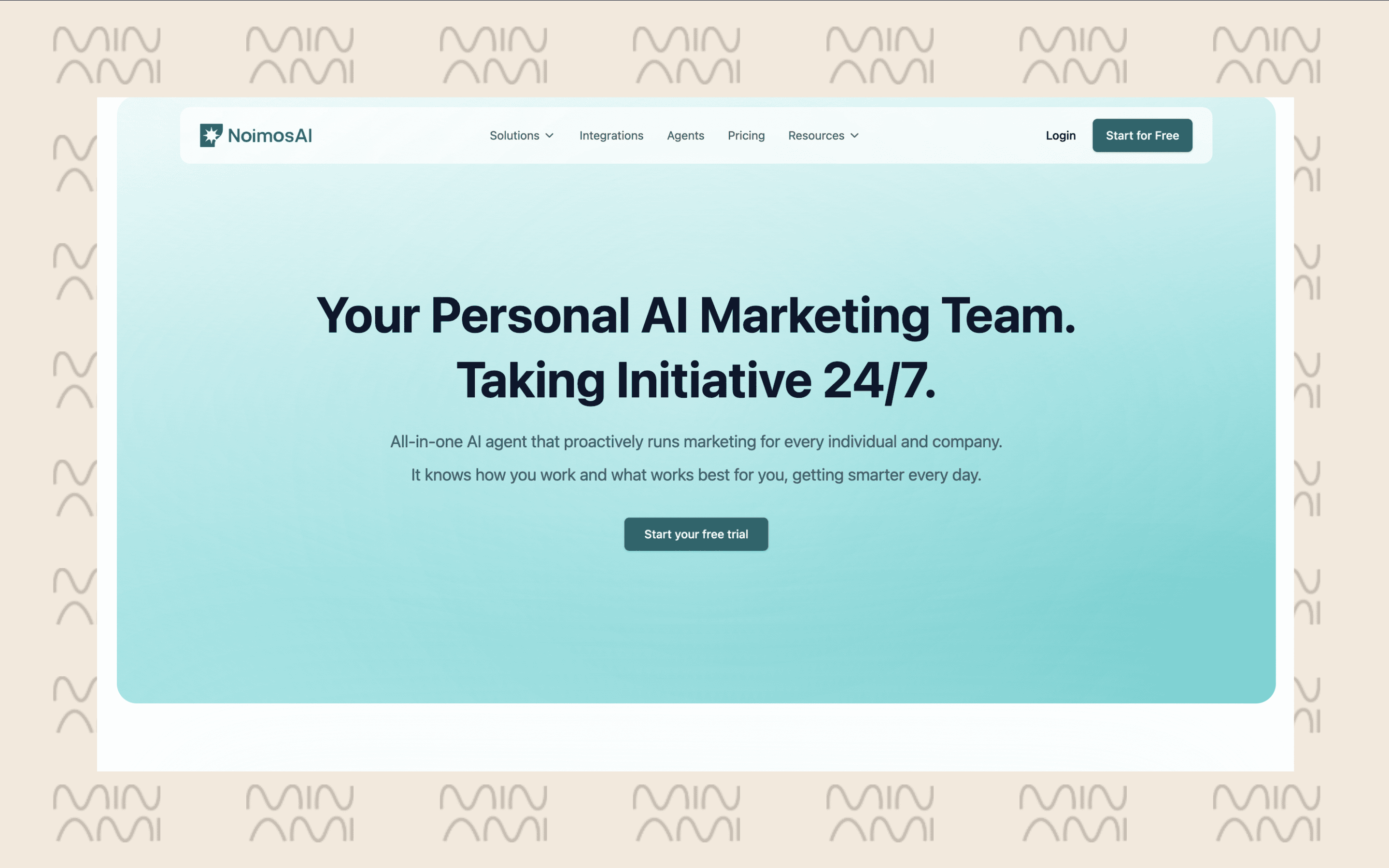
NoimosAI is an autonomous AI marketing platform designed to run marketing operations end to end—from research and strategy to execution and continuous optimization. Its key differentiation lies in organizing marketing activities as a coordinated “squad” of specialized agents with shared memory, rather than isolated automations or a single conversational bot. This approach enables always-on marketing execution and makes NoimosAI particularly well suited for SMBs and content-driven brands that want consistent marketing output without scaling headcount.
Key features
-
Personalized marketing agents that proactively handle research, planning, campaign creation, and optimization across channels
-
Unified squad and memory layer so agents share insights and context instead of working in silos
-
Focus on content and multi‑channel execution, from messaging to performance monitoring
-
Designed for continuous 24/7 operation, keeping campaigns running and adapting autonomously
-
Integrations with common marketing tools, aligning agents with existing workflows
Pricing
- Plans are listed at $99/user/month (Pro), $249/user/month (Team), and $499/user/month (Advanced)
How to choose the right autonomous AI agent
If your business handles growing volumes, complexity, and exceptions, you need an autonomous AI agent. You might not need the most advanced, fully operational agent from day one, with deep system access, multi-agent orchestration, and end-to-end execution across your tech stack. Not yet, anyhow. But as your operations scale and your tolerance for manual work shrinks, you likely will.
That’s the powerful thing about the new generation of autonomous AI agents emerging in 2026. Whether you want a focused agent to automate specific workflows, a general-purpose operator to handle browser-based tasks, or a fully embedded digital employee that runs real operations inside your systems, there are platforms built for different needs and maturity levels.
If you run an ecommerce business, Minami AI is the most natural starting point to put autonomous AI to work in your real operations. It lets you move from experimentation to impact by running post-purchase workflows for you, from day one.
Frequently Asked Questions
Have more questions? Fill this form and our team will be in touch to answer them!
-
How is an autonomous AI agent different from a chatbot?
- A chatbot only responds to questions. An autonomous AI agent acts inside your systems, makes decisions, and executes tasks without step-by-step instructions.
-
Do I need to be technical to use an autonomous AI agent?
- Not always. Platforms like Minami AI or Lindy are built for non-technical teams, while tools like CrewAI are designed for developers.
-
Do autonomous AI agents platforms replace employees?
- No. They reduce repetitive manual work so your team can focus on higher-value tasks instead of routine operations.
-
What makes an AI agent software truly ‘autonomous’?
- Real autonomy means it can set its own steps, reason about decisions, act in real systems, remember past context, and adjust based on results.
Get Started
Minami is available with zero setup
No integrations. No workflows. No dev time. Just power up Minami and let your AI agent cut refunds, manual labor, and losses