
On this page (5)
Let’s be honest for a second. Order management sounds simple. Someone buys, you ship it, end of story. But you and I both know that’s not how it works in real life.
Orders change. Addresses are wrong. Payments need checks. Shipments get stuck. Returns start piling up. And before you notice, a “simple” order turns into five small tasks spread across different tools.
That’s where AI in order management starts to make sense. Not as another dashboard you have to babysit, but as something that actually takes work off your plate and keeps orders moving without constant manual effort.
In this article, I’ll walk you through what AI in order management really means, what an AI agent does day to day, and which solutions can genuinely move orders forward, not just sit on top of them.
What is AI in order management?
AI in order management means using AI technology to help handle orders from checkout to delivery. The goal is to automate repetitive tasks that can absorb thousands of hours of work and increase revenue through cost reduction.
What is an AI Agent for order management and processing?
An AI agent for order management and processing is software that runs your order operations like a smart teammate. It learns from what’s happening across your store, payments, warehouse, and carrier updates, then takes the next step automatically.
This technology uses generative AI and modern large language models (LLMs), such as those from Anthropic, to learn from your workflows and adapt decisions to your business needs.
Benefits of AI agents for order management
Keep order ops moving 24/7
AI agents work around the clock. They monitor orders, shipping updates, and customer requests after hours, so problems don’t stack up overnight.
Cut repetitive mistakes in order management
Order operations are packed with copy-paste tasks like updating addresses, checking statuses, sending the same replies, and moving orders between tools. AI agents follow the same steps every time and don’t miss details.
Automate returns from start to finish
An AI agent can run the entire returns flow and help reduce return volume: it validates the request, applies the right policy, triggers the return label, and moves the case forward based on milestones like “received” or “approved,” while nudging shoppers toward exchanges or store credit when it makes sense.
Upgrade support without hiring
AI agents can answer “Where is my order?” in seconds, collect missing details when needed, and send proactive updates so fewer tickets reach your team.
Drive revenue, not only savings
Faster issue resolution reduces churn. And when the agent also supports shoppers before checkout with product questions, sizing help, and recommendations it can lift conversion and average order value.
7 AI agents solutions for order management
1. Minami AI

Minami is built to run the post-checkout journey end to end, and it feels less like a “support bot” and more like an ops teammate that actually moves orders forward. What makes it stand out is the focus on real operational actions: it can step in when a delivery fails, coordinate with carriers, handle paid-order changes safely, and keep returns and exchanges flowing without your team babysitting every case.
Minami AI is built to automate 100% of order and shipping management issues in ecommerce.
Key features:
-
Delivery issue recovery with proactive actions
-
Courier communication and claim workflows
-
Paid-order edits and post-purchase changes handling
-
Returns and exchanges automation across milestones
Best for:
High-volume eCommerce brands that want to cut support and logistics costs hard by automating post-purchase operations
2. Salesforce Agentforce

If your commerce stack already lives in Salesforce, Agentforce Commerce is usually the most natural move because it runs on the same platform and data model your teams already use. Instead of bolting on a separate “order brain,” you keep orders, customers, inventory, and fulfillment logic in one place, then let Agentforce take action inside Salesforce Order Management.
Key features:
-
Agentic order routing for Salesforce Order Management
-
Platform-native automation using Salesforce tooling (like Flow) around fulfillment decisions
-
Commerce agents that can support shoppers and order questions across channels
-
Agentforce actions that extend into merchandising and store operations (POS) when you need it
Best for:
Organizations that want order actions to happen inside one governed customer platform, not across scattered tools.
3. Oracle Fusion Order Management AI Agents
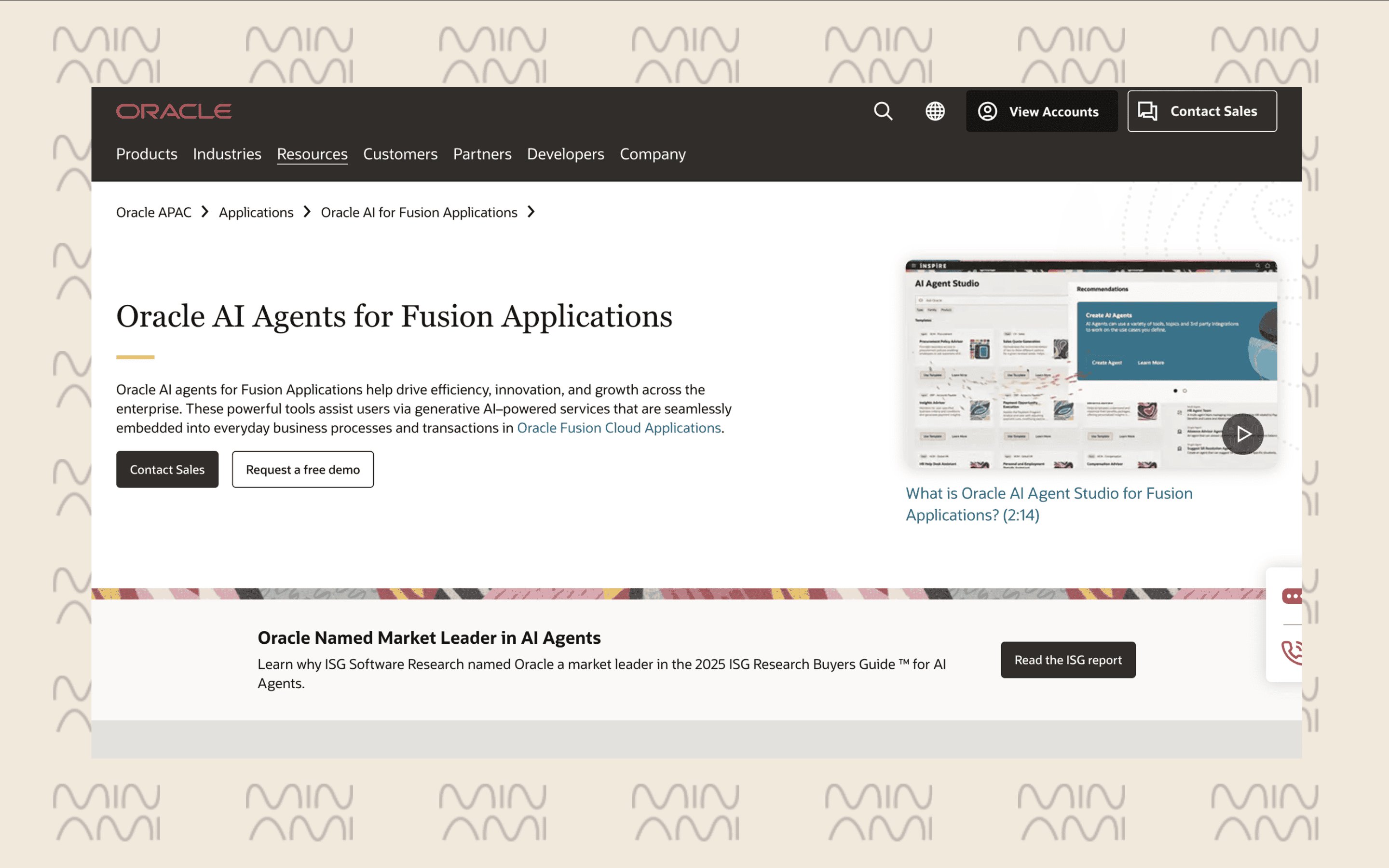
Oracle is unusually direct about “AI agents” inside Order Management, because it frames them as assistants that help teams create and process orders inside the system they already use. The Sales Order Assistant lets reps describe what they need in plain language and turns that into a draft order while surfacing key commercial context, like what’s available and how it’s priced.
Key feautures:
-
Natural-language draft order creation for sales reps
-
Item, pricing, and availability surfaced during order creation
-
Policy-aware return validation tied to the original order details
-
Automatic return initiation when the selected option matches policy
Best for:
Teams that need policy-driven order and returns processing to feel faster and more guided for reps.
4. Manhattan Active Maven
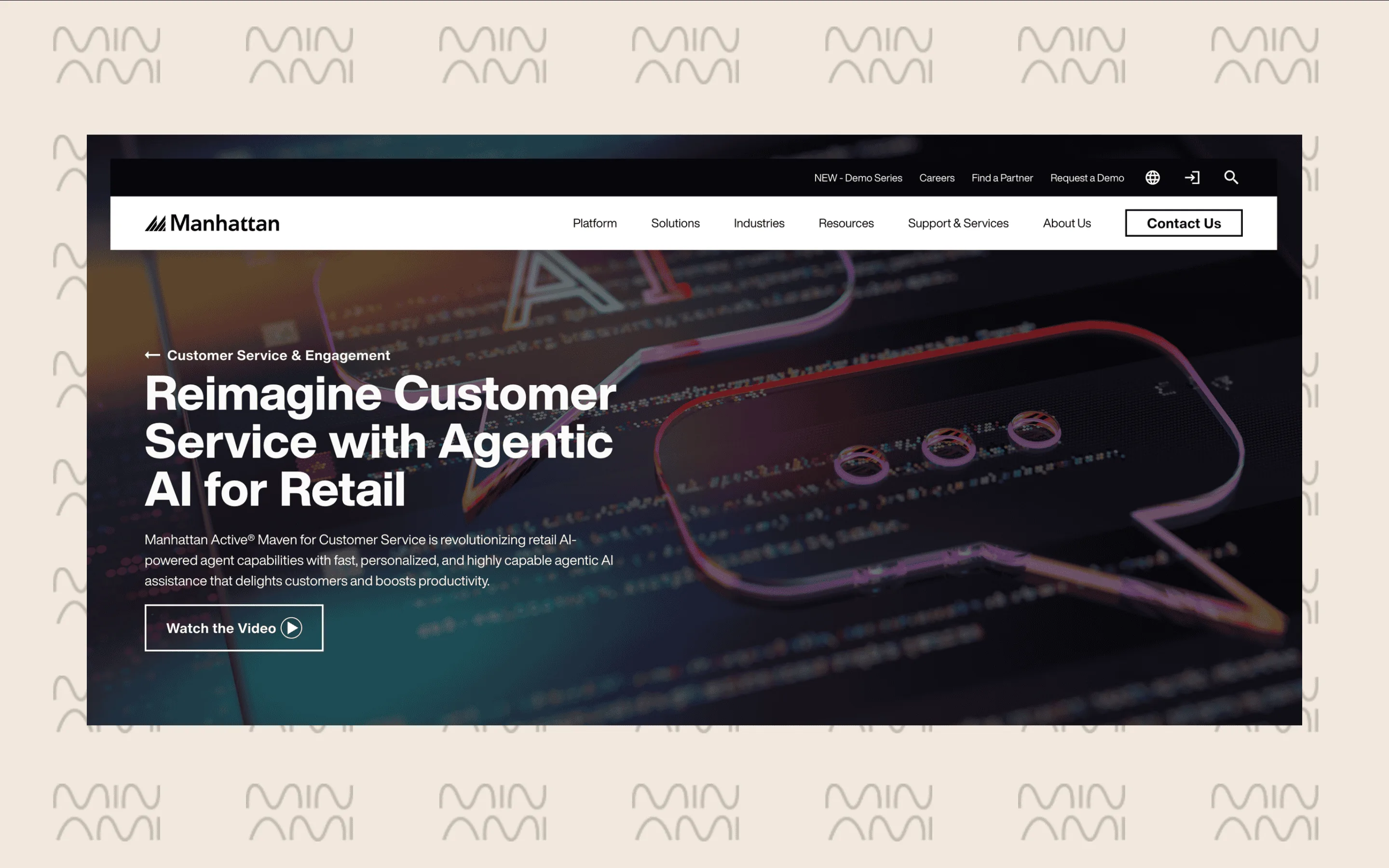
Manhattan presents Maven as “agentic order care” that sits on top of Manhattan Active Order Management. It’s built for that messy middle where customer questions turn into real operational work. So instead of just giving a polite answer, it’s designed to actually help you resolve common order issues that usually land on your team—like “Where is my order?”—plus the heavier fixes, like replacements or price adjustments.**
Key features
-
Agentic handling of WISMO and other order-status inquiries
-
Resolution workflows for replacements and post-order fixes
-
Order-care actions executed within Manhattan Active Order Management context
-
Designed to reduce operational load created by customer order interactions
Best for:
Retailers that want fewer “Where is my order?” tickets and faster resolution when orders go sideways.
5. SAP Joule Agents for sales order fulfillment work
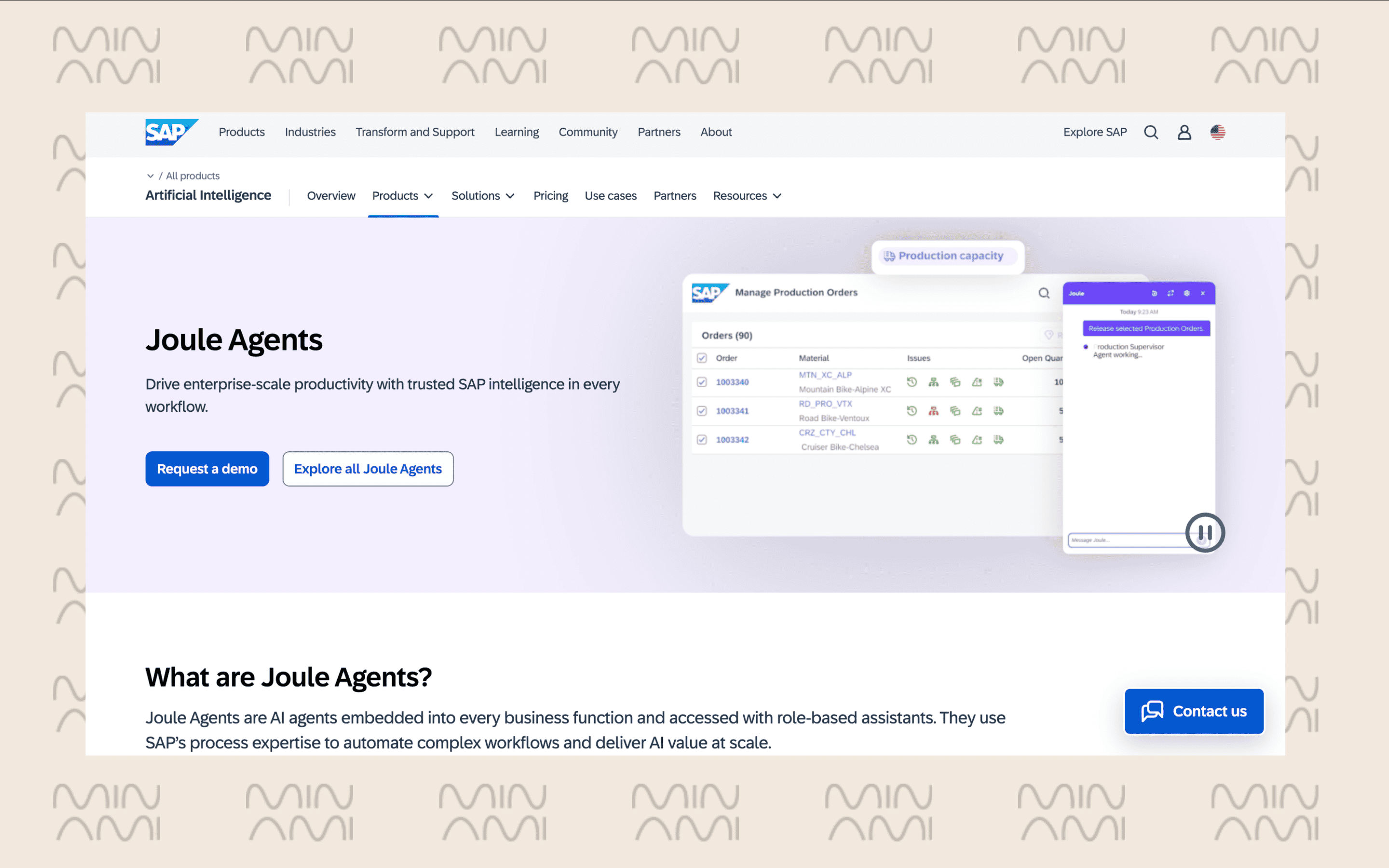
SAP frames Joule Agents as agents embedded across SAP workflows. In an order context, the agent can help with practical tasks like updating sales order fields and stepping in when fulfillment problems show up, so your team spends less time clicking through screens and chasing exceptions. The important nuance is that this value is most consistent when you already run SAP as the backbone of your processç
Key features
-
Sales order field changes initiated by the agent
-
Fulfillment issue detection and guided resolution within SAP workflows
-
Action execution that follows SAP roles, rules, and approvals
-
Best fit when SAP is your system of record and processes are well configured
Best for:
Enterprise ops teams that want quicker exception handling inside structured, approval-based processes.
6. Beam AI
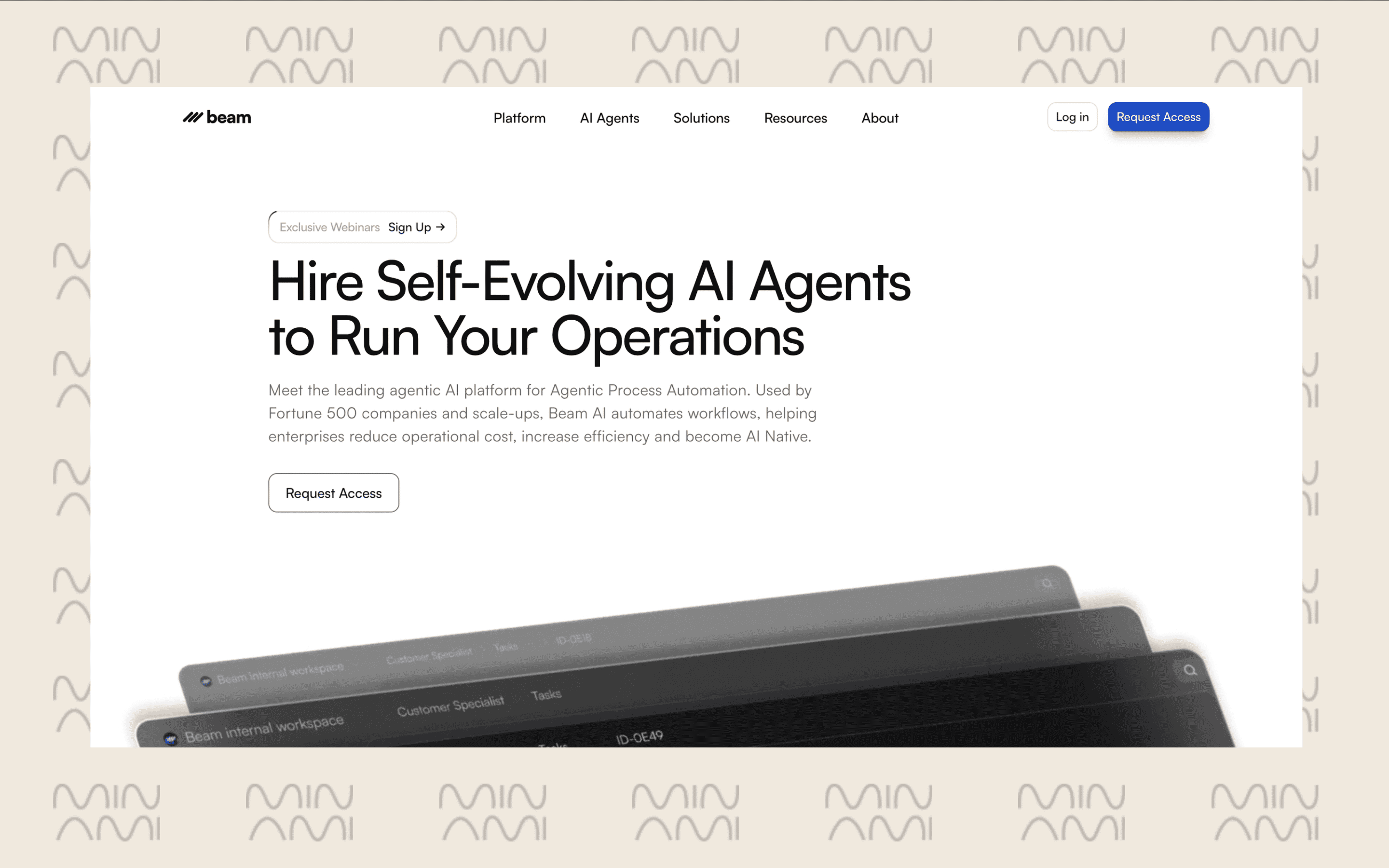
Beam presents itself as an agentic automation platform offering an order management AI agent and order processing workflows that automate work from order creation through fulfillment. It connects to your existing systems and runs the steps for you, using order-focused agent templates that you can adapt to your own processes.
Key features:
-
Order-focused agent templates that run multi-step processing workflows
-
Integrations designed to connect with existing business systems
-
Automation from order creation through fulfillment handoffs
-
Configurable workflows so the agent matches your internal process logic
Best for:
Teams that want to automate order workflows across multiple systems using ready-made agent playbooks.
7. Relevance AI
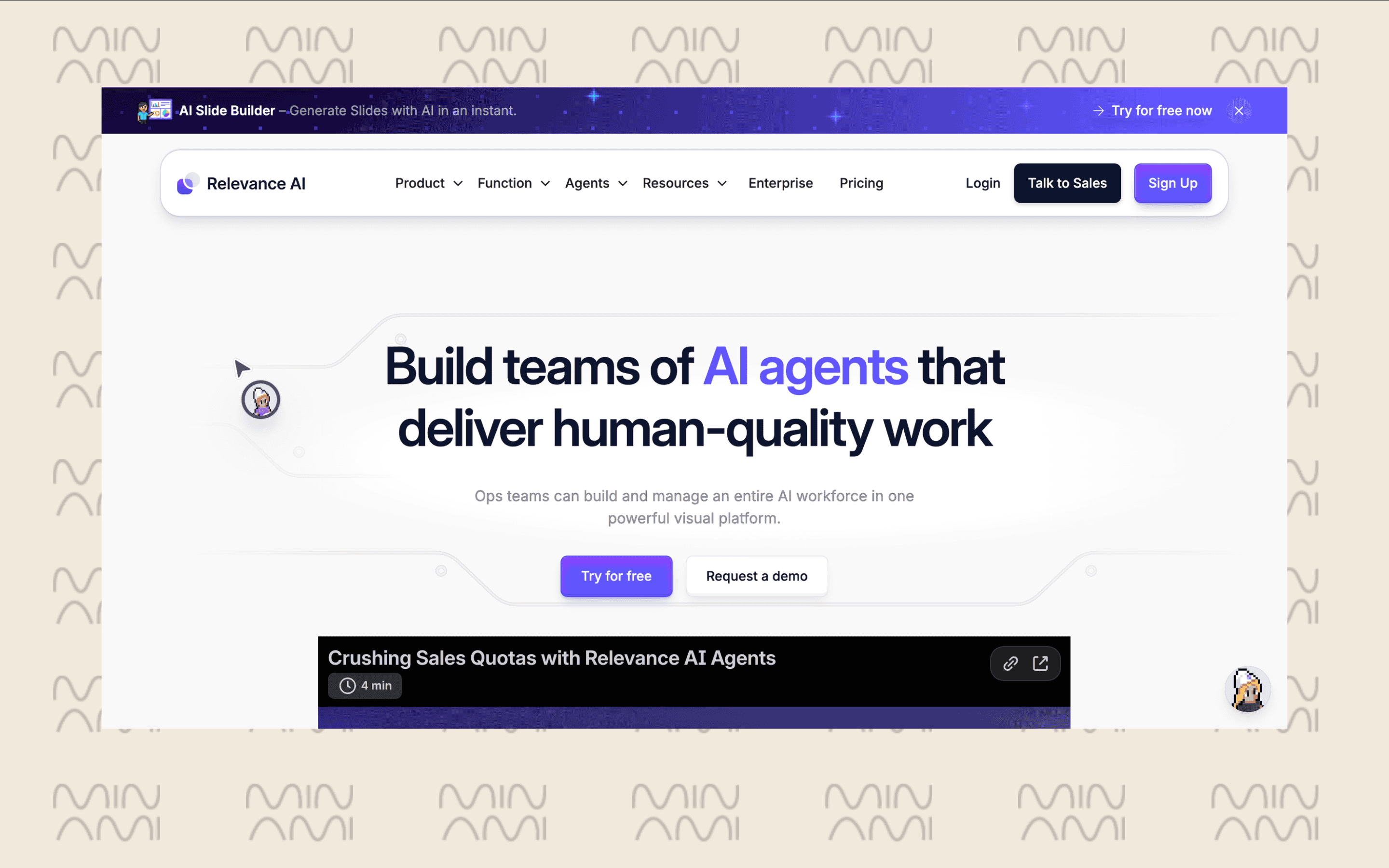
Relevance AI is positioned as a platform where you build and run “teams of agents,”. It gives you the building blocks to create one for your workflow. It leans on agent templates and integrations so your agents can connect to business tools and APIs, then execute order-related steps across systems, including OMS and other order management systems.
Key features
-
Platform to build and orchestrate teams of agents for business workflows
-
Order-processing agent templates you can adapt to your process
-
Integrations to connect agents to tools, data sources, and APIs
-
Best used to automate order workflows across systems, not replace an OMS
Best for:
Teams that want to build a custom “team of agents” for order workflows, tailored to their exact stack and rules.
How to choose an AI order management software
Let’s start with a bit of honesty. Before looking at features or demos, ask yourself one simple thing: what do you actually want this agent to do for your order management?
Some tools are built to take operational actions across the post-purchase journey, others are built to improve “order care” conversations, and others are platforms you configure to run custom workflows. Choose the one witch it better adapts to your needs.
Then look at where your order truth lives and how the agent will act on it. If the agent can only read data, you’ll still be doing the work. You want an agent that can execute changes safely: update order fields, trigger a replacement, initiate a return, apply the right policy, etc.
Finally, if your operations already run on tools like SAP or Salesforce, especially as your OMS or backbone system, it often makes sense to look at their native agents first.
If your world is Shopify, WooCommerce, Magento or a more flexible eCommerce stack, the rules change. Here, you don’t need an agent that could integrate one day. You need one that already knows where the levers are.
Savings calculator
EstimateWhat could Minami save your support team?
Saved per month
$0
0 agent hours freed
0 tickets handled by AI
Estimate based on your inputs. Default automation rate reflects the "on average 90% less customer queries" figure on minami.ai; your results will vary. Excludes Minami subscription cost.