On this page (5)
AI tools have become essential for ecommerce and D2C growth — helping brands cut costs, automate operations, and scale marketing with less effort.
But with so many autonomous AI agents, tools, and platforms available, which ones are actually worth it in 2026? Let’s break down the best options for your growth strategy.
The best AI tools for ecommerce growth in 2026
-
Minami AI — Cuts operational costs and grows revenue through autonomous post-purchase management and product recommendations
-
Klaviyo — Drives repeat purchases through automated, behavior-triggered messaging.
-
Yotpo — Turns existing customers into a retention and acquisition channel
-
Octane AI — Converts more shoppers by guiding them to the right product
-
Tidio — Reduces support costs by resolving queries without human agents
AI Growth: Tools and platforms comparison
| Tool | Use Case | Growth Impact | Pricing |
|---|---|---|---|
| Minami AI | End-to-end AI automation | Cost reduction, support automation and repeat purchases | Custom / enterprise |
| Klaviyo | Email automation | Repeat purchases | $$20–$$1,700+/mo |
| Yotpo | Loyalty & reviews | Customer retention | $$15–$$199+/mo |
| Octane AI | Product quizzes | Conversion lift | $$50–$$200+/mo |
| Tidio | AI support | Support automation | $$29–$$749+/mo |
What is an AI tool for ecommerce growth
An AI tool for eCommerce growth is software that uses artificial intelligence to enhance the operations that drive revenue and help your store perform better. Typically, these tools work across areas such as product recommendations, logistics optimization, and customer experience. They can analyze data, automate tasks, and personalize offers — helping businesses scale efficiently.
What to look for in AI tools for ecommerce growth
Integration with your existing stack
Check whether integrations are native or require middleware. A tool that integrates directly with Shopify or WooCommerce will behave differently from one that syncs data through a third-party connector.
Marketing automation capabilities
Look at what triggers are available for automated campaigns and whether the tool can segment based on purchase history, browsing behavior, or lifecycle stage.
Customer data handling
Understand what data each tool captures — first-party from your existing base, or zero-party collected directly through quizzes or preference forms — and how it feeds back into your segmentation or operational logic.
Backend execution vs. response-only
Response-only tools surface data and communicate with customers. Backend execution tools take action: they update records, trigger carrier changes, process return requests, and close the loop on post-purchase issues without requiring a human to step in.
For brands with high order volume, this distinction determines how much manual work your support team still has to do.
Reporting and attribution
Look at what each tool measures and whether those metrics connect to revenue for better decision-making. Engagement metrics are a starting point, but the more useful tools show how specific automations connect to repeat purchases, retention, and operational costs.
5 AI solutions for ecommerce growth, reviewed
1. Minami AI
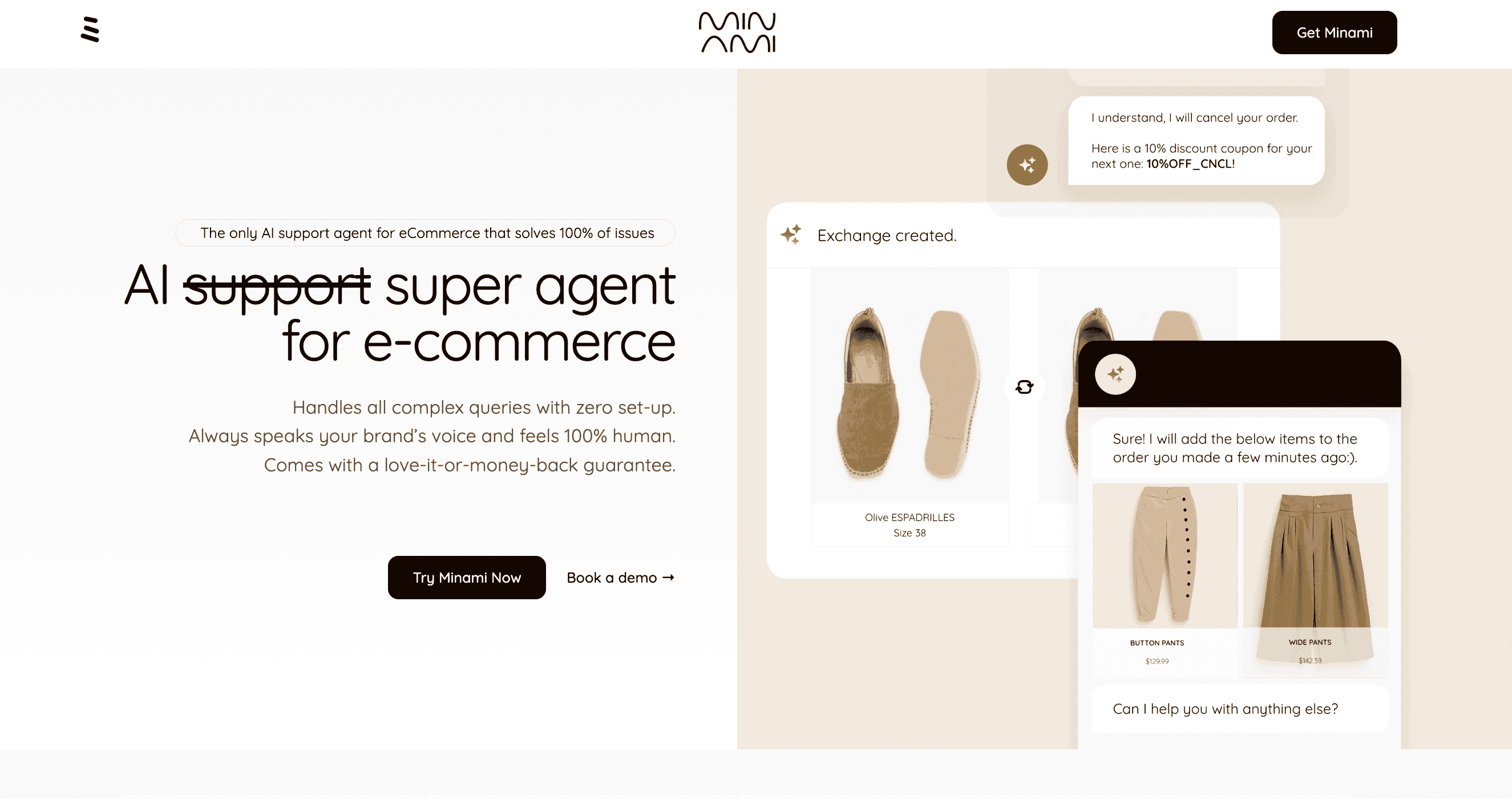
Minami AI is an autonomous agent that helps ecommerce businesses automate their most critical growth operations. What makes it stand out is that Minami doesn’t just provide answers — it takes real action, removing the human step from post-purchase operations entirely.
You can use Minami to automate your entire product and returns exchange management, deliver real-time product recommendations, resolve carrier issues during delivery, and automate your whole customer support channels — all without the human costs.
Features and benefits
-
Automate customer support and returns management
-
Provide tracking and communicate with carriers
-
Provide product recommendations during the shopping experience
-
Analyze customer behavior to provide natural answers
-
Full order management through AI technology
-
Massive cost reduction for enterprise businesses
Pricing
2. Klaviyo
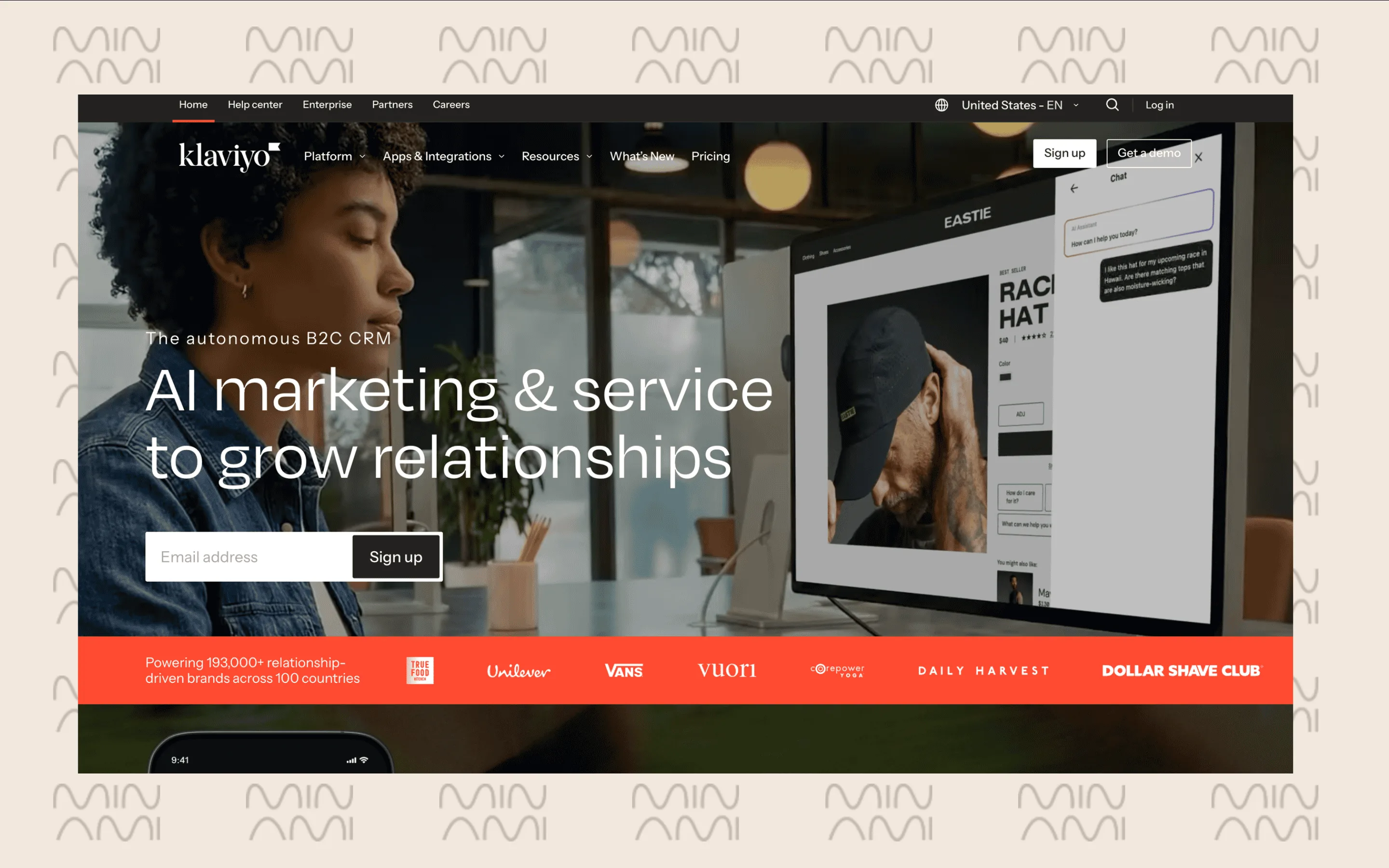
Klaviyo is a marketing automation platform built specifically for ecommerce. It connects to your store and uses purchase and browsing behavior to trigger email and SMS campaigns.
The platform is built around flows — automated sequences that activate based on events like abandoned carts, post-purchase timing, or lapsed customers. You can also use its AI to create better designs and more engaging newsletters.
Features
-
Email and SMS flows
-
Behavioral segmentation
-
A/B testing
-
Ecommerce platform sync
-
Revenue attribution reporting
Pricing
-
From $20/month up to 1,500 contacts
-
Scales to $1,700+/month for large lists
-
Email + SMS bundles priced separately
3. Yotpo
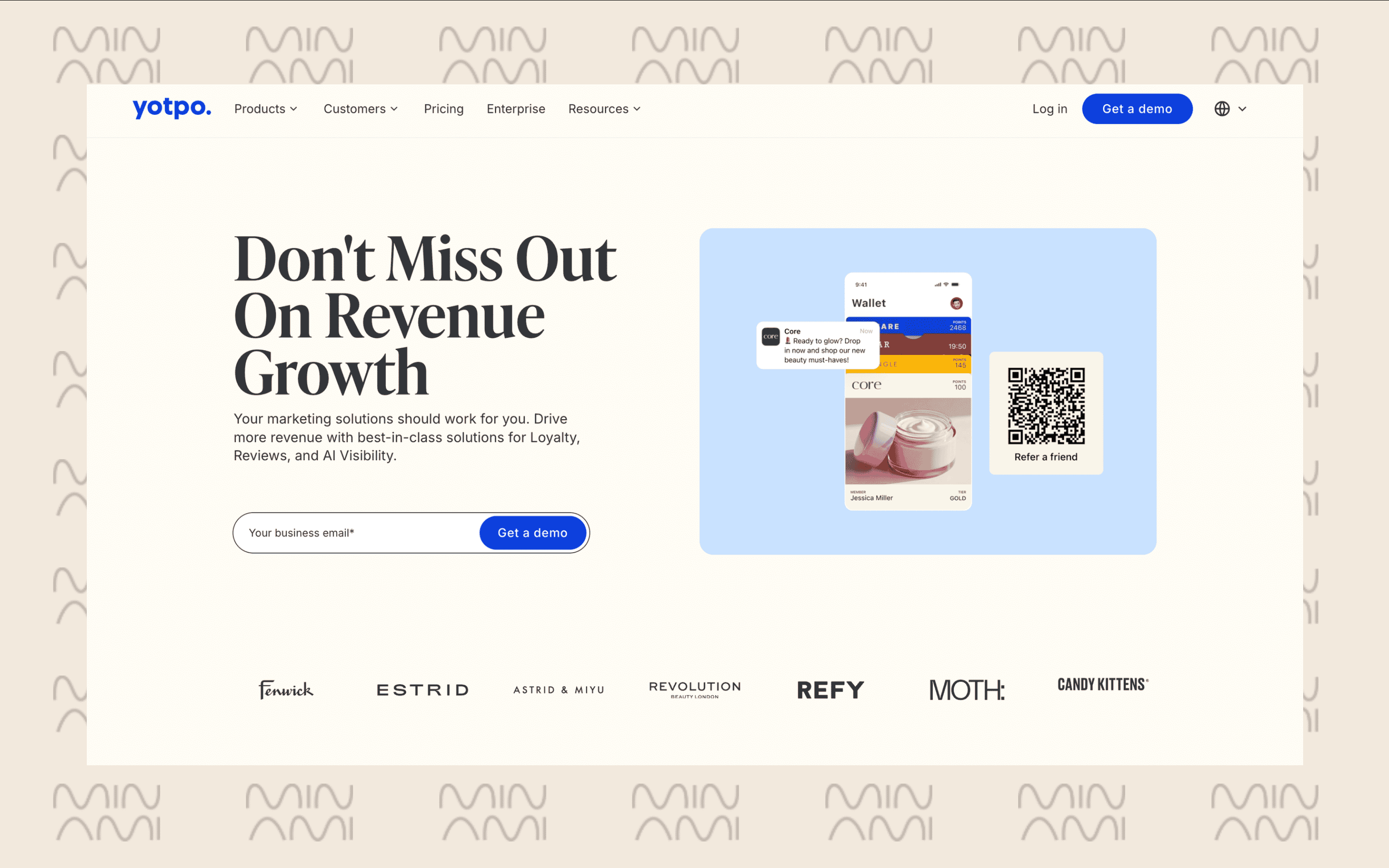
Yotpo is a retention-focused platform that centralizes loyalty programs, product reviews, and referral campaigns. It connects these three functions so that review requests can trigger loyalty points and loyalty tiers can unlock referral incentives.
The platform leverages AI to analyze customer behavior and automatically determine the best moments to request reviews, assign loyalty rewards, or trigger referral offers — maximizing engagement without manual intervention.
Features
-
Loyalty program management
-
Review collection and display
-
Referral campaign tools
-
SMS marketing integration
-
Ecommerce platform connectors
Pricing
-
Reviews module from $15/month
-
Loyalty module from $199/month
-
SMS from $16/month
-
Full platform requires custom quote
4. Octane AI
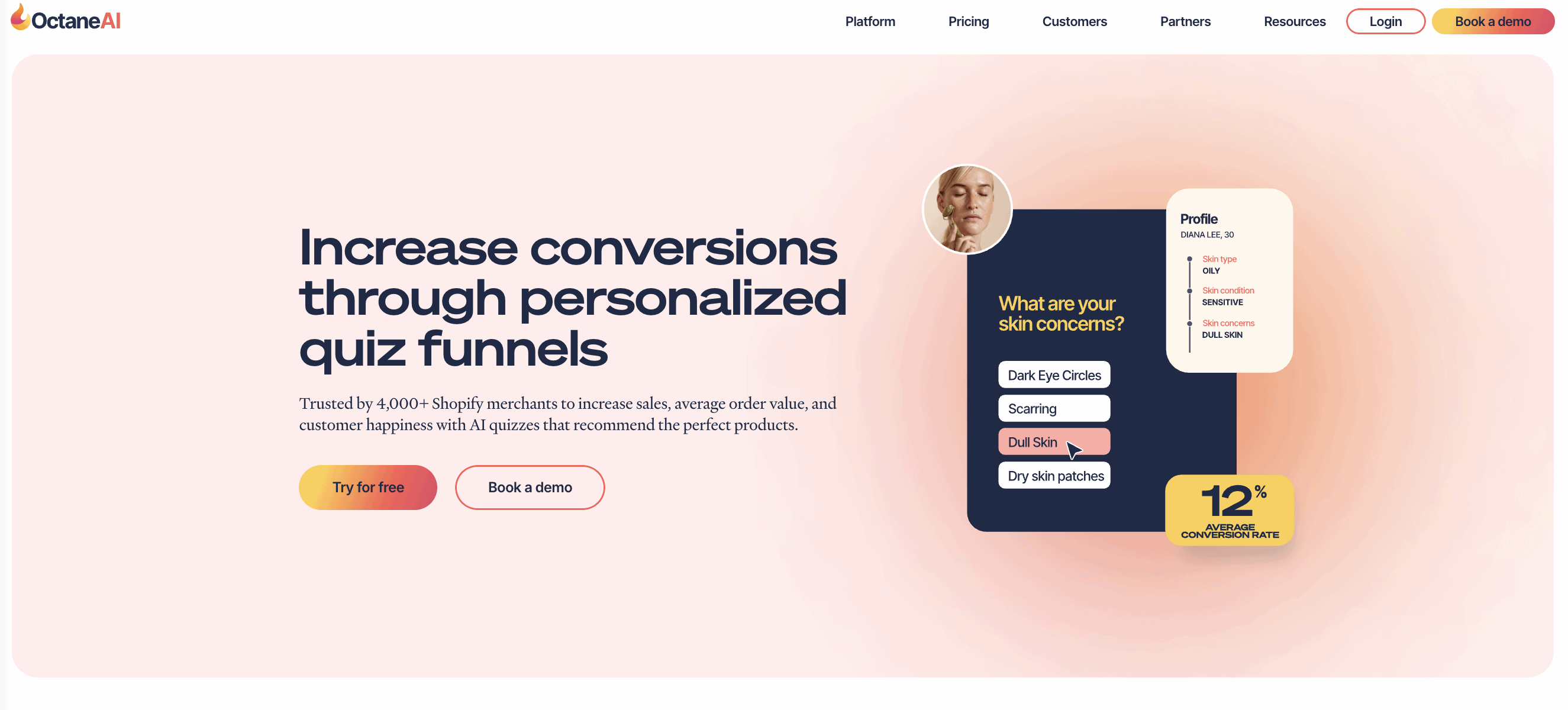
Octane AI focuses on a specific part of the pre-purchase experience: helping customers find the right product through guided quizzes. Brands use it to replace generic browsing with a structured recommendation flow.
The platform uses AI to analyze quiz responses in real time and match shoppers with the most relevant products based on their answers, purchase intent, and browsing patterns.
Features
-
Product recommendation quizzes
-
Zero-party data collection
-
Email and SMS integration
-
Shopify-native setup
-
Conditional quiz logic
Pricing
-
From $50/month up to 200 quiz responses
-
Scale plan from $200/month
-
Enterprise pricing on request
5. Tidio
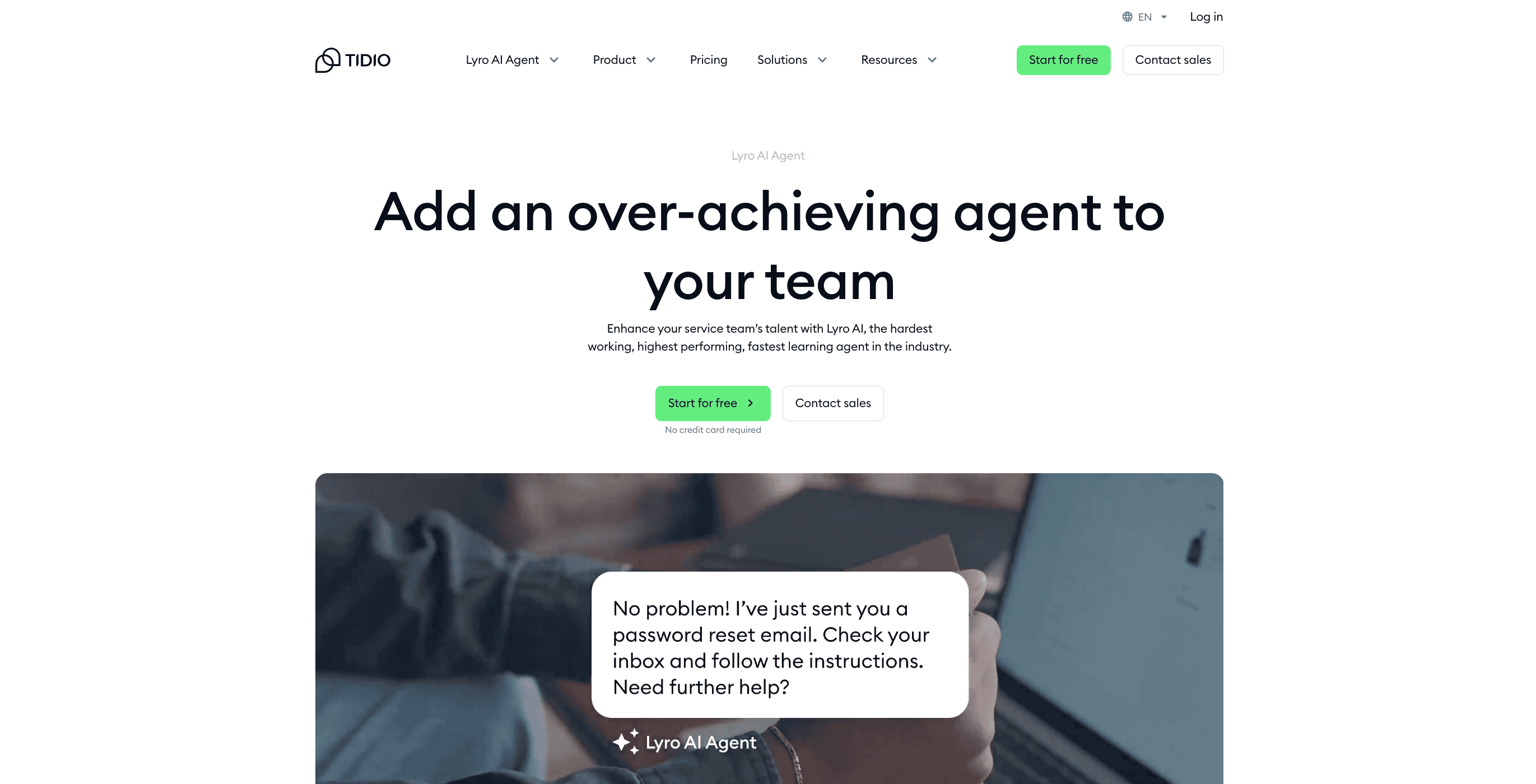
Tidio provides AI-assisted chat for ecommerce customer support. It handles incoming queries through a chatbot layer that can answer common questions, surface order status information, and escalate to a human agent when needed. The tool is positioned for small to mid-size brands that want to reduce the volume of support queries reaching their team.
🔍 Discover the best alternatives to Lyro, the Tidio AI agent
Features
-
AI chatbot for support
-
Order status display
-
Helpdesk integration
-
Email response automation
Pricing
-
Starter from $29/month
-
Growth from $59/month
-
Tidio+ from $749/month
How to choose AI platforms for ecommerce growth
Most of these tools work at the surface level — they send messages, display data, answer questions. That covers a lot of ground, and for marketing or support automation, they do the job well.
The gap they leave is operational. When a delivery fails, a return comes in, or an order needs updating, someone still has to go in and fix it. That manual layer is where post-purchase execution tools come in — they close the loop without waiting for a human to act.
If that’s the bottleneck in your operation, Minami is built specifically for that.
Savings calculator
EstimateWhat could Minami save your support team?
Saved per month
$0
0 agent hours freed
0 tickets handled by AI
Estimate based on your inputs. Default automation rate reflects the "on average 90% less customer queries" figure on minami.ai; your results will vary. Excludes Minami subscription cost.