 Nobikage San
 Introducing
5 Best AI solutions for ecommerce delivery experience
Explore 5 AI tools designed to improve the delivery experience for every online store, from tracking updates to automated customer support
Delivery has stopped being a back-office logistics problem and turned into core revenue infrastructure.
The global AI in logistics market is valued at roughly $12.2 billion in 2026, projected to hit $196.6 billion by 2034, according to Fortune Business Insights. And it shows in retention: 70% of consumers say they’ll choose the same retailer again after a satisfying delivery experience.
This guide covers the strongest AI agents for delivery experience in 2026, organized by the job they do: resolving problems after checkout, optimizing the route to the customer’s door, and preventing failed or fraudulent deliveries before a package ever ships.
Top AI software platforms for delivery experience
| Tool | Best for | Main capabilities | Key difference |
|---|---|---|---|
| Minami AI | High-volume ecommerce | Full support and return management | Resolves the full post-purchase process |
| Yuma AI | Support teams | Ticket automation | Works inside existing helpdesks |
| Onfleet | Own delivery fleets | Routing and dispatch | Optimizes last-mile operations |
| Wise Systems | Large fleet networks | Route and capacity planning | Supports long-term fleet optimization |
| Parcel Perform | Multi-carrier ecommerce | Tracking and delay prediction | Focuses on visibility and alerts |
What makes a tool an “AI Agent” for delivery
A real AI agent for delivery experience does more than display a tracking number.
It understands a situation, connects to live order, carrier, or fleet data, and executes a next step on its own, filing a courier claim, rerouting a driver, or calling a customer to confirm an address, without a human manually approving every move.
Best AI tools for post-purchase tracking
Best AI solutions for improving the delivery experience in online stores
1. Minami AI
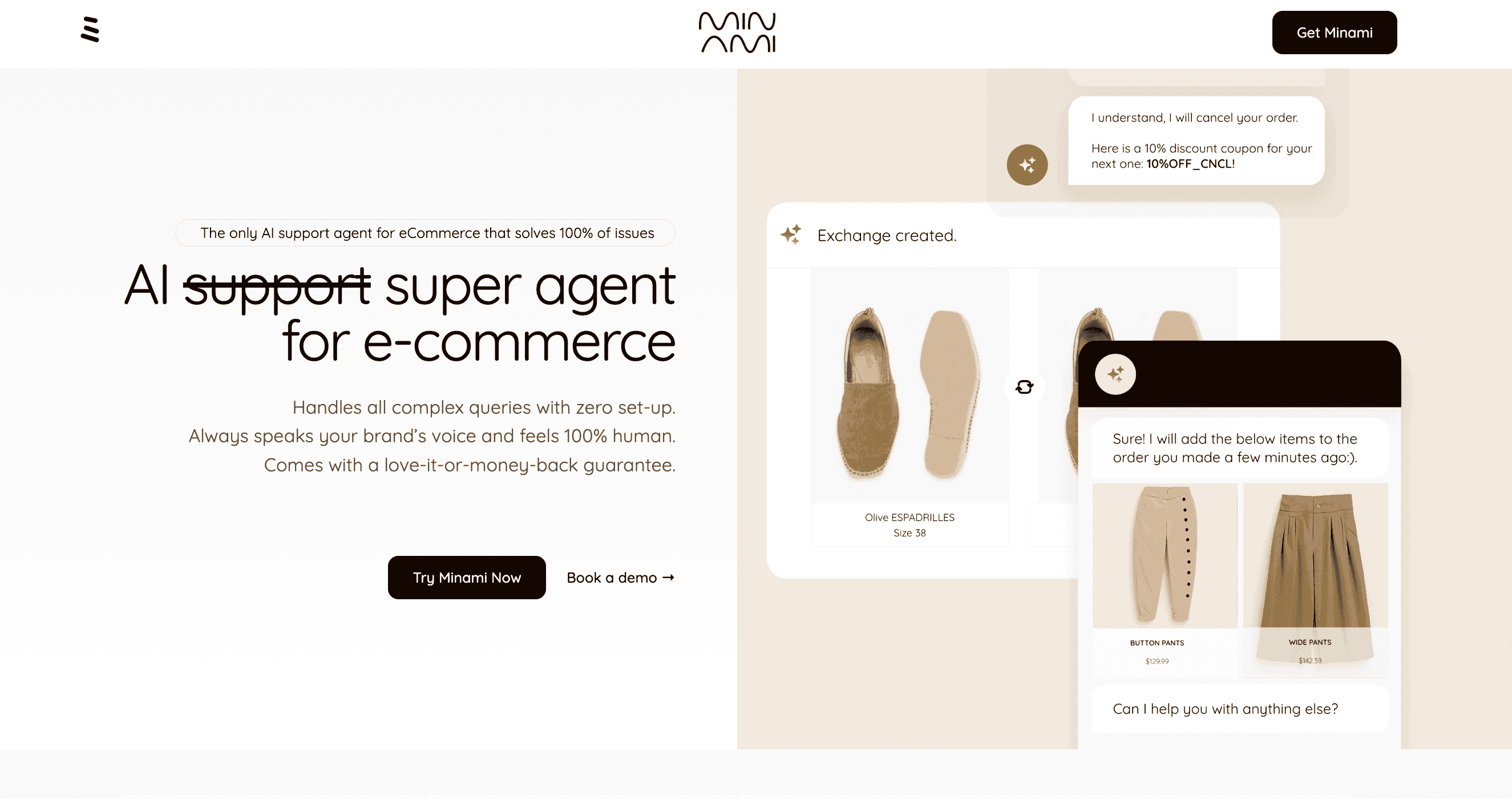
Minami AI is an autonomous AI agent designed to manage the entire ecommerce post-purchase journey. It handles customer conversations and completes the operational work behind them, including delivery incidents, order changes, carrier claims, returns, and exchanges.
Unlike tracking platforms that only detect problems, or support agents that respond to tickets, Minami resolves each issue end to end.
Best for: Ecommerce teams that want to automate complex post-purchase operations, particularly high-volume brands working with multiple carriers and support channels
Key strengths
- Resolves delivery incidents, order changes, returns, and carrier claims end to end
- Connects customer conversations with live order, shipping, and carrier data
- Executes multi-step workflows rather than simply suggesting the next action
- Communicates across chat, email, and post-purchase touchpoints
- Uses the brand’s policies and tone when making decisions
- Covers the entire post-purchase journey through one AI agent
Considerations
- Delivers the greatest impact when order and support volumes are high
- Helps teams scale without adding more support or operations staff
- Centralizes workflows across multiple stores, markets, and carriers
2. Onfleet
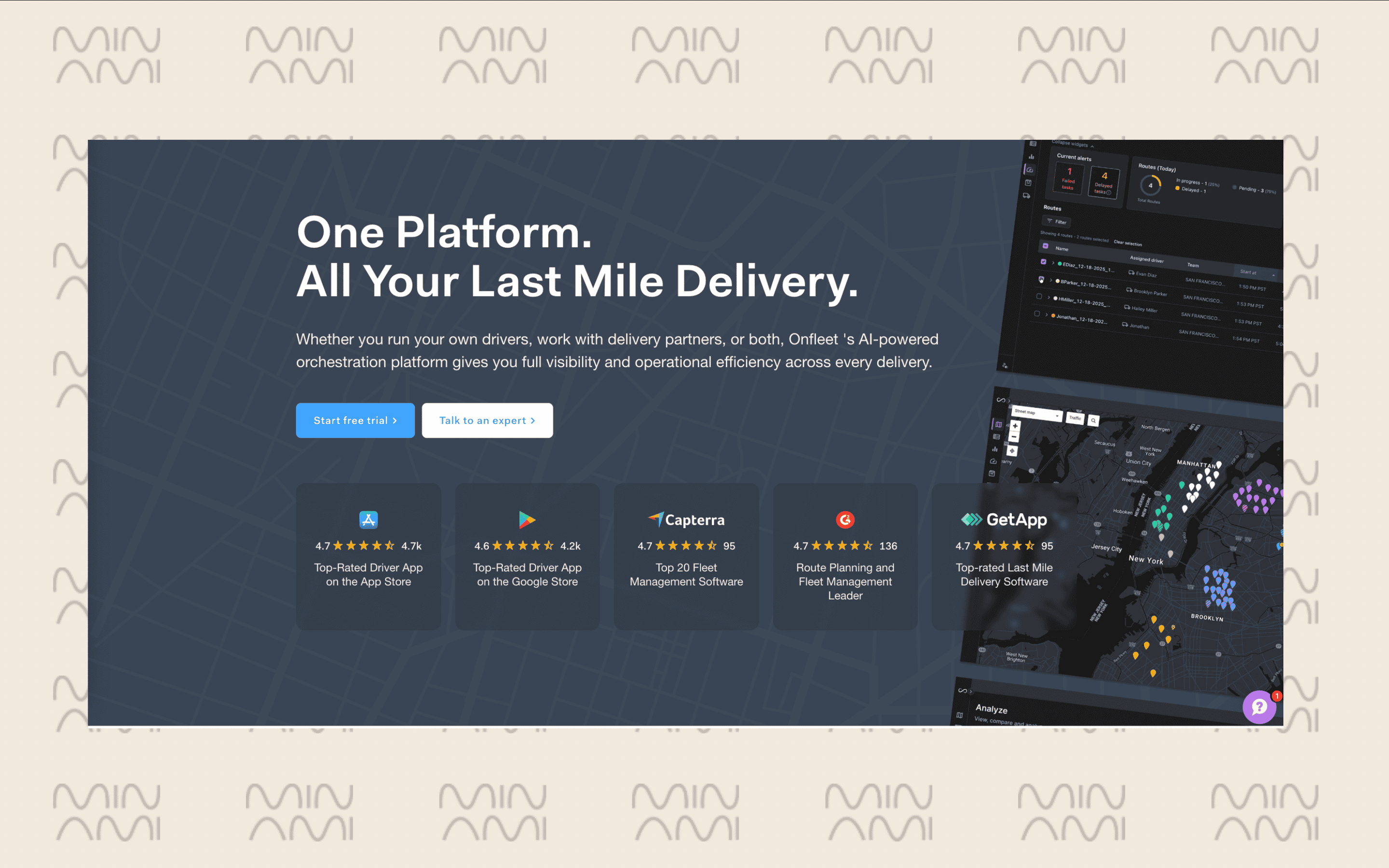
Onfleet helps businesses plan and manage their own last-mile deliveries. It assigns orders to drivers, optimizes routes, and adjusts them when traffic, capacity, or delivery priorities change.
It also gives customers live tracking, arrival estimates, driver communication, and proof of delivery.
Best for: Retailers and delivery companies that operate their own fleet
Key strengths
- Optimizes routes in real time
- Assigns deliveries automatically
- Adds new orders to active routes
- Detects deliveries at risk of delay
- Provides branded live tracking
- Captures signatures, photos, and proof of delivery
Considerations
- Designed for owned or managed fleets
- Does not handle returns, refunds, or carrier claims
3. Wise Systems

Wise Systems helps large delivery operations improve routes, fleet capacity, and depot planning. It studies historical performance and dispatcher decisions to recommend more efficient delivery plans.
Teams can use it to reorganize territories, balance workloads between depots, and compare planned routes with actual results.
Best for: Large fleets and multi-depot delivery networks
Key strengths
- Learns from dispatcher decisions
- Optimizes routes and vehicle capacity
- Models future fleet requirements
- Redistributes customers between depots
- Identifies inefficient routes and territories
- Compares planned and actual performance
Considerations
- Focuses on delivery operations rather than customer support
- Requires enough historical data to produce useful recommendations
- May be too complex for smaller fleets
The benefits of using AI tools in ecommerce
4. Parcel Perform
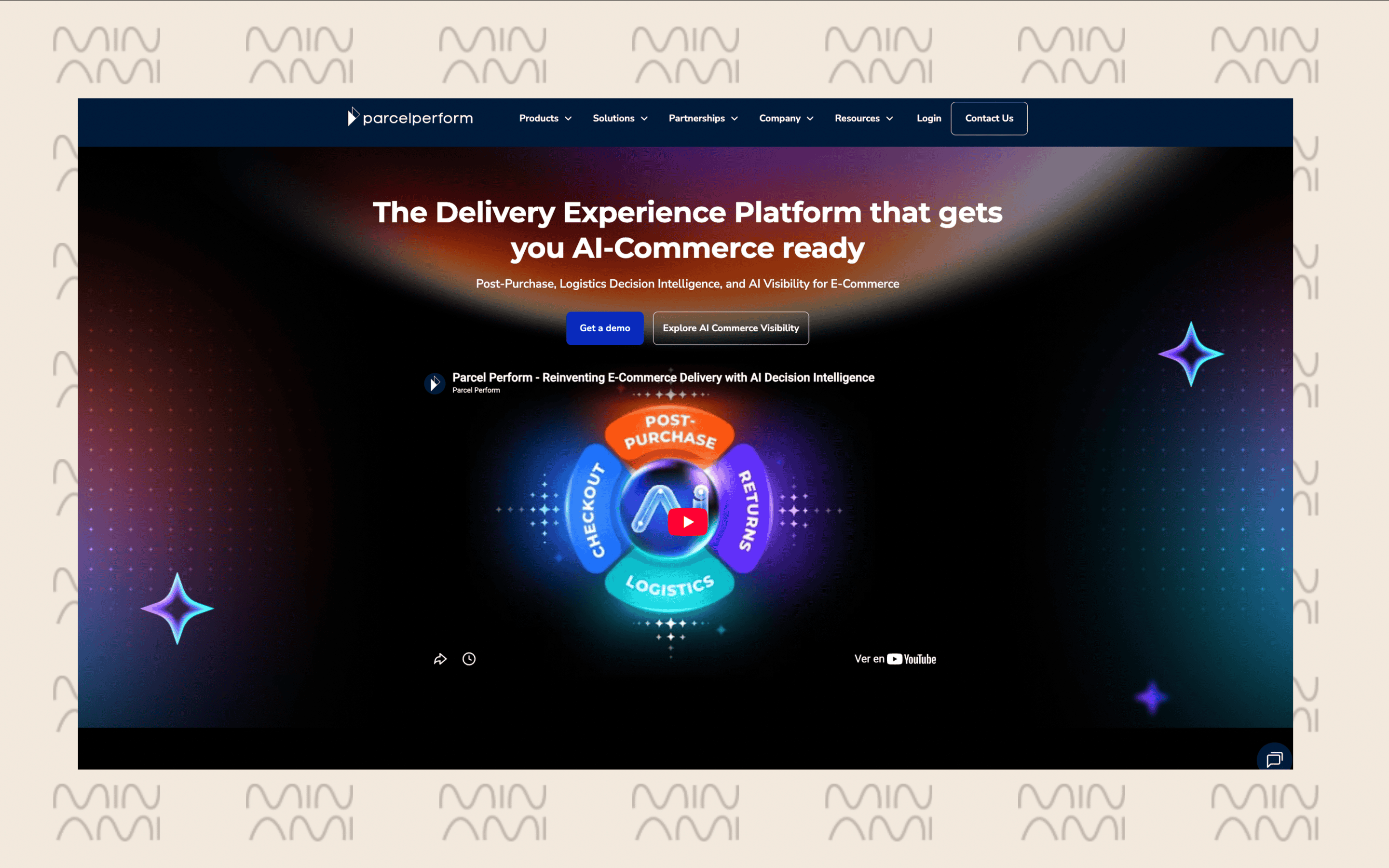
Parcel Perform brings tracking data from more than 1,100 carriers into one platform. It predicts delivery dates, identifies shipments at risk, and notifies customers when delays or customs problems appear.
Teams can also use its analytics to compare carriers and investigate delivery performance without manually reviewing spreadsheets.
Best for: Ecommerce brands that need consistent visibility across multiple carriers
Key strengths
- Connects with more than 1,100 carriers
- Predicts delivery dates
- Detects stuck or delayed parcels
- Sends proactive customer notifications
- Compares carrier performance
- Lets teams explore shipment data using natural language
Considerations
- Detects and communicates problems rather than resolving them
- Claims, replacements, and order changes may still require manual work
Explore the best AI tools for reverse logistics management
5. Yuma AI
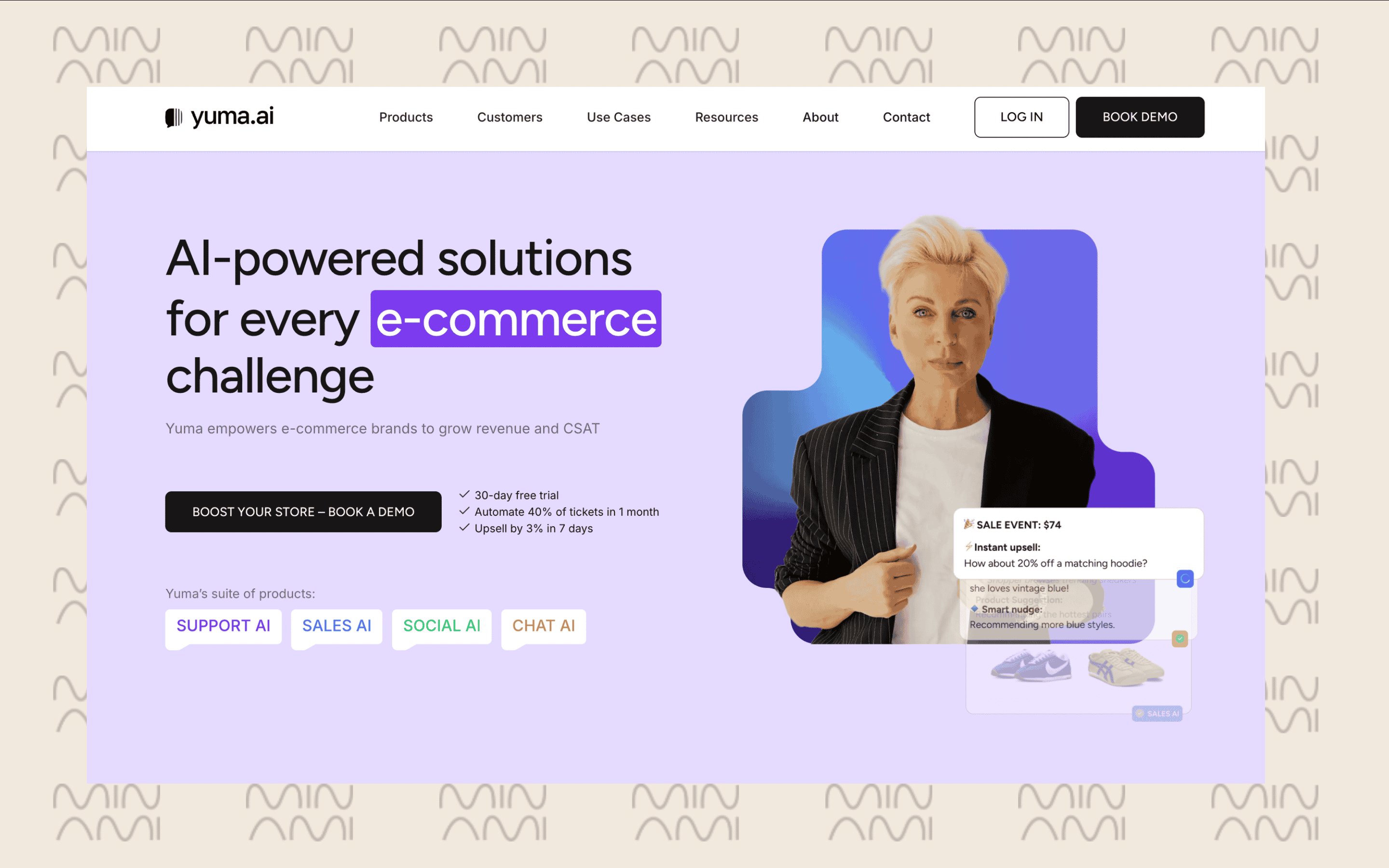
Yuma AI automates ecommerce support requests inside your existing helpdesk. It reads each ticket, checks live order data, and performs actions such as issuing refunds, creating replacements, or filing carrier claims.
Its library of more than 75 predefined actions helps teams automate common workflows without building them from scratch.
Best for: Ecommerce support teams that want to automate repetitive shipping and order requests
Key strengths
- Includes more than 75 ecommerce actions
- Checks live customer and order data
- Creates refunds, replacements, and shipping labels
- Connects with existing helpdesks and ecommerce platforms
- Reviews responses before sending them
- Works without replacing the current support stack
Considerations
-
Most workflows start after the customer opens a ticket
-
Unusual cases may require custom actions or human intervention
How to choose an AI tool for delivery experience management
Start by thinking about the part of the delivery process you actually want to improve. If you manage your own fleet, route optimization software will probably be the best fit. If your main challenge is tracking shipments across different carriers and spotting delays earlier, a delivery visibility platform makes more sense.
For high-volume ecommerce, basic alerts and automated replies are usually not enough. Look for an AI agent that can access live order data, contact carriers, keep customers updated, and resolve delivery issues from start to finish.
In the end, the best tool is the one that removes the most manual work while helping you deliver a faster and more consistent customer experience.
Frequently Asked Questions
Have more questions? Fill this form and our team will be in touch to answer them!
-
What data does an AI delivery tool need?
- It normally needs access to order details, tracking events, customer information, carrier data, and store policies. The quality of its decisions depends on how complete and accurate this information is.
-
Can AI work with several carriers at the same time?
- Yes. Multi-carrier tools can standardize tracking data and apply consistent workflows across different couriers. However, the actions available depend on each carrier’s integrations and APIs.
-
Is delivery AI only useful for large ecommerce brands?
- Smaller stores can benefit from automated tracking and notifications. Autonomous resolution provides the greatest value for high-volume ecommerce, where reducing even a small percentage of manual incidents can save hundreds of operational hours.
-
Can an AI delivery agent replace a customer support team?
- Yes. Minami AI can replace most of the manual work traditionally handled by post-purchase support teams. It answers customers, investigates delivery incidents, contacts carriers, processes order changes, and manages returns or claims without human intervention.
Get Started
Minami is available with zero setup
No integrations. No workflows. No dev time. Just power up Minami and let your AI agent cut refunds, manual labor, and losses