On this page (5)
Every day, more AI tools show up in the ecommerce industry.
And yet, all those tools haven’t made the pile any smaller. Most teams are still overwhelmed, buried in the same work, trying to figure out how to actually get value out of the AI they’ve adopted.
This guide breaks down where AI genuinely helps, which tasks are worth handing off, and how to tell the difference.
What “AI for ecommerce teams” actually means
Ecommerce teams work across a wide environment: logistics, returns, fulfillment, delivery communication, the shopping experience, and sometimes customer support. “AI for ecommerce teams” means any application of AI across that operational stack, from the simplest tool that answers a question to a system that carries out a full task on its own.
That range is wider than it sounds, and the difference between its two ends is what the rest of this guide is about.
Why most ecommerce AI stops at talking
Almost all of these tools are built to answer. Ask a question, get a reply.
The reason is historical: most ecommerce AI was built on top of customer-support software, so it inherited support’s job, handling the conversation. That’s genuinely useful, but it’s only half of what an ecommerce team does.
The other half is the work underneath the conversation. A tool that answers can tell a customer their delivery is late. It can’t call the carrier, reroute the parcel, or close the loop.
That part still lands on a person. Whenever AI can only talk about a problem rather than act on it, the hours stay exactly where they were.
This is exactly why autonomous AI agents for ecommerce are becoming a different category entirely: they don’t just answer customers, they execute operational work across returns, delivery incidents, order management, and post-purchase workflows.
AI tools and systems for ecommerce teams
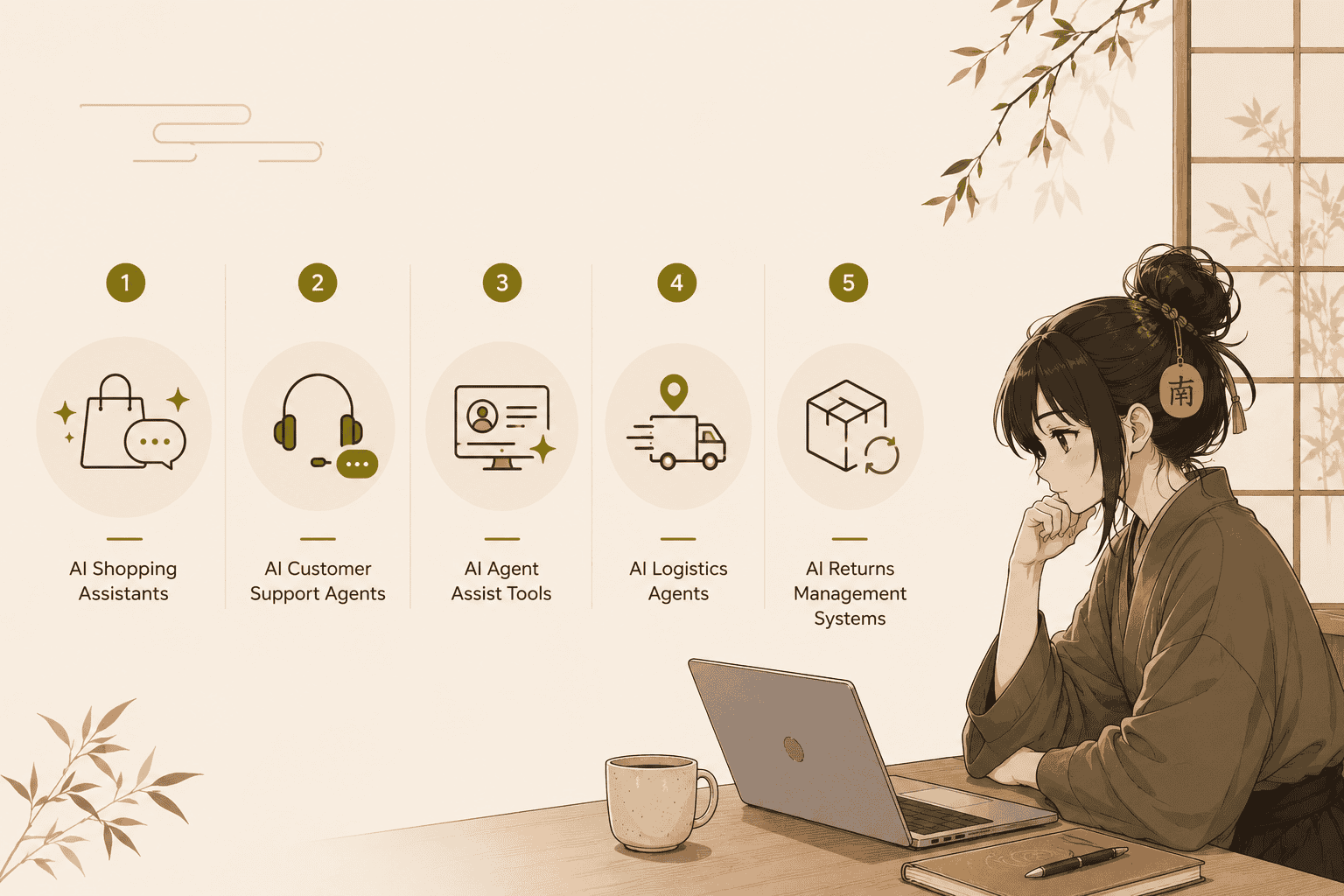
AI shows up in a few distinct places across an ecommerce team, and each one is built for a different part of the job.
Some work before the sale, some handle the questions that come after it, and some take on the operational work behind the scenes. Here’s what each does, and where it earns its place.
1. Shopping assistants
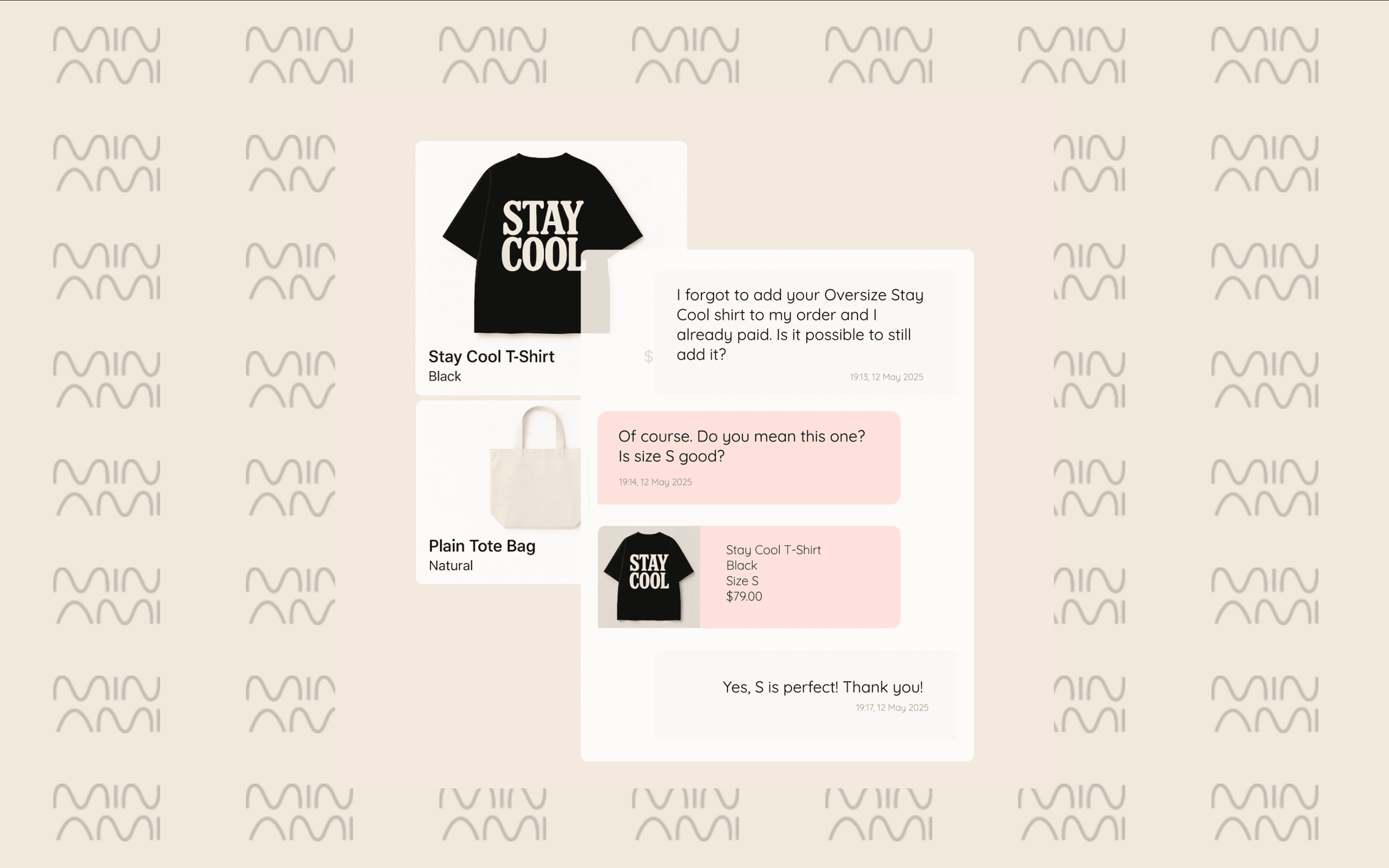
Some AI works the moment before someone buys. Shopping assistants step in when a shopper hesitates, answering the question that’s holding them back. Does this run small, will it arrive before the weekend, what’s the difference between these two. They keep people moving toward checkout so they don’t drift off to a competitor.
Where they help most:
- Answering product and sizing questions in real time, before a little doubt turns into an abandoned cart
- Recommending and cross-selling based on what someone’s already looking at
- Helping people find what they want when they’re not quite sure themselves
👉 How to boost sales using generative AI in the retail industry
2. Customer support agents
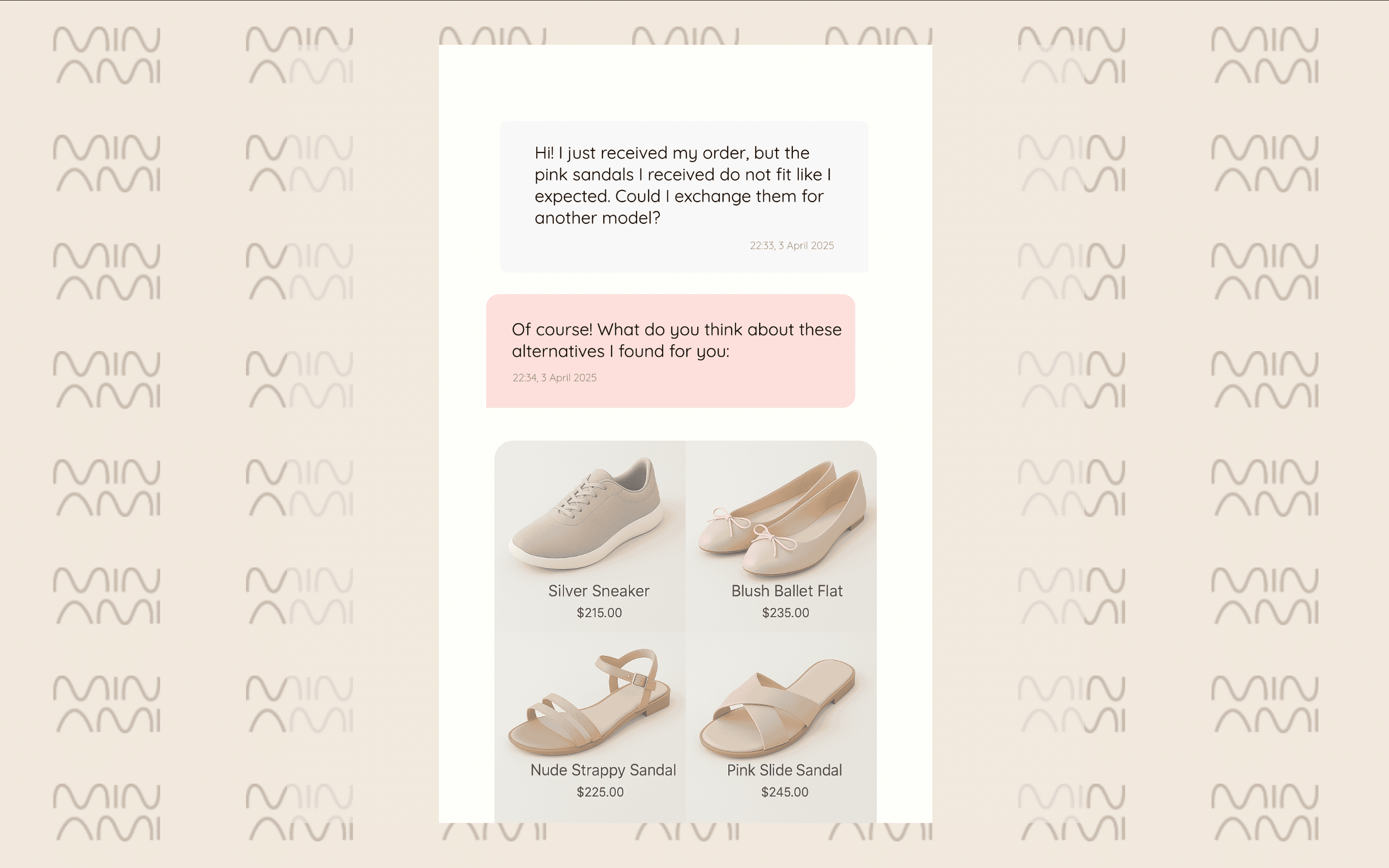
Then there’s the AI that handles the questions you’ve answered a thousand times. Support agents take on the repetitive, high-volume tickets, which is exactly why they’re the easiest thing to hand off and free your team for the cases that genuinely need a person.
The ones they take off your plate most:
- Order tracking and “where’s my package,” easily the most common thing people ask
- Questions about returns and refund status
- Small account changes, like fixing an address or tweaking an order
3. Agent assist
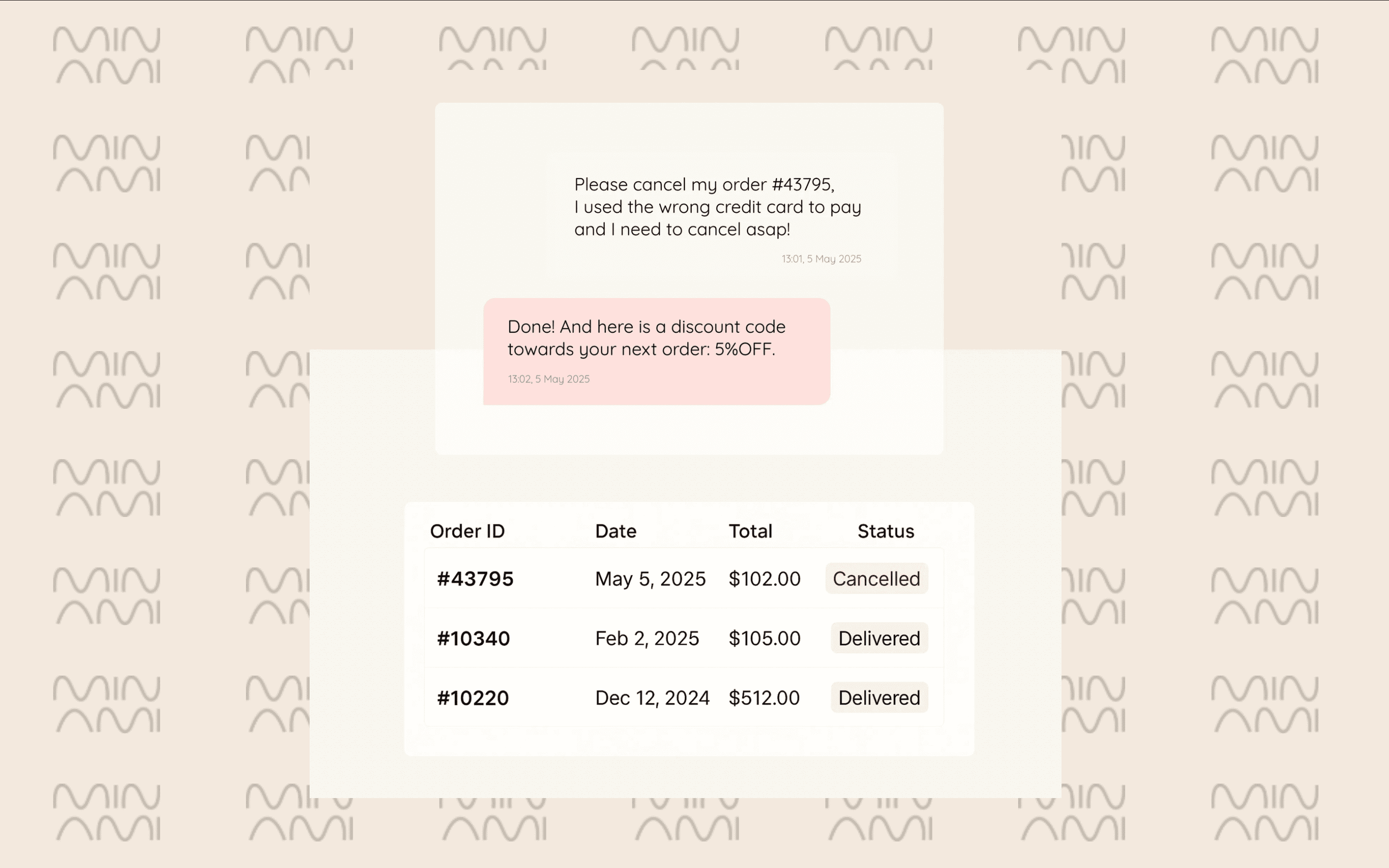
Some issues aren’t routine, and when one lands, a rep has to jump in. That’s where agent assist comes in. It sits beside your reps and pulls up everything they need, so they’re not digging through order systems, carrier portals, and old tickets just to figure out what’s going on.
What it typically does:
- Brings order history, customer details, and shipment status into one place
- Suggests replies and next steps while the conversation’s still happening
- Gets new agents up to speed faster by handing them the context instantly
👉 The best AI agents for order management in the fashion industry
4. Logistics agents
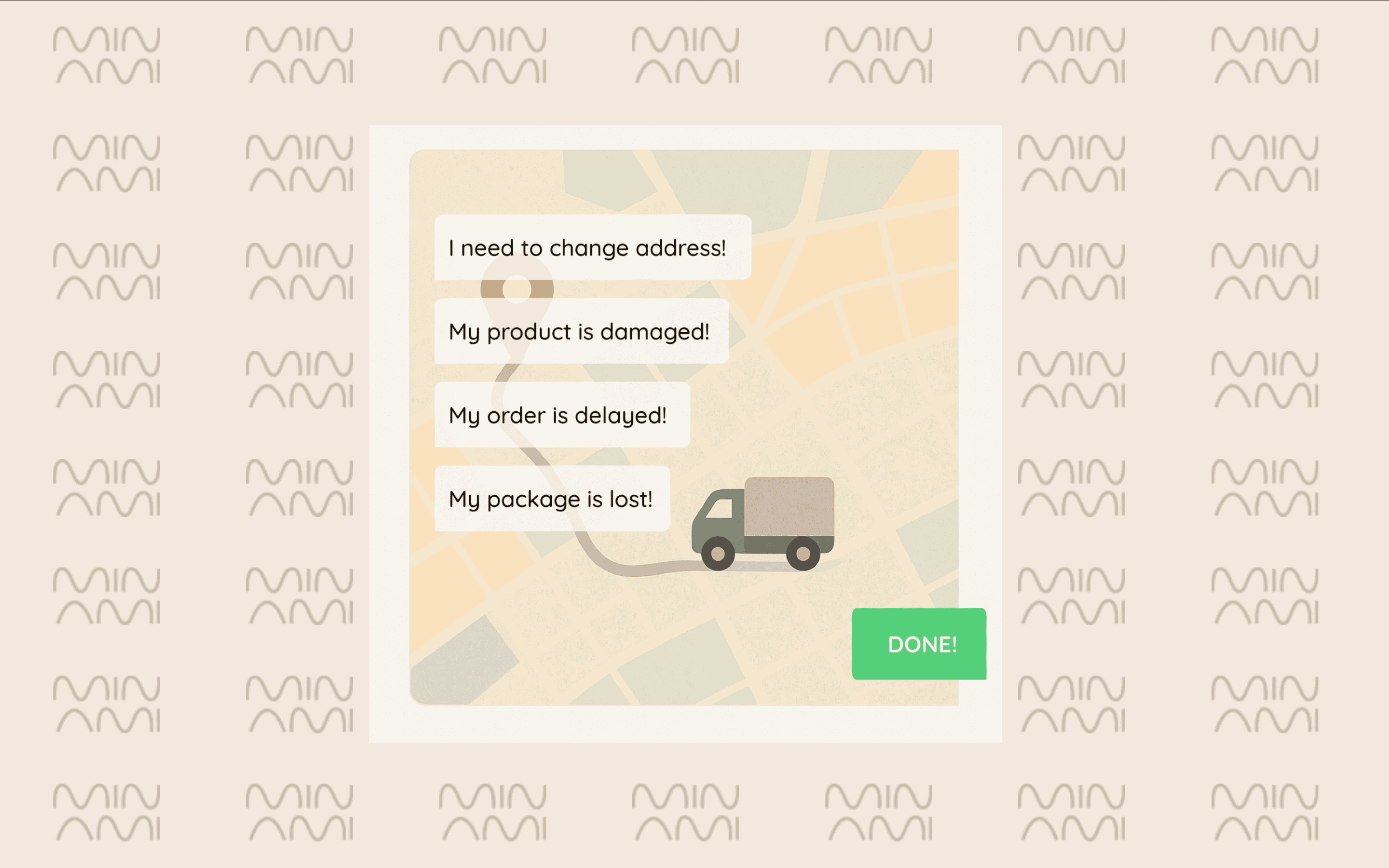
Past the support desk, AI starts doing the work rather than just talking about it. Logistics agents handle the messiest tickets your team deals with, the delivery problems that tend to surface only once the customer’s already annoyed. They get there first.
The highest-value use cases:
- Spotting a shipment that’s stopped moving and giving the customer a heads-up before they even reach out
- Going straight to the carrier to chase down stuck or failed deliveries
- Asking for a corrected address when a delivery fails, then getting it back on its way
👉 How to use AI agents to improve decision-making in ecommerce
5. Returns management systems
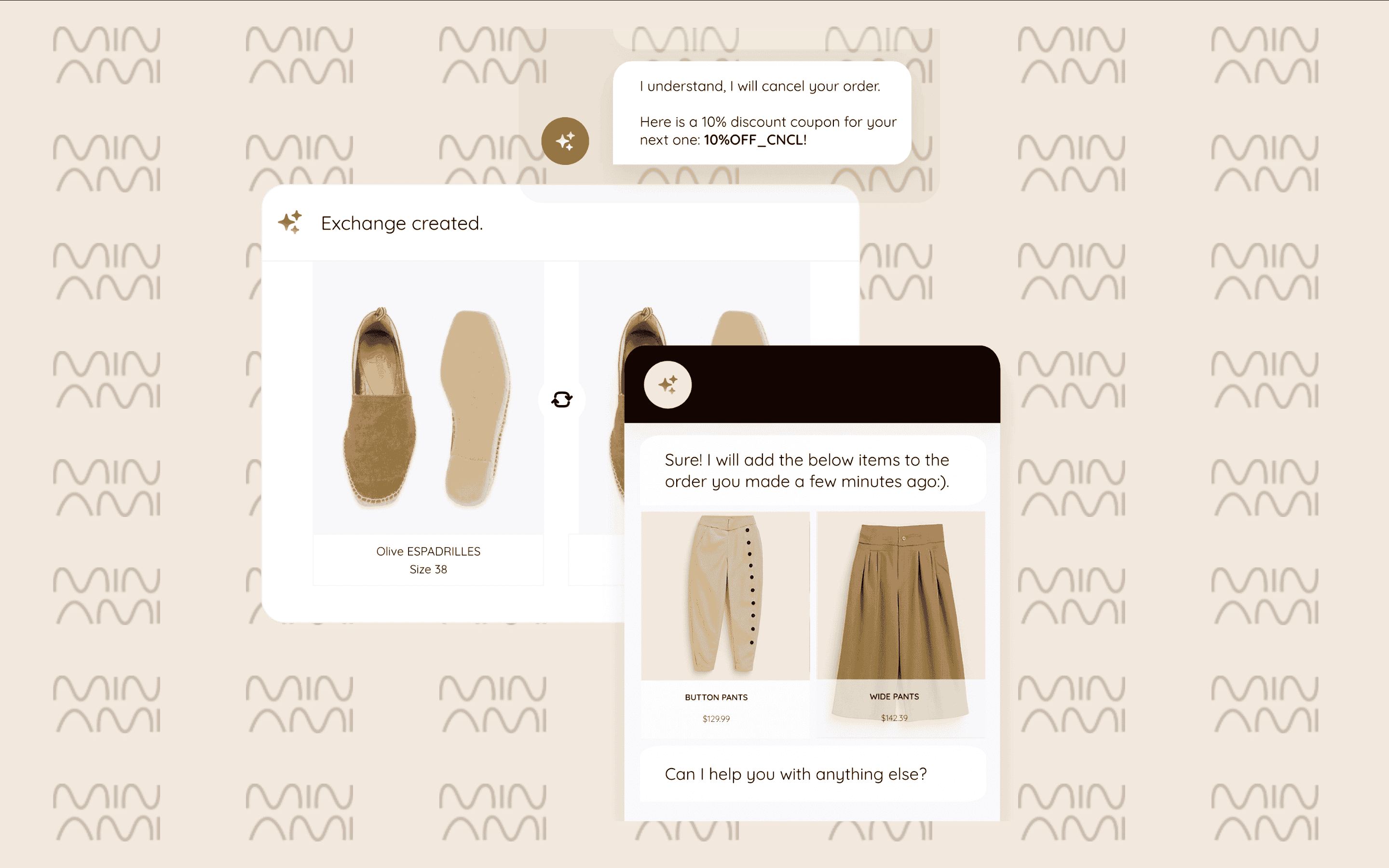
And then there’s the part nobody enjoys. Returns management systems take on reverse logistics start to finish, the same repetitive steps every single time, and look out for your revenue while they’re at it.
The ones that make the biggest difference:
- Approving returns and applying your policy automatically, without someone reviewing every single case
- Pointing customers toward an exchange rather than a refund when it makes sense, so you keep the sale
- Processing the refund and kicking off the return steps on its own
👉 AI in ecommerce returns: Key metrics, data, and statistics
How to decide what to automate first
You don’t need to automate everything at once, and you shouldn’t try. The teams that get value early start where the math is obvious. A few ways to find those tasks:
Start with volume. If the same request hits your queue hundreds of times a week and the steps barely change, that’s the clearest place to begin.
Then look for where time disappears without showing up anywhere.
Some work doesn’t feel like a system you can fix, it feels like a string of one-off fires, and that’s usually what quietly costs the most. It’s worth handing off even when the volume looks lower.
Finally, watch the signals that you’ve waited too long.
Response times creeping up, the same ticket filling your inbox, returns piling faster than anyone can process them, your team working late on tasks nobody would call strategic.
When that’s the daily reality, the only question left is which task to hand off first.
Minami AI helps ecommerce teams:
Minami AI is built for the resolving end of that line, not the talking end. It works directly inside your operations to take repetitive work across support, logistics, and returns off your team completely. Minami AI helps ecommerce teams:
- Resolve delivery incidents automatically before customers create tickets
- Manage returns and exchanges with AI-driven workflows
- Handle WISMO requests proactively across multiple channels
- Communicate with carriers automatically when shipment issues appear
- Assist customers during shopping journeys with conversational recommendations
- Automate repetitive support and operational tasks
- Reduce manual workload without increasing headcount
Because Minami AI connects directly to ecommerce systems, shipping operations, and customer workflows, it works more like an operational teammate than a support chatbot.
If you’d like to see it in action, book a demo with Minami.
Savings calculator
EstimateWhat could Minami save your support team?
Saved per month
$0
0 agent hours freed
0 tickets handled by AI
Estimate based on your inputs. Default automation rate reflects the "on average 90% less customer queries" figure on minami.ai; your results will vary. Excludes Minami subscription cost.