 Nobikage San
 Introducing
AI-driven reverse logistics: Top platforms and tools for reverse supply chain managementorms
Discover the top AI-driven reverse logistics platforms helping retailers automate returns, reduce costs, and optimize supply chain operations in 2026.
The best AI tools for reverse logistics in 2026
-
Minami AI - The only AI agent that automates reverse logistics and returns end to end
-
Loop Returns - Manages exchange-first return flows for Shopify brands
-
ReturnGO - Configures return logic and exchange rules for ecommerce stores
-
Optoro - Processes enterprise returns into resale and recovery channels
-
AfterShip - Aggregates carrier tracking data and powers return portals
What is an AI-powered tool for reverse logistics
An AI-powered reverse logistics tool is software that uses artificial intelligence to automate and optimize the operational flow of products moving from the customer back to the retailer or warehouse after a purchase.
👉Best AI-powered product returns management platforms
How AI helps in reverse logistics and supply chain
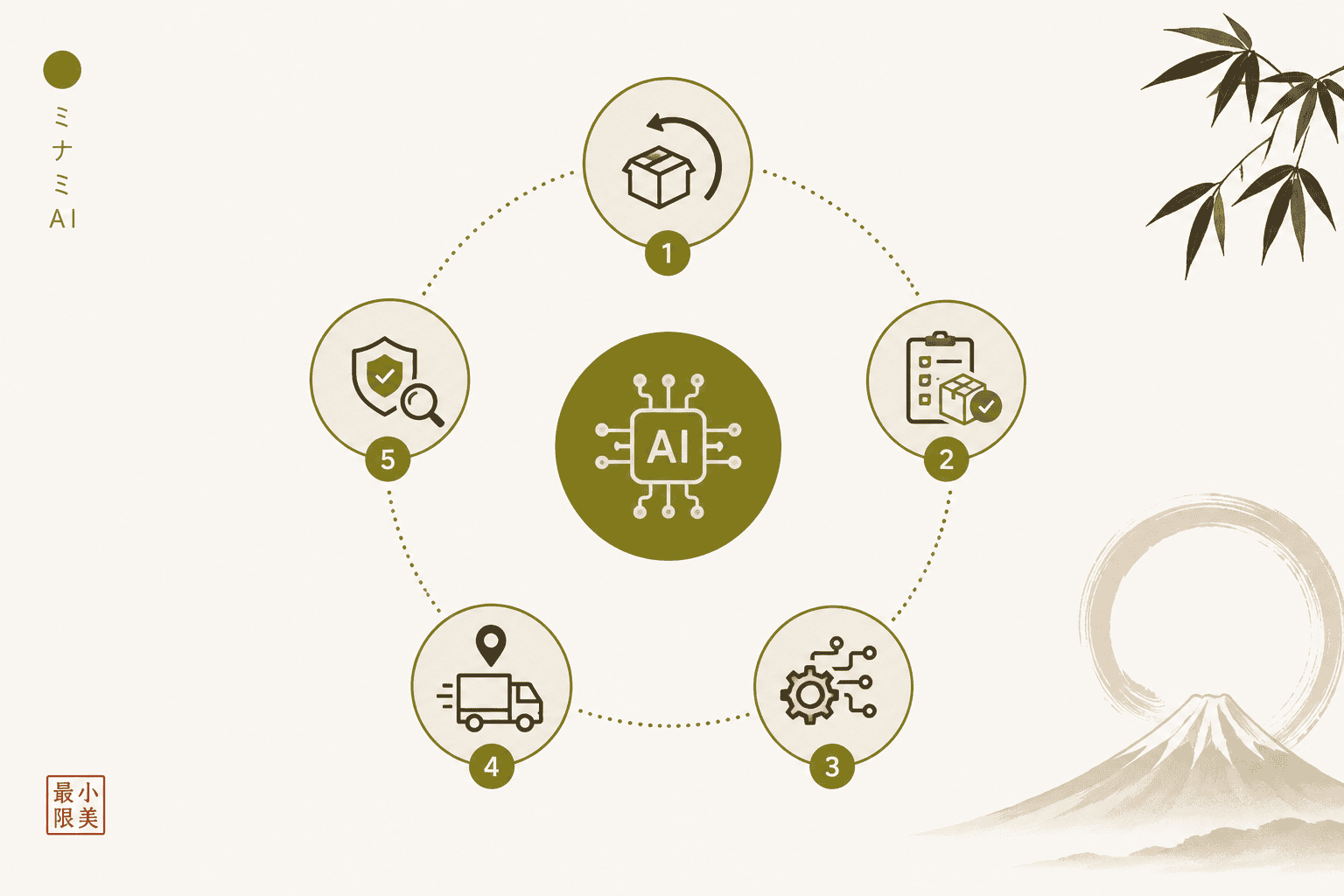
1. Automated return processing
AI can automatically handle return requests, apply return policies, approve exchanges or refunds, and reduce the manual workload normally handled by support teams.
2. Smarter inventory and disposition decisions
AI helps retailers decide whether a returned product should be restocked, refurbished, resold, recycled, or discarded based on operational rules and product data.
3. Backend operational execution
Some AI platforms go beyond customer communication and execute real operational actions directly inside ecommerce, logistics, and warehouse systems without human intervention.
4. Carrier and warehouse coordination
AI can synchronize carriers, warehouses, tracking systems, and ecommerce platforms to keep return operations updated across the entire supply chain.
5. Fraud detection and operational control
AI can identify suspicious return behavior, detect policy abuse, and apply operational rules automatically to reduce losses and manual reviews.
👉 AI for ecommerce teams: all you need to know
Top AI reverse logistics tools, reviewed
1. Minami AI
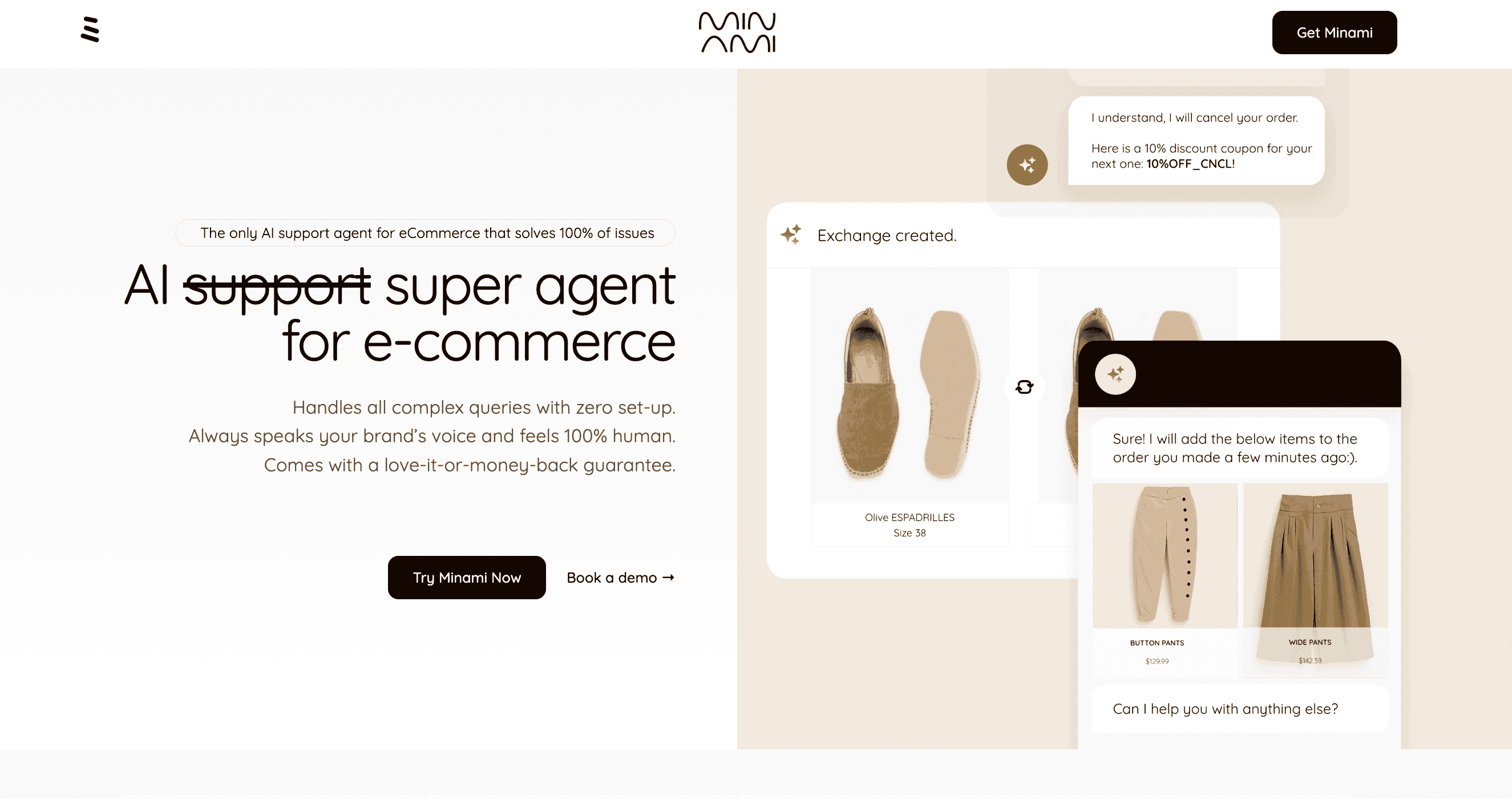
Minami AI is an autonomous AI operations platform built for ecommerce brands that want to remove large amounts of manual work from customer support, reverse logistics, and post-purchase operations.
Unlike traditional AI support tools that only answer customers or assist agents, Minami AI operates directly across orders, deliveries, returns, carriers, and backend workflows to resolve operational issues autonomously.
The platform is designed to replace large customer support and logistics operations teams by handling repetitive post-purchase and reverse logistics work at scale.
Key features
- AI agent for eCommerce customer service
- AI returns and exchanges management
- AI agent for eCommerce logistics
- Autonomous return approval and policy enforcement
- Reverse logistics workflow automation
- Autonomous delivery incident resolutionion
Pros
- Massive support and return cost reduction
- Executes real backend operational actions
- Handles support and logistics in one platform
Cons
- Focused mainly on ecommerce operations
- Better suited for mid-market and enterprise brands
Pricing
2. Loop Returns
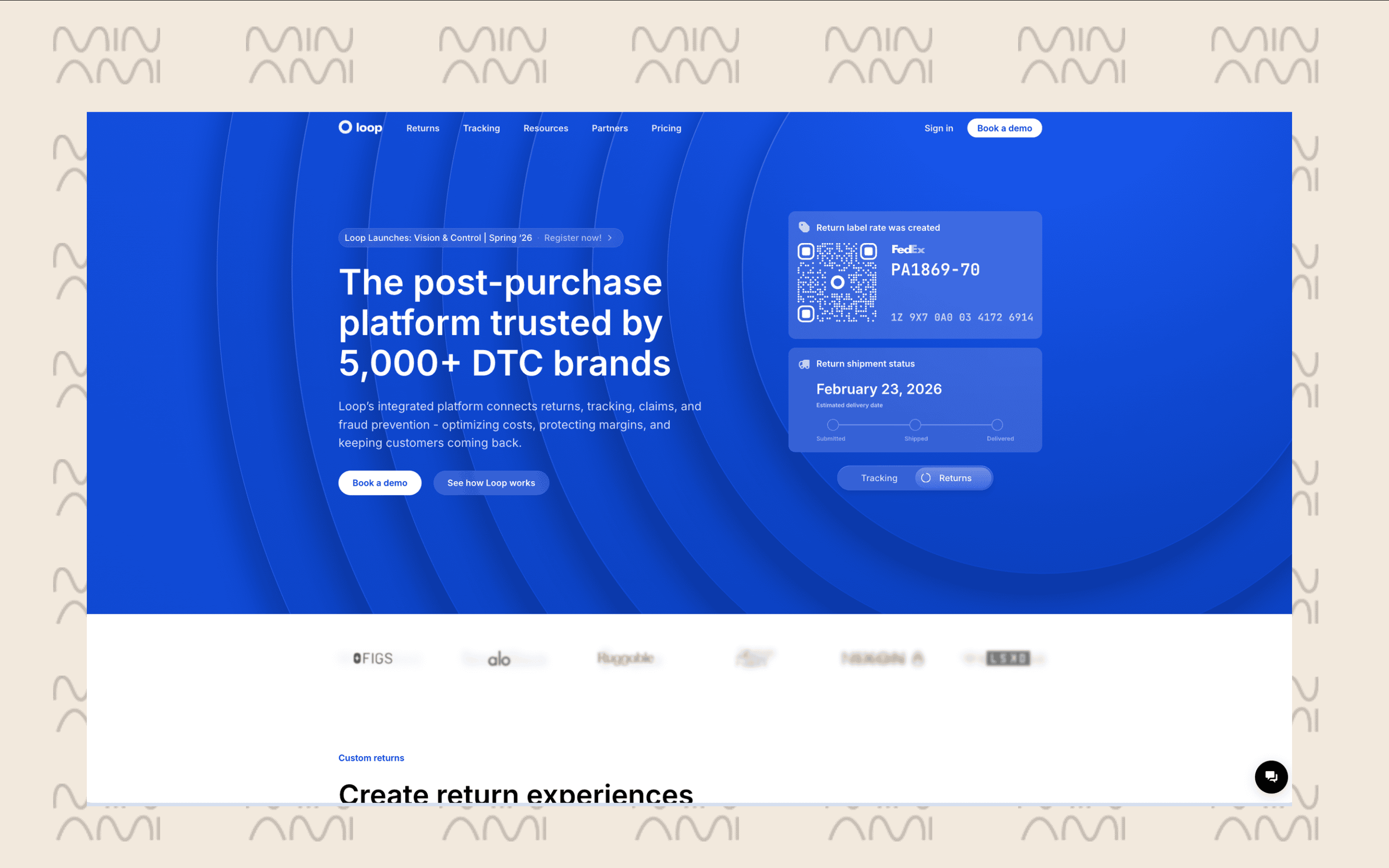
Loop Returns is a returns platform built for Shopify brands. Its approach centers on turning refund intent into an exchange or store credit before money leaves the business.
Shoppers move through a branded portal, select a return reason, and see exchange options presented in the flow.
Key features
- Branded return portal
- Exchange and store credit flows
- 3PL warehouse integrations
- Return label routing
- Checkout returns coverage
Pros
- Strong exchange-first revenue retention
- Deep Shopify integration
- Structured, low-maintenance automation
Cons
- Built primarily for Shopify
- Limited fit for complex enterprise routing
Pricing
- Essential plan starts at around $155/month
- Advanced plan starts at around $340/month
3. ReturnGO
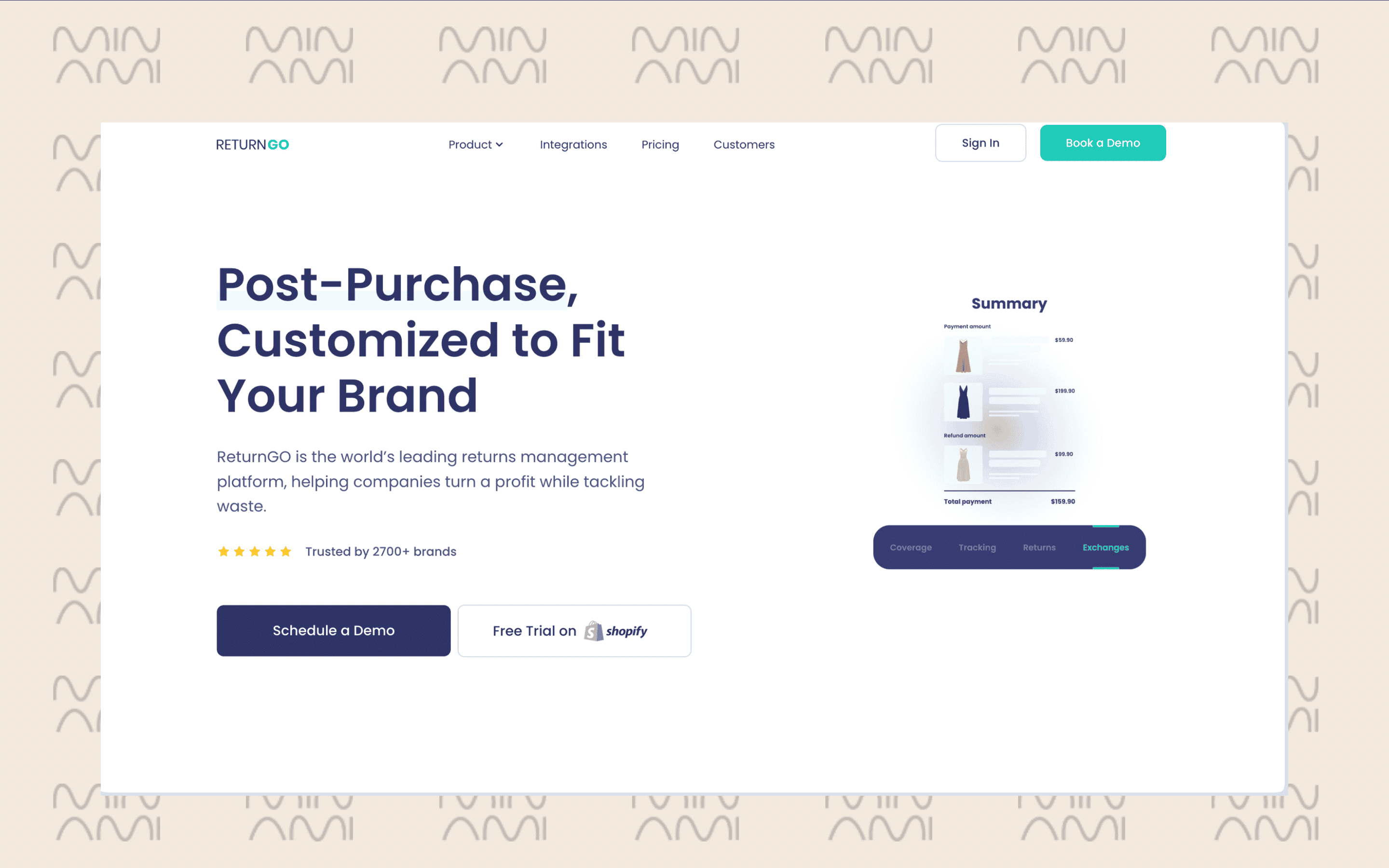
ReturnGO is a returns app focused on configurable return rules. Its defining angle is depth of customization: brands build their own eligibility logic, fees, and exchange flows rather than working within a fixed setup.
It connects to ecommerce platforms, 3PLs, and helpdesks through its integration layer.
Key features
-
Custom return rules engine
-
Exchange and store credit options
-
Multi-platform integrations
-
Branded return portal
-
Omnichannel return support
Pros
-
High configurability for edge cases
-
Broad integration coverage
-
Transparent usage-based pricing
Cons
-
Rule management requires ongoing attention
-
Configuration depth adds setup time
Pricing
-
Premium plan starts at around $147/month
-
Pro plan starts at around $297/month
4. Optoro
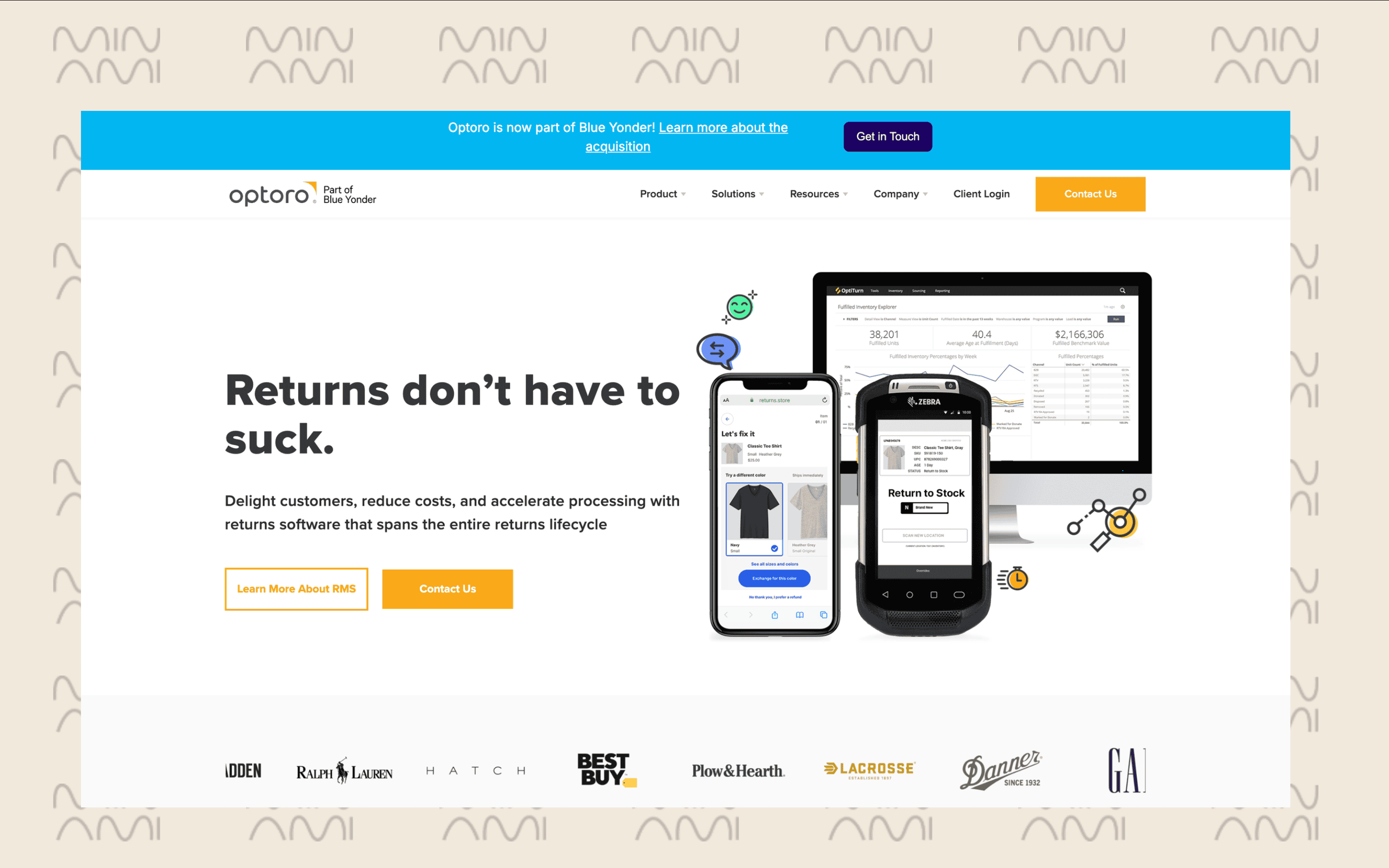
Optoro is built for enterprise retailers processing high return volumes.
Its focus is recovery: getting returned units back into circulation through resale, refurbishment, and recommerce channels to limit lost value.
A disposition engine routes each returned item along the path it calculates as most profitable.
Key features
-
Disposition routing engine
-
Resale and recommerce channels
-
Warehouse management
-
Returns analytics
-
Express drop-off returns
Pros
-
Strong recovery value on returns
-
Built for high-volume operations
-
Detailed returns analytics
Cons
-
Enterprise pricing and setup
-
Heavier implementation than ecommerce-first tools
Pricing
Custom enterprise pricing
👉 The best agentic AI solutions for enterprise eCommerce in the US market
5. AfterShip

AfterShip operates as a data layer over the shipping and returns process. Its core function is to aggregate tracking information from a large carrier network and present it in one place.
It also offers a branded returns portal that sits on top of that tracking data.
Key features
-
Carrier tracking aggregation
-
900+ carrier network
-
Branded return portal
-
Delivery status notifications
-
Shipment analytics
Pros
-
Broad carrier coverage
-
Free tier to start
-
Simple tracking setup
Cons
-
Primarily a data and display layer
-
Limited backend execution
Pricing
- Paid plans start at around $11/month
- Pricing scales with return or shipment volume
AI-powered reverse logistics insights
AI-driven reverse logistics platforms do more than process returns. They also analyze return data to detect patterns, reduce operational losses, and improve reverse supply chain decisions.
Return reason analysis
AI groups returns by reason, SKU, size, or supplier to identify recurring product issues and return patterns.
Product return rates
AI tracks which products generate the highest return volume so teams can detect operational and merchandising problems faster.
Disposition tracking
AI-powered reverse logistics tools monitor whether returned products are restocked, refurbished, resold, or discarded.
Refund-to-exchange conversion
AI measures how often refund requests turn into exchanges or store credit to help retain revenue inside the business.
Return processing bottlenecks
AI identifies delays across warehouse intake, inspection, transport, and refund approval workflows.
Insights vs backend execution
Most platforms only surface insights. Advanced AI-driven reverse logistics systems can also apply operational changes automatically inside the reverse supply chain.
How Minami AI helps reduce reverse logistics costs
If your reverse logistics operation depends on support agents, warehouse staff, and carriers constantly coordinating returns and delivery issues manually, Minami AI replaces much of that operational back-and-forth with a single autonomous layer connected across your post-purchase systems.
Instead of different teams moving information between tools, workflows stay centralized and operational decisions happen inside the same environment.
That removes a large amount of manual coordination from the reverse supply chain process itself.
Frequently Asked Questions
Have more questions? Fill this form and our team will be in touch to answer them!
-
Why is AI reverse logistics becoming important for ecommerce brands?
- AI reverse logistics is becoming important because returns now affect margin, inventory availability, customer experience, and support costs at the same time. A strong AI-powered reverse logistics setup helps brands process returns faster, recover more revenue through exchanges, and reduce the manual work created by refund-heavy operations.
-
How does reverse logistics AI decision-making reduce costs?
- Reverse logistics AI decision-making reduces costs by routing each case based on business impact. For example, the system can prioritize exchanges over refunds, flag high-risk returns, choose the right return method, or decide when a low-value item should be refunded without being shipped back.
-
Can AI help reduce refunds in reverse logistics?
- Yes. AI-powered reverse logistics can reduce refunds by identifying exchange opportunities, recommending replacement products, offering store credit, and personalizing the resolution based on the customer, product, and return reason. This is where AI reverse logistics can directly protect revenue.
-
What makes Minami AI different from traditional AI reverse logistics software?
- Most AI reverse logistics tools mainly help manage return requests or customer communication. Minami AI goes further by executing real operational actions directly inside ecommerce and logistics systems, including exchanges, delivery incident resolution, order updates, and reverse logistics workflows without relying on manual teams.
Get Started
Minami is available with zero setup
No integrations. No workflows. No dev time. Just power up Minami and let your AI agent cut refunds, manual labor, and losses