On this page (6)
In 2026, fashion and apparel brands are rethinking how they run ecommerce operations, and AI agents built specifically for this vertical are gaining serious attention. They connect orders, customers, logistics, and policies in real time, helping teams execute with less manual work and tighter control over margin and experience.
In this guide, we break down the best AI agents for fashion and apparel brands in 2026, what each one does well, and which types of teams they fit best.
The best AI agents for fashion brands in 2026
-
Minami AI — Fully autonomous operations for fashion and apparel brands
-
Gensmo — Turns inspiration into full outfits
-
Uwear AI — Creates model photos from product images
-
Exei AI — Helps shoppers choose products in real time
-
Vue.ai — Produces fashion visuals at scale
-
Syte AI — Helps shoppers find similar products visually
Comparative table
| Tool | Pricing Model | Typical Range | Automation Level |
|---|---|---|---|
| Minami AI | Custom quote | Enterprise-based | Fully autonomous |
| Gensmo | Credit-based | $$5–$$50 packs | Assistive AI |
| Uwear AI | Credits / SaaS | $0.10/credit | Visual automation |
| Exei AI | Tiered monthly | $50–$500/month | Guided selling |
| Vue.ai | Enterprise quote | ~$30k+ modules | Content AI |
| Syte AI | Enterprise quote | Custom enterprise | Visual assist |
What is an AI agent for fashion and apparel retailers?
An AI agent for fashion and apparel retailers is autonomous software built specifically for this vertical.
It’s designed around the realities of fashion commerce: high return rates, size and fit issues, seasonal collections, exchanges, inventory sensitivity, and brand experience.
Embedded into your ecommerce stack, it connects your platform, OMS, CRM, WMS, and carriers. It monitors data in real time, understands customer and order context, and takes action independently.
Features of a fashion AI agent for order and customer management
Live order intervention
The agent can step in while an order is still in motion. It updates addresses, swaps items, pauses shipments, or processes cancellations before the parcel leaves the warehouse, so teams avoid back-and-forth emails and manual fixes.
Delivery incident ownership
When something goes wrong in delivery, the agent doesn’t just flag it. It tracks the shipment, analyzes what happened, follows up with carriers, and drives the case to resolution instead of passing it between teams.
Autonomous returns and exchanges
It handles return requests end to end, walking shoppers through the process while recommending exchanges or store credit when they benefit both the customer and the brand.
Proactive customer outreach
Rather than waiting for tickets, the agent detects delays or issues early and notifies customers in advance, which reduces frustration and inbound support volume.
Smart product recommendations
The agent suggests relevant products during tracking, returns, or exchange flows based on size, style, past purchases, and return reasons. Recommendations feel contextual, not random or pushy.
The best AI agents for fashion and apparel brands, reviewed
1. Minami AI
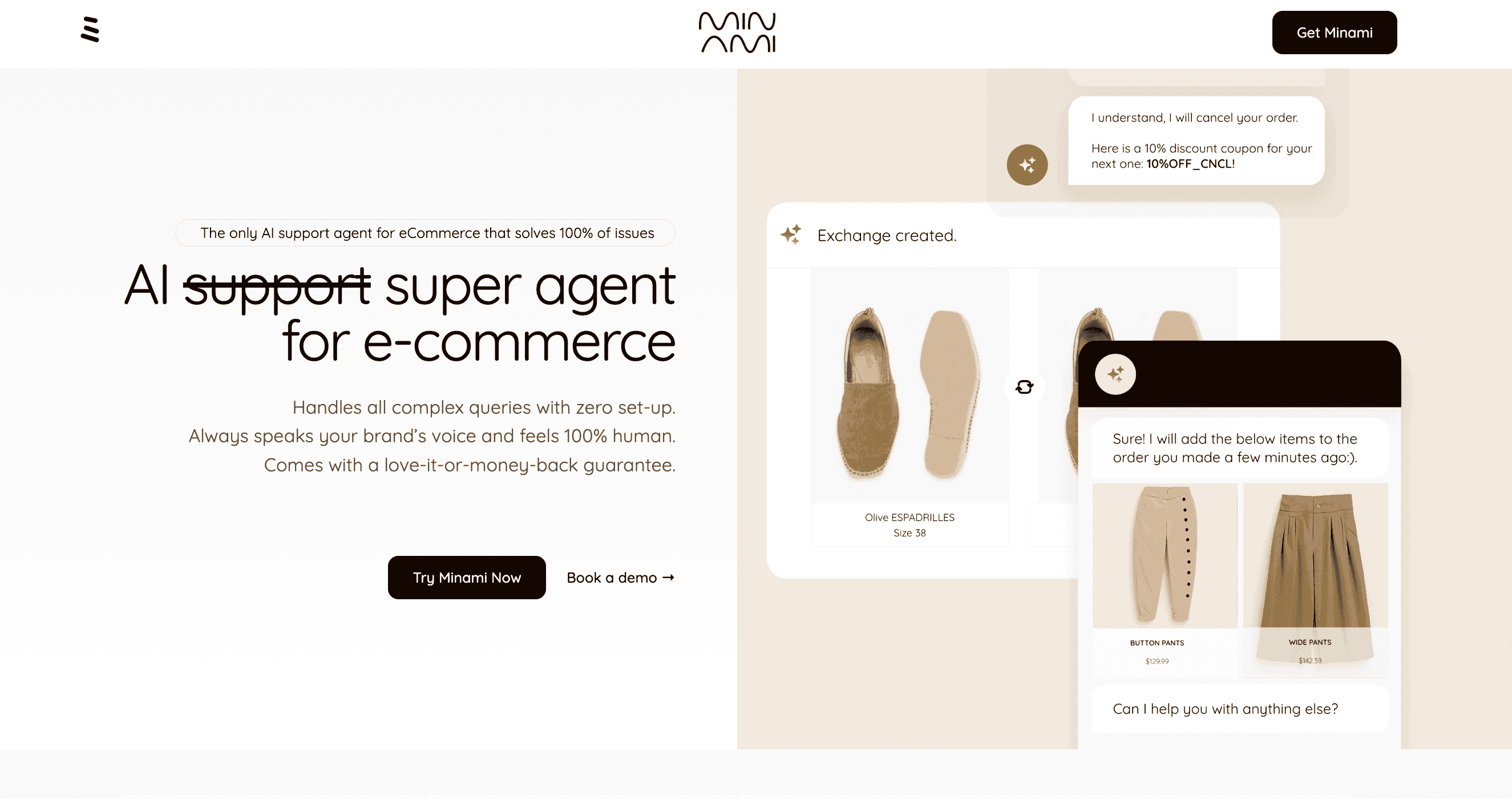
Minami AI ranks among the best AI agents for fashion and apparel brands because it is purpose-built for the realities of high-volume, return-heavy, and season-driven retail operations.
It functions less like a tool and more like a digital operations teammate that sits inside your existing systems and works continuously on your behalf.
Unlike generic AI platforms, Minami is designed around the typical pain points of apparel brands — sizing issues, exchanges, delivery incidents, and post-purchase complexity — which makes it immediately relevant in real-world scenarios.
Its value shows most clearly under pressure, when volumes spike and operational friction usually increases.
Features
-
Replaces up to 95% of support workload in fashion brands — allowing teams to operate with leaner support structures while protecting margin and customer experience
-
Autonomous post-purchase handling — runs order, delivery, and returns processes with minimal human involvement
-
Smart exchange flows — steers customers toward exchanges or credit in a way that protects revenue
-
Proactive issue detection — spots delivery or order problems early and acts before customers complain
-
Cross-system orchestration — coordinates data and actions across ecommerce, OMS, carriers, and support tools
-
Product recommendations — Minami displays products during the shopping experience, encouraging customers to generate additional sales
Pricing
2. Gensmo
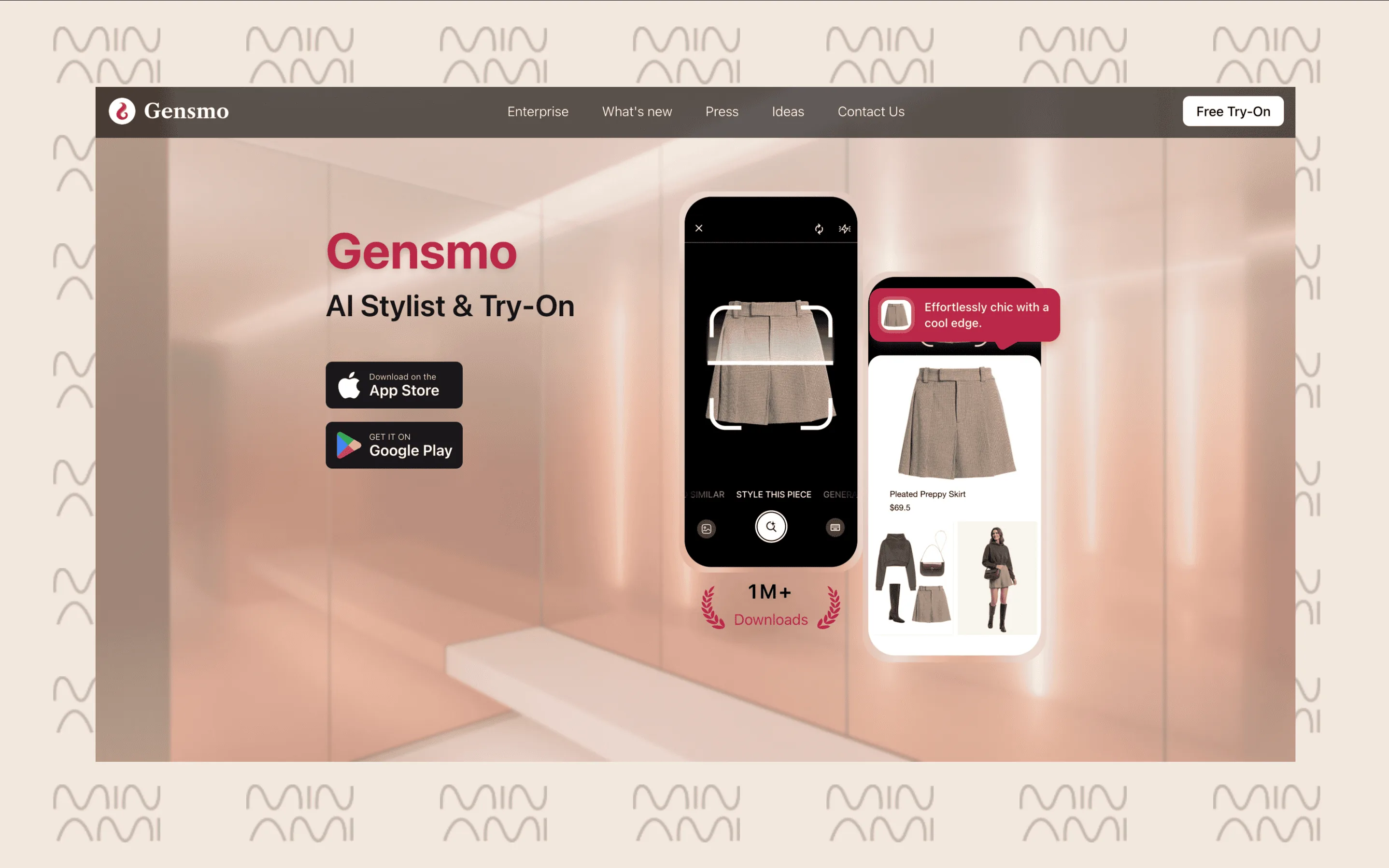
Gensmo earns a spot on the list because it treats fashion as a visual language, not a keyword problem.
Its core idea is simple: shoppers don’t think in SKUs—they think in silhouettes, moods, and references, and Gensmo translates that instinct into shoppable direction fast.
It feels closer to an AI stylist than a traditional shopping interface, which makes it especially strong at the discovery and consideration stage. For apparel brands, that “visual-in → outfit-out” loop helps sustain engagement while customers are still figuring out what they want.
Key features
-
“Describe a vibe” styling — Shoppers can enter a prompt, keyword, or inspiration and receive a complete outfit direction in one flow.
-
Visual input, visual output — Relies on images and collages so users can express taste without needing precise descriptions.
-
Style a single item into a full look — Starts from one product and builds an entire outfit around it.
-
Find similar pieces and dupes — Matches silhouettes and aesthetics across brands to recreate a look users like.
-
Try-on–oriented experience — Positioned around avatar and try-on concepts to support more confident purchase decisions.
Pricing
Free to download, with in-app purchases based on credits. Example iOS credit packs include $5 (10 credits), $10 (20), $15 (30), $20 (40), $30 (60), and $50 (100)
3. Uwear AI
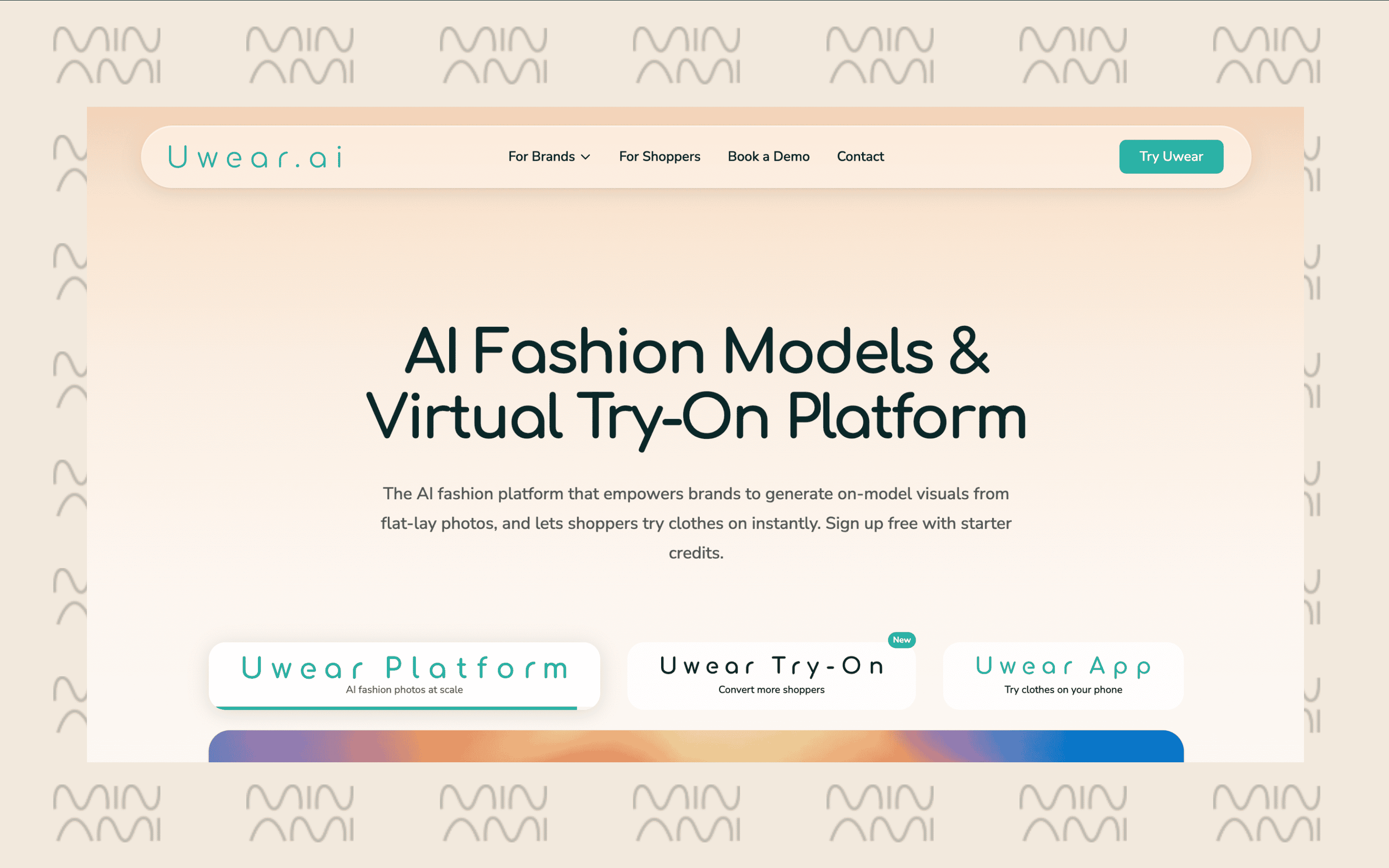
Uwear AI makes the list by turning one of fashion’s biggest bottlenecks—product imagery—into a scalable system.
Its core strength is generating on-model visuals from a single flat-lay photo, which lets brands refresh PDPs quickly while keeping presentation consistent across collections.
It’s especially useful for apparel teams shipping frequent drops that want studio-grade output without studio-level timelines.
Key features
-
AI fashion model generation — Converts flat-lay images into realistic on-model visuals optimized for ecommerce.
-
Virtual try-on for shoppers — Enables try-on experiences that help customers visualize fit and style earlier in the buying journey.
-
Studio and API workflows — Supports both hands-on creation in a visual studio and automated generation through APIs.
-
Cross-channel asset production — Produces visuals suitable for PDPs, paid ads, and campaign creatives from a single product image.
-
Shared credit system — Applies the same credit pool across studio and API usage, helping teams centralize and control production spend.
Pricing
-
Platform pricing (Studio + API): Pay-as-you-go at $0.10 per credit, with no subscriptions and credits that never expire.
-
Shopify try-on app: Listed at $2,500/month, with plan limits and a free trial noted on the app listing.
4. Exei AI
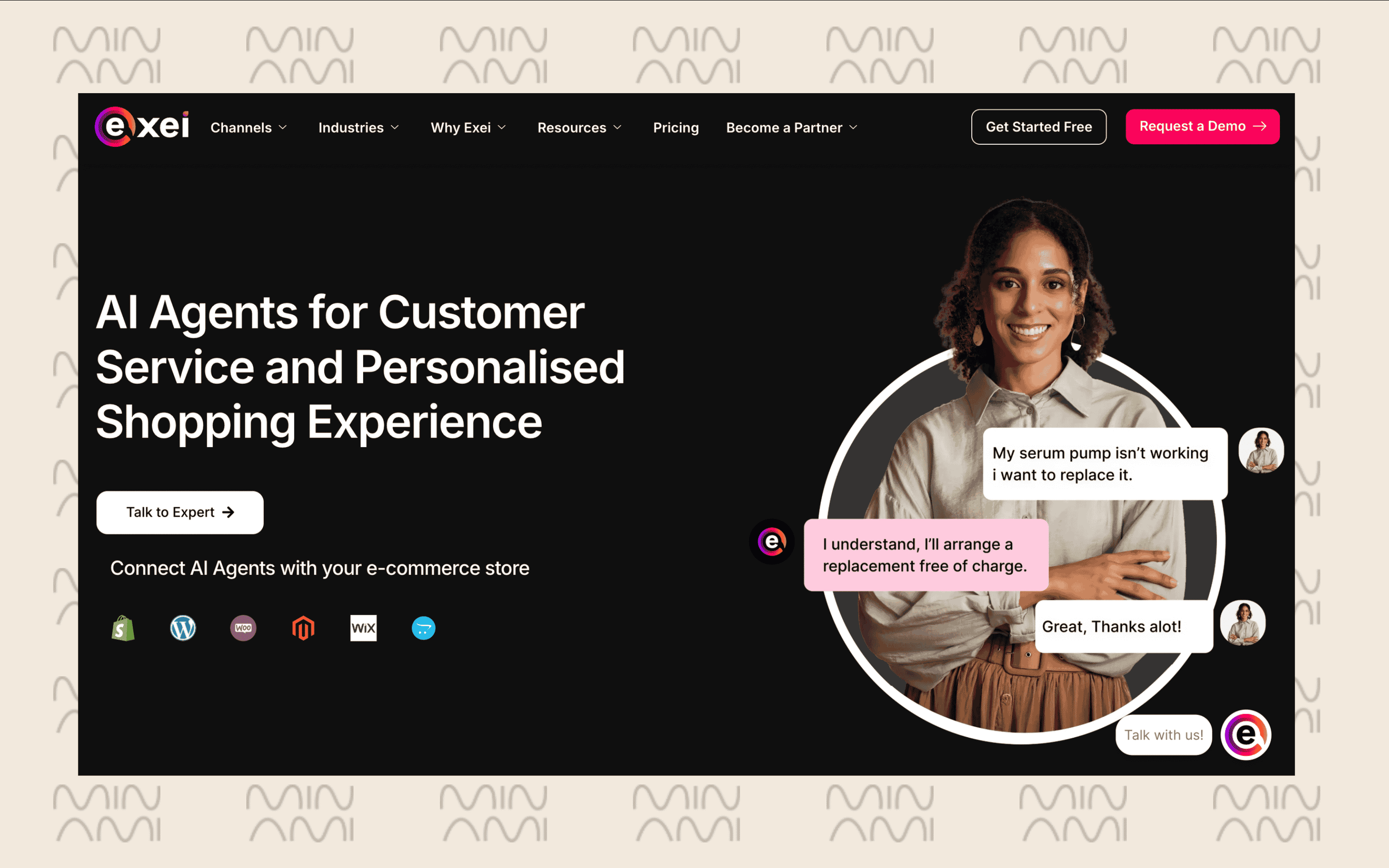
Exei AI makes the cut because it’s built around one core strength: conversational selling that feels instant and human. It turns the “I have a question” moment into a buying moment—which matters in fashion, where hesitation kills conversion.
The positioning is clear: keep shoppers engaged, guide them to the right items, and reduce drop-offs while the customer is still on the page.
For apparel brands, it’s less about back-office automation and more about winning the conversion window.
Key features
-
Shopping AI agent for style guidance — Holds natural, real-time conversations that help shoppers find the right products faster.
-
Outfit and product discovery flows — Moves customers from “What should I wear?” to a focused shortlist with clear next steps.
-
Multichannel deployment — Designed to work across web and messaging-style touchpoints for broader coverage.
-
Multilingual conversations — Supports global audiences with wide language availability.
-
Knowledge training from brand content — Learns directly from site content and documentation to respond accurately and stay on brand.
Pricing
-
Starter: $50/month — 5,000 messages per month, voice minutes included, 1 agent
-
Standard: $200/month — 21,000 messages per month, 2 agents
-
Professional: $500/month — ~56,000 messages per month, 4 agents
-
Enterprise: Custom pricing
5. Vue AI
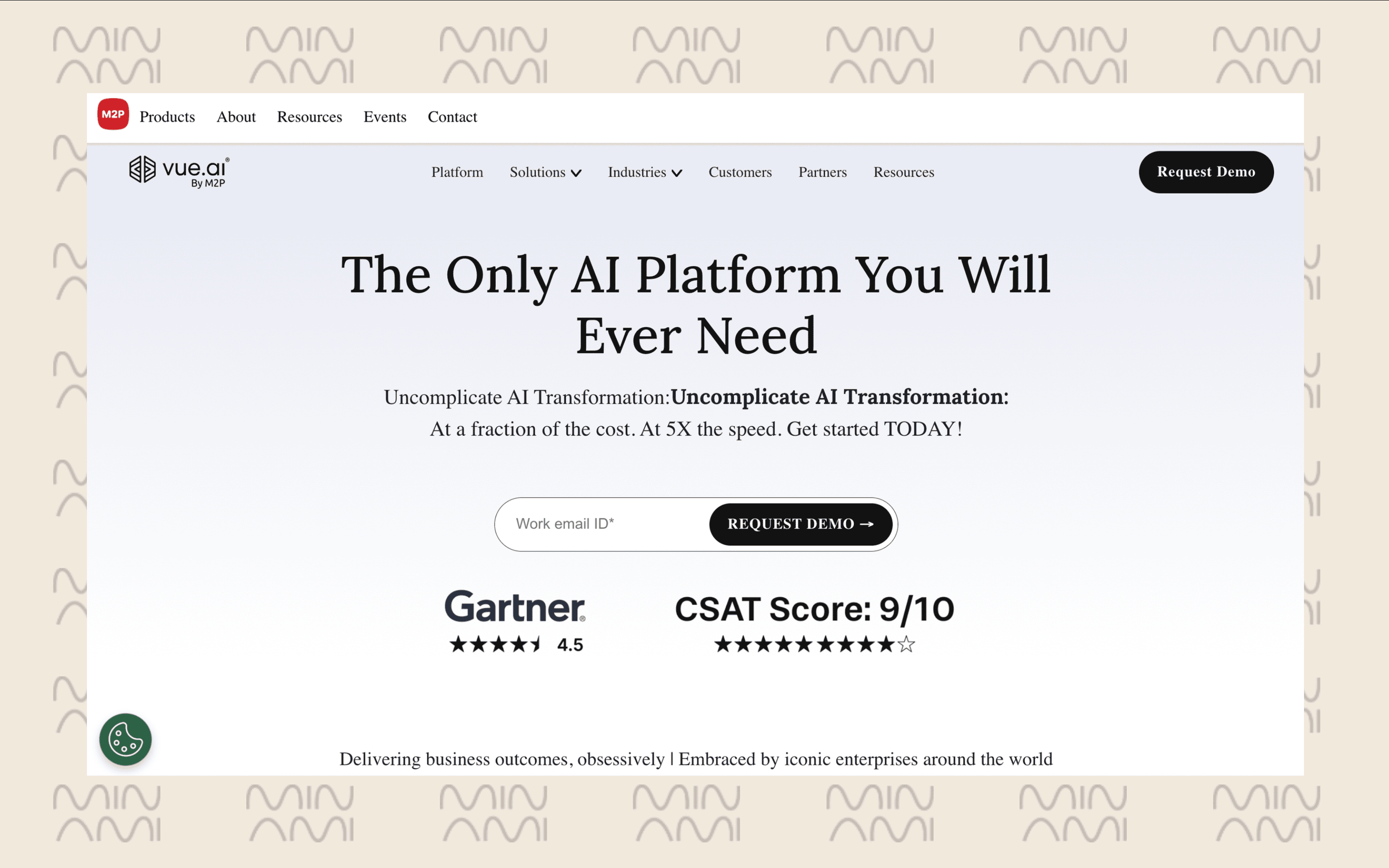
Vue.ai earns its place by tackling one of fashion’s toughest problems with a focused superpower: turning raw product content into conversion-ready visuals at scale.
For apparel brands, that matters because the quickest lift in conversion often comes from stronger PDP presentation and more consistent creative across drops. Vue.ai positions itself squarely at the enterprise level, designed for teams that want AI embedded into merchandising and content workflows, not bolted on as a standalone tool.
If your catalog turns over fast, this kind of visual automation feels like adding a production line without adding headcount.
Key features
-
On-model imagery automation — Generates on-model fashion visuals to reduce repeat photoshoots while keeping creative output consistent across collections.
-
Model diversity and customization — Supports diverse, realistic models with flexible variations to match different brand aesthetics and markets.
-
AI styling and outfitting layer — Enables outfit-level recommendations that encourage shoppers to buy complete looks rather than single items.
-
Catalog intelligence — Automates product tagging and enrichment so merchandising teams can organize, filter, and activate catalogs faster.
-
Retail workflow orchestration — Brings multiple content and merchandising use cases together under one centralized platform.
Pricing
Vue.ai follows an enterprise pricing model and typically works on a quote basis. Public pricing is limited, but third-party listings for specific modules (such as virtual dressing experiences) reference starting figures around $30,000, indicating that costs vary significantly depending on scope, modules, and scale.
6. Syte AI
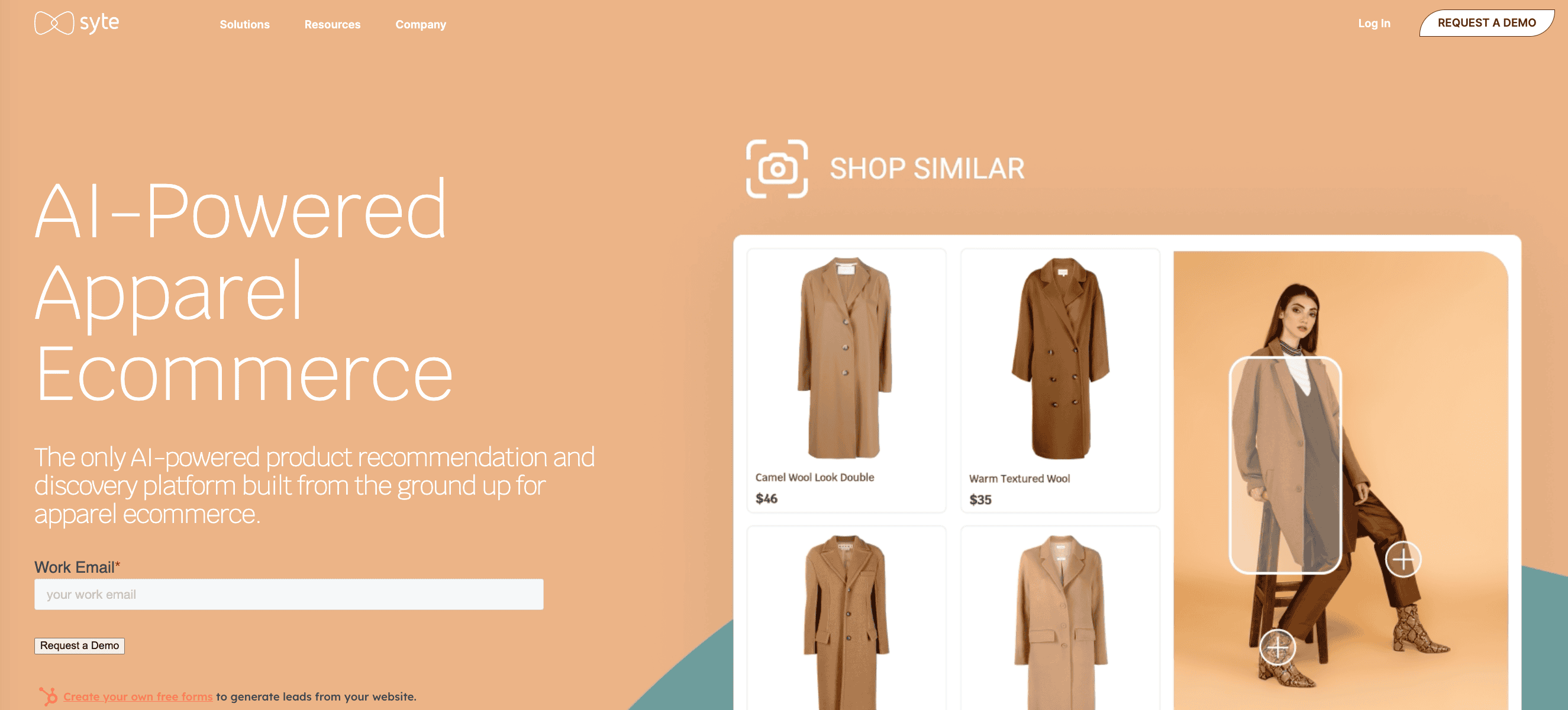
Syte AI makes the list because it owns one superpower fashion brands care about: turning visual inspiration into conversion.
Shoppers often know what they want when they see it—they just can’t describe it, and Syte closes that gap instantly. Instead of pushing users through filters and keywords, it makes discovery feel natural: scroll, tap, buy.
For fashion and apparel, that “see it → shop it” loop is one of the fastest ways to lift discovery and engagement.
Key features
-
Image search and inspiration galleries — Lets shoppers search with images and browse visually, without relying on text or filters.
-
Shop Similar / Shop the Look recommendations — Turns any product or image into close alternatives or complete outfits.
-
Hyper-personalized recommendations — Adapts results using behavioral signals and visual preferences to keep feeds relevant.
-
AI tagging and merchandising — Automatically enriches products with visual tags to improve navigation, search, and merchandising control.
-
Visual discovery suite — Modular tools built specifically for retail discovery journeys, including camera search and visual recommendations.
Pricing
Syte uses a quote-based pricing model. Costs typically depend on factors like monthly traffic, SKU volume, and implementation scope, and are often packaged as bundled suites covering visual discovery, merchandising, and personalization.
How to choose an AI agent for the fashion and apparel industry
If you’re thinking long term, choose the AI agent that scales with operational complexity, not just traffic. As a fashion brand grows, exchanges, delivery incidents, cross-border friction, and support load increase faster than order volume, and surface-level AI won’t absorb that pressure.
An agent built specifically for fashion—one that operates inside post-purchase workflows, runs exchanges, manages incidents, and replaces most support workload—becomes structural infrastructure. Instead of adding headcount every season, you add capacity through automation, creating compounding efficiency as volume rises.
Savings calculator
EstimateWhat could Minami save your support team?
Saved per month
$0
0 agent hours freed
0 tickets handled by AI
Estimate based on your inputs. Default automation rate reflects the "on average 90% less customer queries" figure on minami.ai; your results will vary. Excludes Minami subscription cost.