 Nobikage San
 Introducing
I have analyzed how hundreds of ecommerce brands are using generative AI to increase sales and revenue
Tired of guessing what actually works? Learn how leading ecommerce brands use generative AI to avoid costly missteps and turn everyday operations into revenue.
Generative AI in ecommerce is moving fast, and U.S. brands are already using it to drive 20% more sales, create smarter content, and improve personalization. The biggest retail names treat it as a real strategy because it helps with SEO, product content generation, ads, and on-site optimization.
Today, you can implement generative AI solutions across your entire customer journey and provide search-driven recommendations that account for up to 26% of total ecommerce revenue.
If you’re wondering how ecommerce brands use generative AI or you want to boost your own sales, we’ll walk through how retail and online stores increase conversion with generative artificial intelligence.
Best ways to optimize your ecommerce brand with AI technology
| Strategy | What it does | Why it increases sales |
|---|---|---|
| Generative AI product recommendations | Detects intent and suggests products based on browsing, past orders, and context | Shoppers find the right item faster, reducing hesitation and increasing AOV |
| Post-purchase gift cards & incentives | Detects frustration or delivery issues and offers a small incentive automatically | Detects frustration or delivery issues and offers a small incentive automatically |
| AI chatbots & shopping assistants | Answer sizing, shipping, and product doubts in natural conversation, 24/7 | Removes friction instantly, so more shoppers complete the purchase |
| Turn returns into exchanges | Converts refund requests into exchanges and better-fitting products | Keeps revenue inside your store instead of losing it to refunds |
| Recover abandoned carts | Identifies why the cart was abandoned and sends a message that solves that issue | Restores confidence and brings the shopper back to complete the cart |
| Recover lost delivery costs | Detects lost/damaged packages and files courier claims automatically | Protects margins by recovering money that would normally be lost |
| Dynamic, context-aware content | Rewrites pages so each visitor sees the version that matches their intent | Higher relevance increases conversion rate instantly |
| Automated image generation | Creates lifestyle scenes and missing variants from a few photos | Better visuals improve engagement, ad performance, and product appeal |
| Predictive analytics & inventory optimization | Spots early demand signals and adjusts stock or visibility | Prevents stockouts and pushes trending items before competitors |
Top strategies to increase ecommerce and retail sales using generative AI
1. Generative AI ecommerce product recommendations
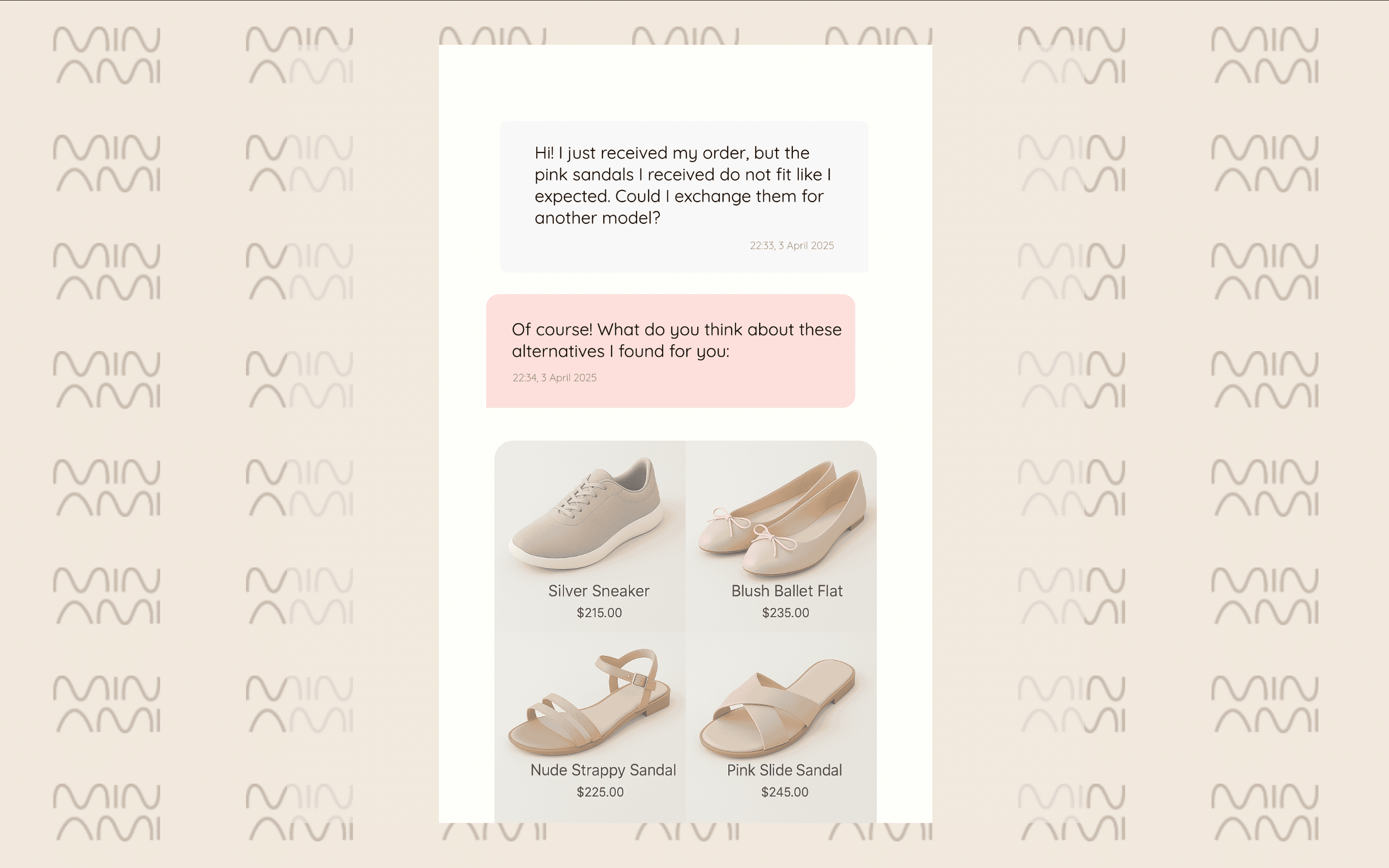
68% of shoppers say they’re more likely to buy when they get personalized recommendations. Generative AI replaces static “related products” with recommendations built from real shopper behavior.
It analyzes three core signals: how a customer browses, what they purchased in the past, and the source of their visit.
With those inputs, the system predicts what each person is most likely to buy next.
For example, a shopper who comes from a running-gear campaign and checks a pair of shoes triggers a specific pattern. That means an AI chatbot widget can pop up on that exact page and provide product recommendations that match what the customer is looking for but hasn’t found yet.
To achieve that, you need a generative AI shopping assistant like Minami that recognizes the intent behind the visit and shows complementary items.
2. Conversational commerce with generative, voice-enabled AI
Shoppers are already talking to their devices to get things done.
They build grocery lists, reorder basics, and find products with simple voice commands—and 22% say they prefer speaking over typing.
Voice-enabled AI lets customers compare prices, understand product details, check availability, or complete a purchase through a normal, natural conversation.
And when buying feels that easy, more shoppers finish the purchase.
3. Generative AI post-purchase gift cards and codes
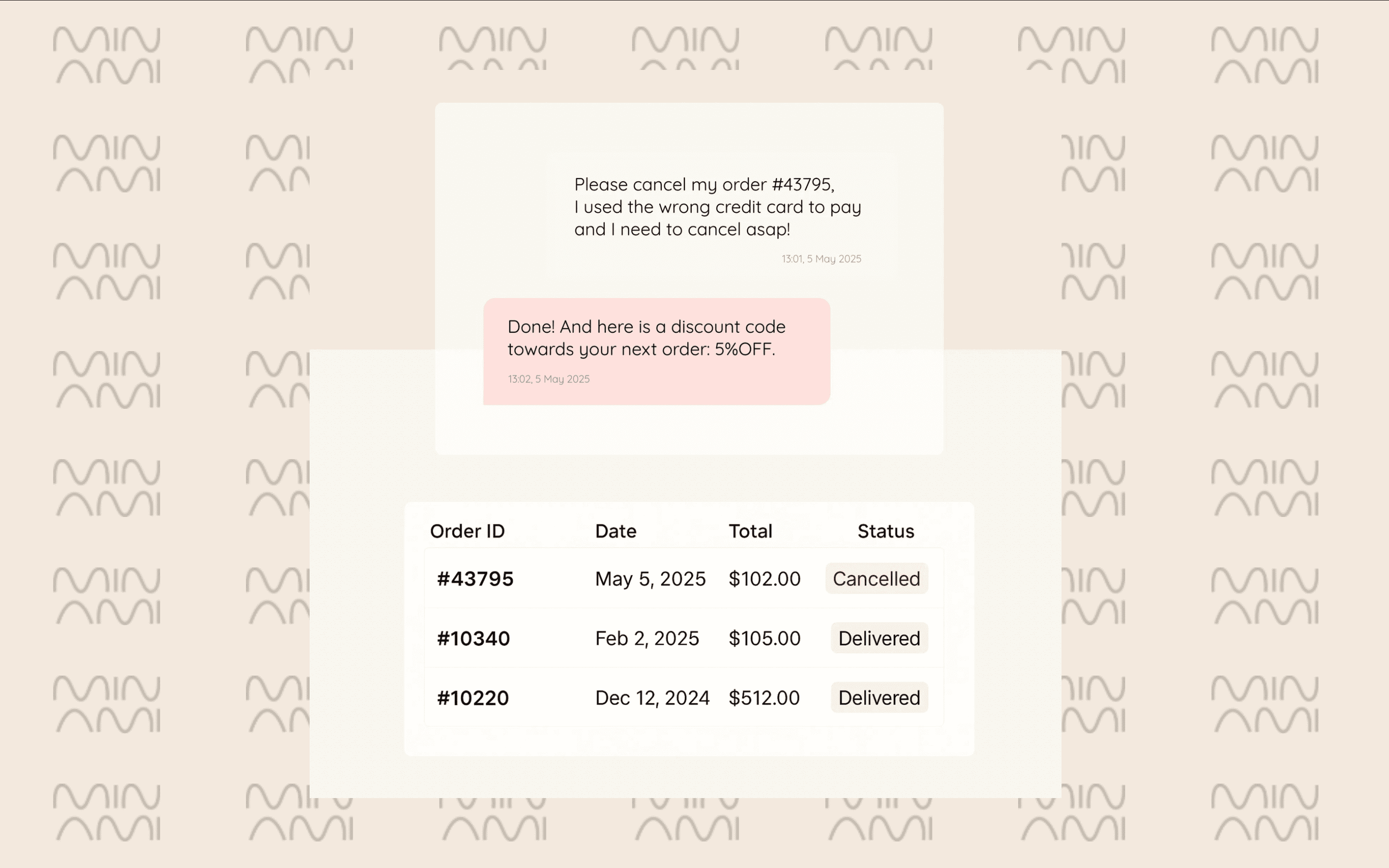
A proven way to recover sales with generative AI is to offer a gift card when the system detects an angry shopper or a delivery issue.
The AI reads the tone of the message, checks the order, reviews the carrier scans, and understands the exact point where the experience breaks.
At that moment, the system offers a small, time-limited discount or store credit to bring the shopper back into a good experience.
4. Recover abandoned carts with personalized messages
When someone leaves a full cart, generative AI looks at what actually happened: the product they compared, the last question they asked, the point where they slowed down, and the detail they never confirmed.
With that context, the AI sends a follow-up message in the channel the shopper used last — email, WhatsApp, SMS, or chat — and answers the exact doubt that blocked the purchase.
It can confirm sizing, offer a cheaper delivery option, show the right variant, or clarify a detail the shopper missed.
5. Turn returns into ecommerce sales with generative AI
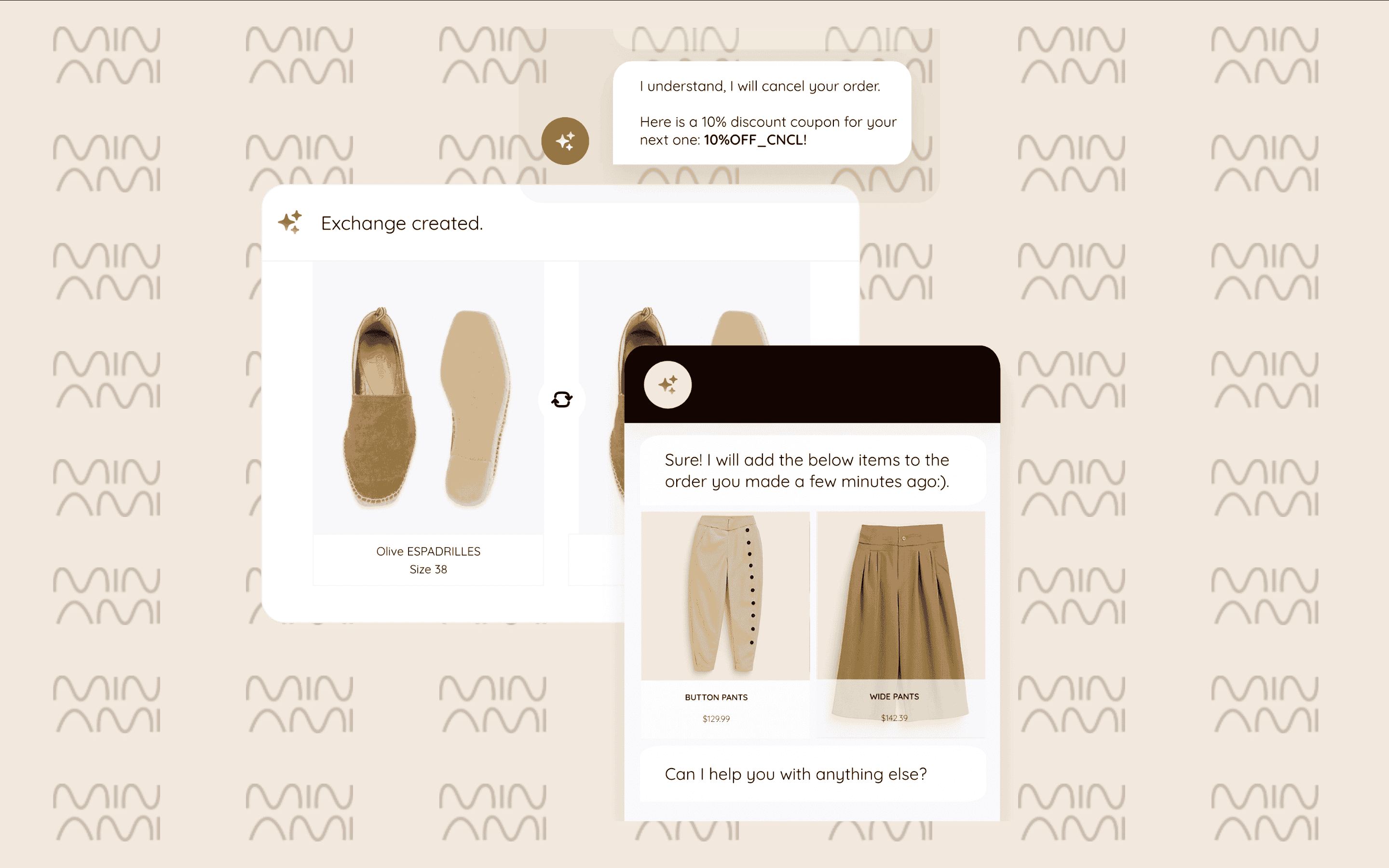
90% of consumers say the post-purchase experience is just as important as the product itself. And the return experience is, by far, the most important step for most customers.
Instead of sending shoppers to a portal, the AI manages everything in the same chat.
When someone says they want to return an item, the system reviews the order, checks your policies, and guides them toward the best outcome — usually an exchange or a switch to a better-fitting product.
If the item doesn’t fit or isn’t what they expected, the AI can suggest the right size or an alternative that solves the problem and keeps the sale.
And because the entire flow is conversational, it’s simple to introduce a relevant upgrade or add-on that recovers revenue that would have been lost.
6. Recover lost delivery costs with generative AI
Modern ecommerce AI can detect delivery issues, identify when a courier claim should be filed, and handle the entire process automatically.
It reviews lost or damaged orders, prepares the claim, negotiates with the courier, and recovers the payout without human involvement.
7. Offers human-like 24/7 assistance

Generative AI chatbots act like a helpful store associate right inside your website.
They guide shoppers through their questions, clear up confusion, and support their decisions without forcing them into stiff buttons or scripted flows.
If someone needs sizing help, wants to check shipping options, or just isn’t sure whether a product fits their needs, the AI gives quick, natural answers any time of day.
And the best part? They’re available 24/7. That means shoppers always get a friendly, stress-free experience without you having to hire more support agents.
8. Dynamic, context-aware content
Generative AI rewrites product descriptions and landing pages so they match whoever is visiting.
It reads intent, device, and past behavior, then adjusts the message to fit what that person cares about.
Someone searching for acne-safe skincare sees content focused on oil control, while a returning customer who buys anti-aging gets a version about firmness and hydration.
9. Automated image generation
With just a few studio shots, it can produce lifestyle scenes, new angles, and missing color variants.
A backpack brand could turn one photo into versions for city, outdoor, or office use and even generate views like the inside pocket or a model wearing it.
This helps you build a bigger catalog faster, keeps the style consistent, and gives you more options to test in ads and landing pages.
10. Predictive analytics and inventory optimization
Your store’s activity always leaves signals about what shoppers will want next, and generative AI can read those signals long before they become obvious.
If a travel bag starts climbing in views and add-to-carts before a long weekend, the system can catch the trend early and recommend what to do with it — restock, highlight it on the homepage, or give it extra visibility in your campaigns.
The same applies when interest starts to cool down.
Integrate generative AI into your ecommerce with Minami
If you really want to optimize your retail brand and boost your eCommerce sales with generative AI, you need more than a collection of disconnected tools — you need a platform built for the way modern brands work.
Minami gives you a setup where you can leverage real shopper behavior, automate the heavy lifting behind returns, and use AI-driven content generation to keep your product pages fresh and aligned with what customers want. Instead of adding features on top of each other, the system connects the entire journey so your personalization feels real and your personalization isn’t limited to static rules.
With Minami running in your store, your retail team can activate a complete generative AI strategy from day one and turn it into higher sales, fewer manual tasks, and a smoother experience end to end.
Frequently Asked Questions
Have more questions? Fill this form and our team will be in touch to answer them!
-
What is generative AI in retail and eCommerce?
- Generative AI in retail uses language models to understand shopper questions and reply in real time. When it connects to your store, it reads your products, orders, and policies to give accurate answers. It can recommend items, fix order issues, and take actions automatically.
-
How do ecommerce brands use generative AI to get more sales?
- Training time varies from hours to weeks depending on the tool. The key question to ask vendors is: What sources does your AI learn from? If it only reads help articles, you’ll need more prep work. If it pulls from ticket history or catalogs, training can be much faster.
Get Started
Minami is available with zero setup
No integrations. No workflows. No dev time. Just power up Minami and let your AI agent cut refunds, manual labor, and losses