 Nobikage San
 Introducing
What AI agent is best for your company? I reviewed six of the most popular options across each vertical.
Not sure which AI agent your business needs? Compare six leading options by industry and find the perfect fit for your brand.
If you’re active on Reddit, you’ve probably come across topics about how vertical AI agents are getting more and more popular. There’s even some speculation that companies providing this kind of technology could end up replacing traditional SaaS or startups.
And honestly, it’s normal to think that.
Vertical AI agents are built to perform at a high level inside specific industries. They give each business cutting-edge solutions that can solve many use cases with zero human effort. That is why 89% of companies and verticals are currently using or testing an AI agent.
But what exactly is a vertical AI agent? What companies are out there? Are they worth it? Let’s dive in.
What is a vertical AI agent? Definition
A vertical AI agent is an AI agent (a sort of chatbot that leverages LLM technology to provide conversational and automated answers) built for one industry and one job, not for everything at once. Instead of trying to answer every possible question like general AI tools do, these agents work with focused data and real expertise from a specific field.
Vertical vs. traditional AI agent: which one should you choose?
If your brand needs depth, accuracy, and real execution inside one industry, choose a vertical agent. Traditional, general-purpose agents are fine for broad questions or simple tasks, but they can’t match the precision of an agent trained for a specific sector.
Tip: When you evaluate an AI agent, keep in mind that some broad platforms also offer “vertical” solutions, but that doesn’t mean they were actually built for that purpose.
Examples of vertical AI agents platforms
-
Ecommerce and retail → orders, shipping, returns, exchanges, claims, carrier issues
-
Financial services and fintech → accounts, cards, payments, logins, simple disputes, always operating under strict compliance
-
SaaS and B2B → product setup, billing, permissions, in-app support, and reducing technical tickets
-
Healthcare → appointments, basic information, visit management, and routing to specialists, always with strong privacy safeguards
-
Travel and mobility → bookings, changes, cancellations, vouchers, and incident handling for flights, hotels, and transportation
-
Telecom and utilities → plans, billing, outages, plan changes, and basic technical support
1. Ecommerce and retail AI agents
AI agents for eCommerce and retail are platforms that live inside the order and post-purchase journey. They understand carts, orders, shipments, returns, exchanges, stock, discounts, and fraud patterns.
A good ecommerce AI agent can answer “where is my order?”, fix address issues before shipping, reduce returns, talk to carriers when something goes wrong, and even boost the sales by recommending better products.
2. Financial services and fintech AI agents
In banking and fintech, AI Agents are vertial tools that help customers check balances, understand charges, reset access, block cards, or get guided through simple dispute flows.
These agents must respect strict regulation and audit trails, so they automate the safe and repetitive cases while escalating anything sensitive to a human team without breaking compliance.
3. SaaS and B2B software AI agents
Here the agent acts as a product expert that lives inside your app and support channels. It understands plans, permissions, integrations, and setup steps. It can explain features, fix common configuration mistakes, handle billing questions, and unblock users without forcing a ticket to support every time.
4. Healthcare and medical services AI agents
In healthcare, vertical AI agents focus on navigation and logistics more than diagnosis. They help patients book and manage appointments, prepare for visits, understand basic information about treatments or coverage, and route questions to the right doctor or department.
They must be very careful with privacy, consent, and clinical language, so they work as a structured guide and triage layer rather than trying to replace medical judgment.
5. Travel, mobility, and hospitality AI agents
A good travel AI agent can help a customer change a flight, manage hotel dates, handle cancellations, work with vouchers or credits, and explain policies clearly during stressful moments like delays or strikes.
In mobility and delivery, they can rebook rides, update pick-up points, or handle issues with drivers and couriers. Speed and clarity are everything in this vertical.
6. Telecom, energy, and utilities AI agents
This Ai agents help customers understand their bills, adjust plans, report problems, and go through basic troubleshooting steps before a technician is needed. When they are well connected to internal systems, they can apply changes on the account directly, which cuts down wait times and pressure on call centers.
Top AI agents that provide better customer service by vertical
1. Minami AI — eCommerce & Retail
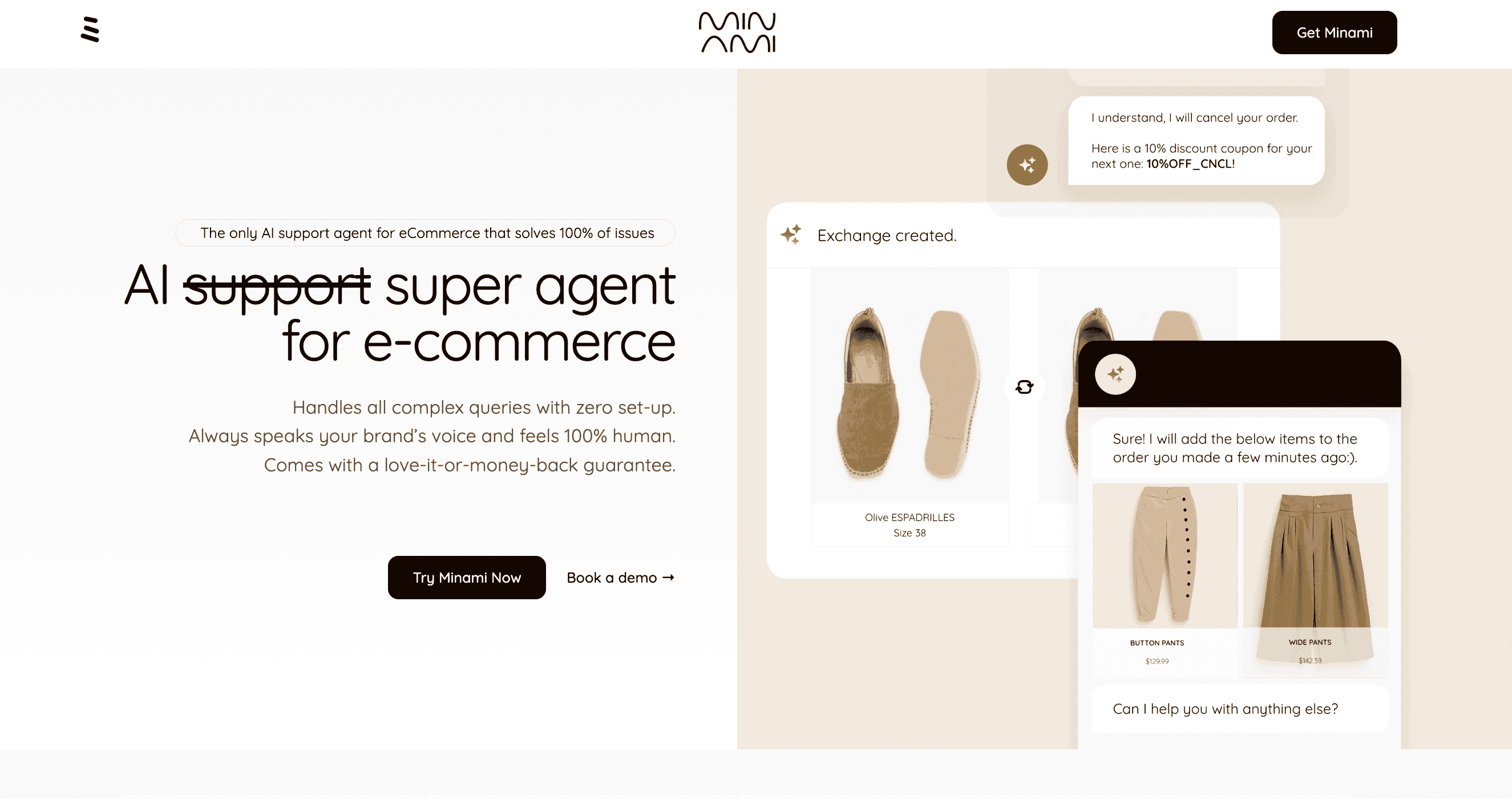
Minami is the only vertical AI Agent that works natively with commerce backend Shopify, BigCommerce, WooCommerce, custom stacks and the logistics layer (carriers, returns systems, warehouse data). What Minami does in this vertical
-
Executes returns, exchanges, reships, refunds, cancellations, and address corrections
-
Handles delivery issues: lost package claims, “where is my order,” damaged-in-transit cases, and carrier escalation.
-
Optimizes revenue by directing customers toward exchanges over refunds using inventory, order value, and margin signals.
-
Detects return fraud patterns (wardrobing, repeated INR claims, mismatched reasons vs. SKU behavior).
-
Serves as a 24/7 operations agent, closing 80–100% of post-purchase requests with zero human involvement.
Why Minami fits the vertical Minami was built to handle the full workload of a support team, not just answer questions. It resolves up to 90% of cases autonomously by reading order, policy, and logistics data and executing the best action in real time.
2. Ada — Financial Services & Fintech
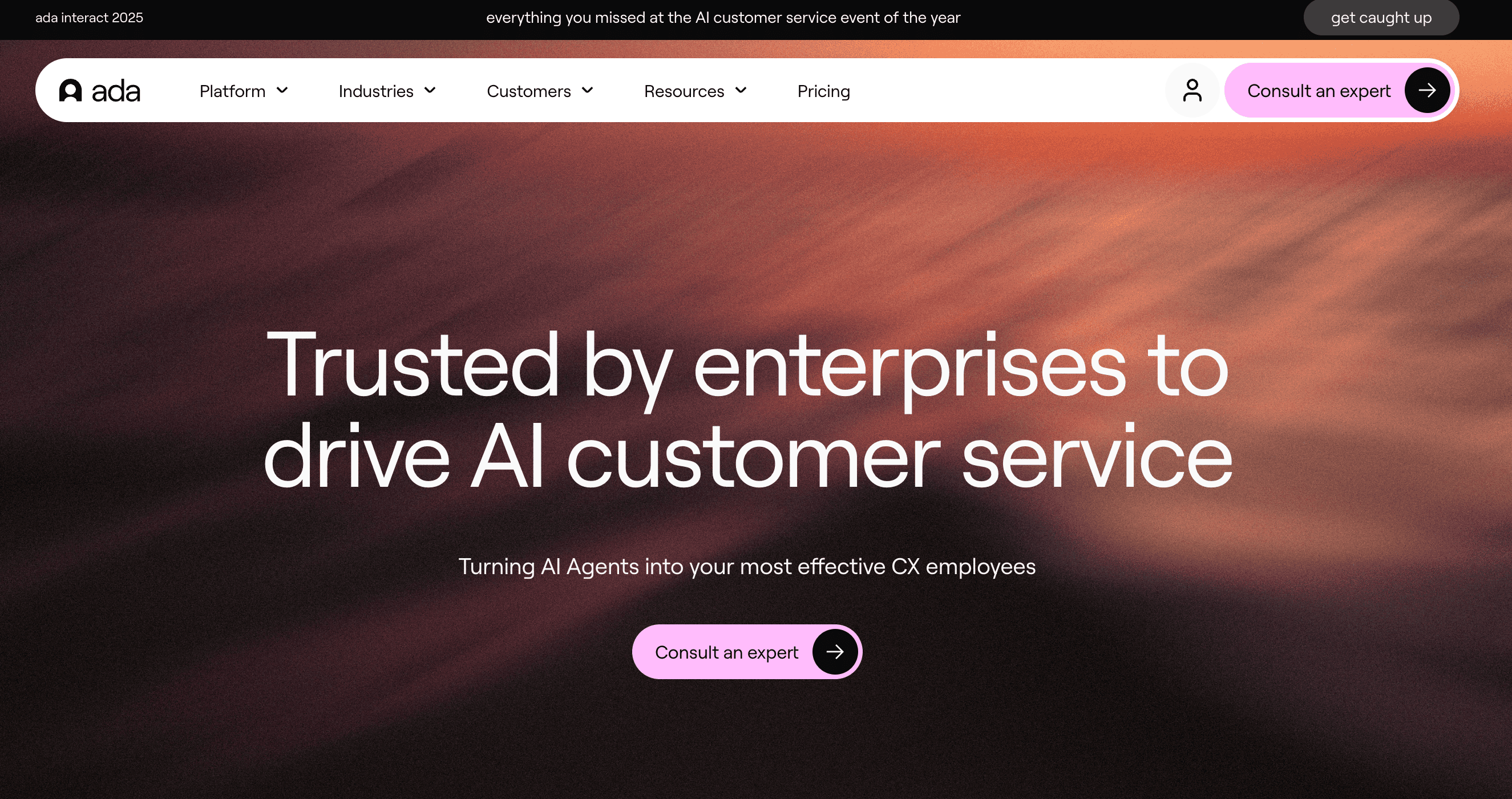 Ada is strong in regulated self-service environments. Its design choices prioritize compliance, authentication, and risk-controlled automation, which is required in banking and fintech.
What Ada actually does in this vertical
-
Orchestrates KYC/identity verification flows before allowing any sensitive action.
-
Handles card issues (freeze, replace, activate), account access problems, and payment status inquiries.
-
Automates simple disputes like failed transfers or duplicate charges through structured workflows, not free-text reasoning.
-
Routes high-risk or high-value cases to compliance teams with complete conversation trails.
-
Maintains strict guardrails to meet PCI, SOC2, and industry-specific requirements.
Why Ada fits the vertical Banking and fintech require predictable, auditable flows. Ada is optimized to run scripted, rule-dependent, compliant journeys, making it safer than freeform LLM agents for this category.
3. Fin (Intercom Fin) — SaaS & B2B Software
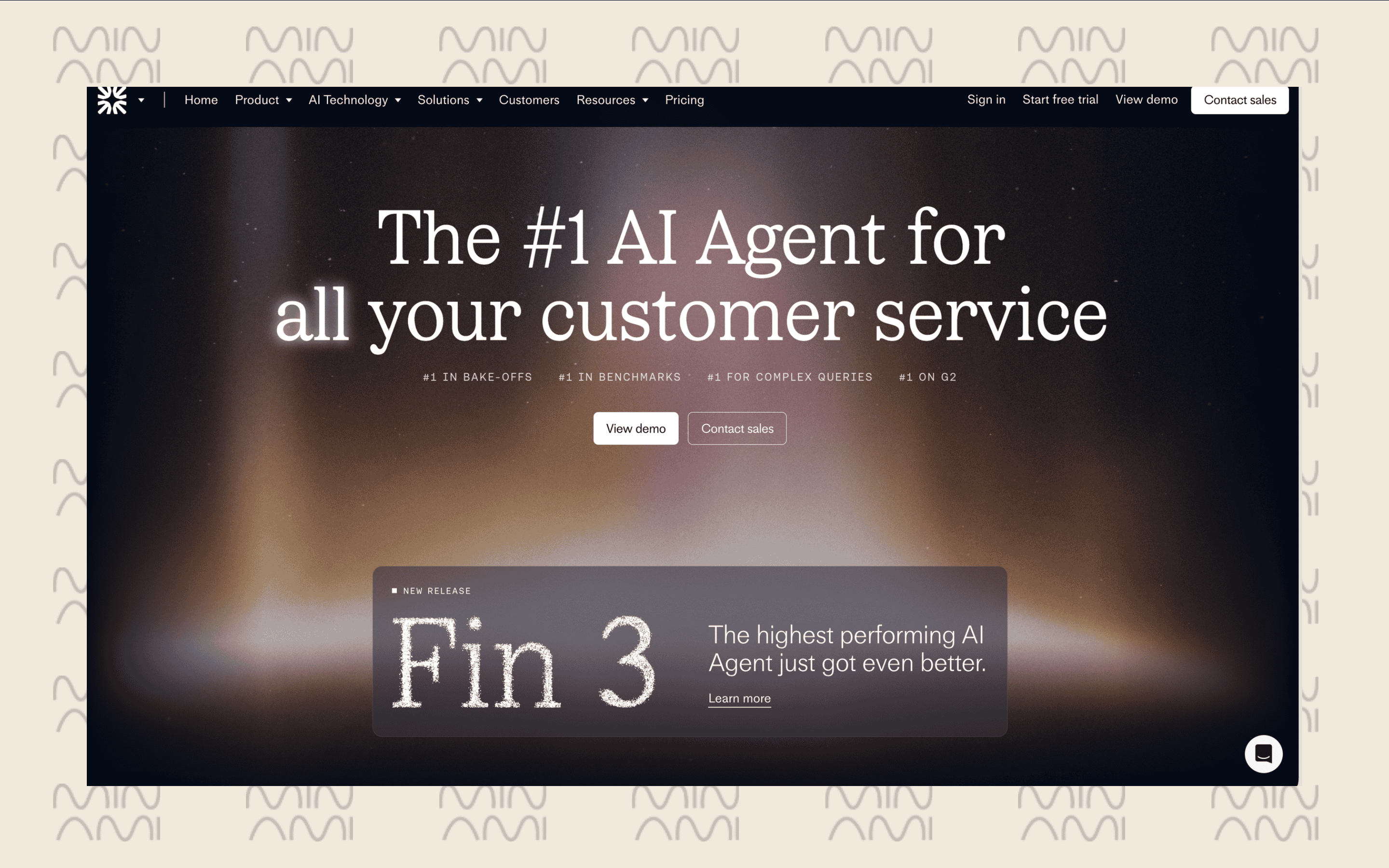
Fin is optimized for knowledge-heavy support in software products, where the agent must interpret complex documentation, understand permissions, and resolve software questions without hallucinating.
What Fin actually does in this vertical
-
Searches and synthesizes technical documentation, admin settings, and product configs to answer support questions accurately.
-
Handles requests like API limits, billing changes, workspace permissions, feature activation, troubleshooting, and in-app onboarding.
-
Integrates tightly inside helpdesk workflows to reduce the time human agents spend on repetitive or technical tickets.
-
Uses conversation context + product schema to resolve multi-step issues, especially B2B onboarding or feature configuration.
Why Fin fits the vertical
SaaS support is less about logistics and more about interpreting product logic. Fin is built to ingest large technical corpora and deliver precise, doc-grounded responses — ideal for software companies where accuracy beats autonomy.
4. Druid AI — Healthcare
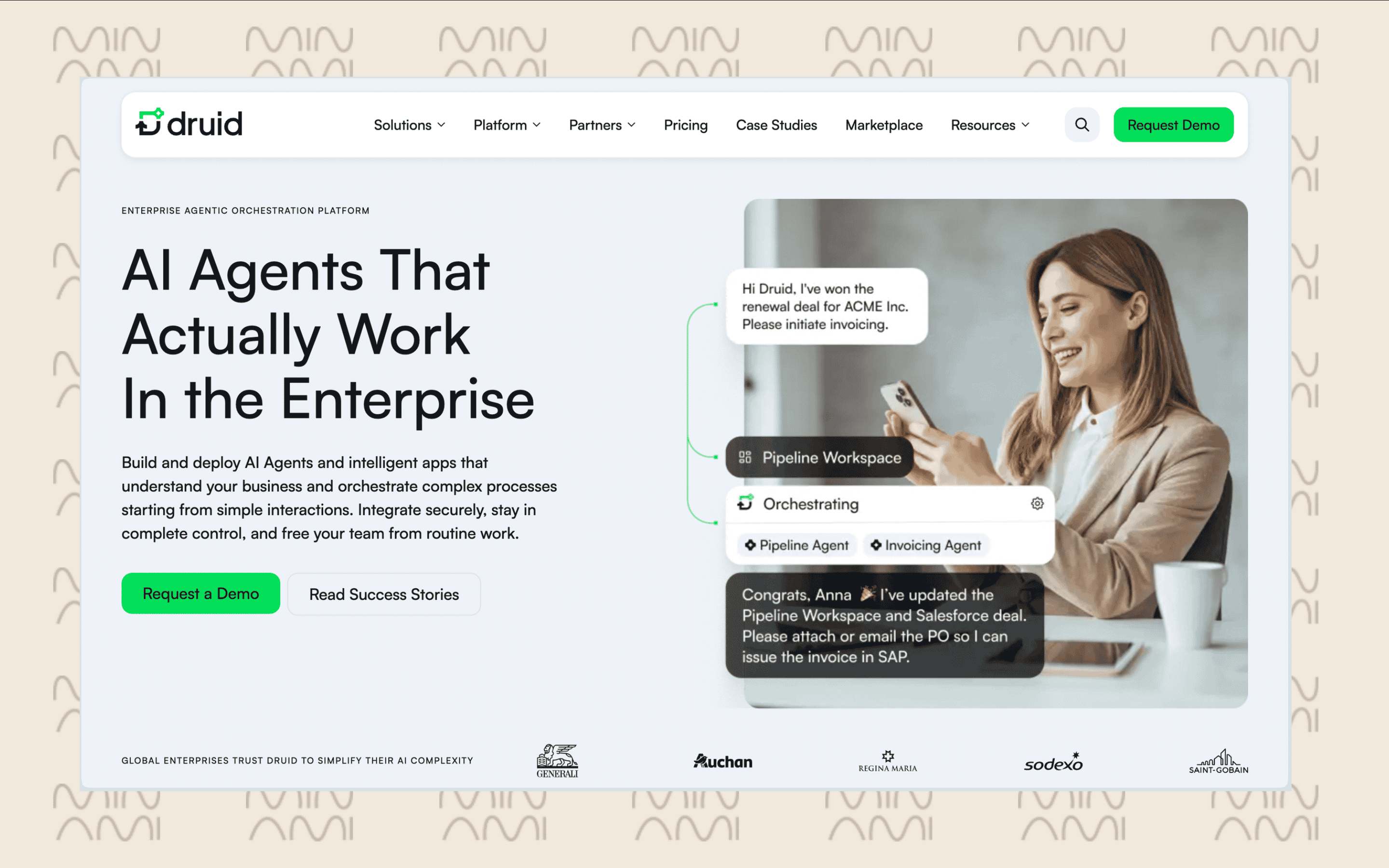
Druid AI is very popular for healthcare’s operational and clinical-adjacent workflows, focusing on accuracy, structured protocols, and strict privacy.
What Druid AI actually does in this vertical
-
Automates appointment scheduling, availability checks, rescheduling, and cancellations.
-
Handles pre-visit instructions, documentation requests, and patient intake questionnaires.
-
Provides** 24/7 symptom-based routing (not diagnosis) by mapping patient statements to the correct department or specialist.
-
Assists with insurance verification, referral management, and basic claims follow-up.
-
Ensures full compliance with HIPAA and health data protection requirements.
Why Druid fits the vertical
Healthcare automation needs rigid guardrails and predictable triage flows. Druid specializes in safe, protocol-driven conversations, which is crucial for clinics, hospitals, and insurers.
5. Enlighten AI — Travel, Mobility & Hospitality
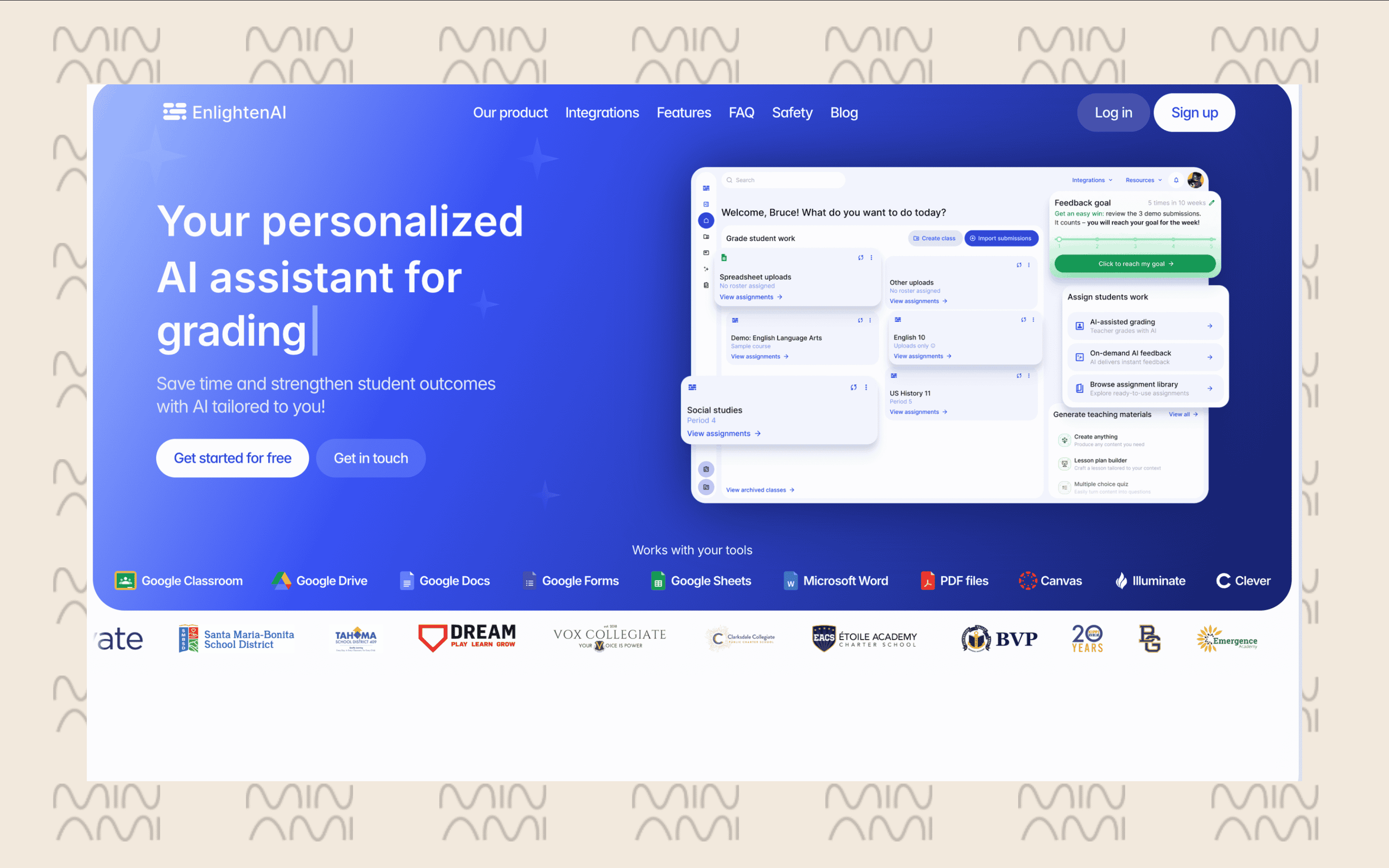
Enlighten AI focuses on high-friction travel operations where customers need real-time itinerary changes, disruption handling, and reservation management.
What Enlighten actually does in this vertical
-
Automates flight/hotel reservation changes, cancellations, rebookings, and voucher issuance.
-
Handles disruption events (delays, cancellations, overbooking) by re-routing passengers automatically based on rules and availability.
-
Provides loyalty program support: points balance, upgrades, eligibility, redemption.
-
Processes check-in, boarding, baggage tracking, and missing luggage cases with integrations into airline/hotel systems.
-
Uses intent models trained on travel-specific data, giving it unusually strong accuracy for itinerary-based queries.
Why Enlighten fits the vertical
Travel is about real-time operations. Enlighten AI focuses on enterprise airlines, hotels, and mobility platforms that need automation capable of reacting instantly to disruptions — something generic chatbots can’t do.
6. Cognigy — Telecom, Energy & Utilities**
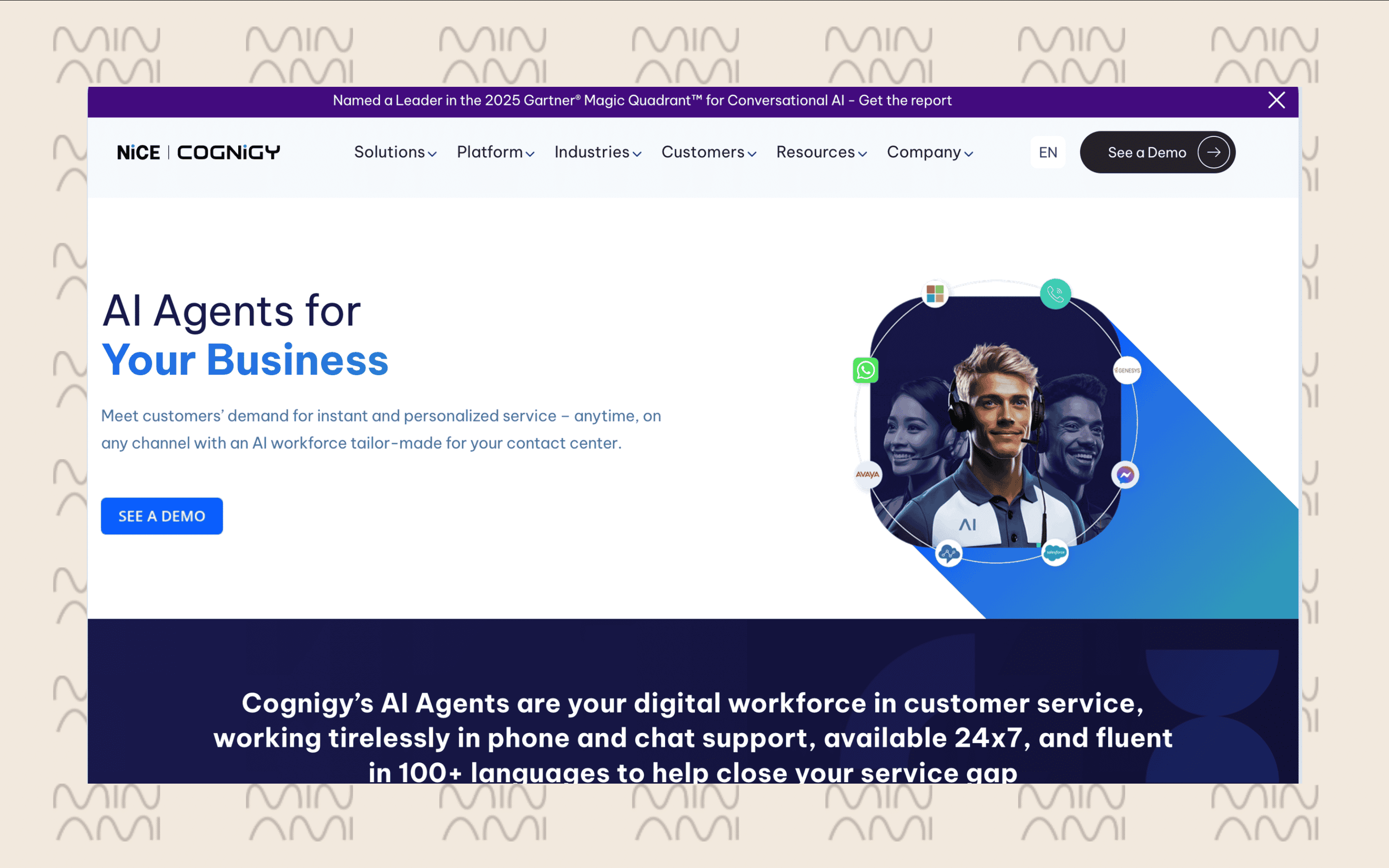
Cognigy excels in environments with high-volume requests tied to billing systems, subscription management, meter data, outages, and device troubleshooting.
What Cognigy actually does in this vertical
-
Handles billing inquiries, payment arrangements, meter readings, plan usage, and account details.
-
Executes plan changes, upgrades, SIM/eSIM activation, and line/device management.
-
Troubleshoots internet, TV, or mobile service issues through structured guided flows.
-
Sends proactive outage notifications, estimated restoration times, and service updates through voice, chat, and messaging.
-
Integrates with enterprise telecom stacks like BSS/OSS, which is rare in horizontal AI agents.
Why Cognigy fits the vertical
Telecom and utilities rely on systems that require automation across multiple legacy platforms. Cognigy’s strength is deep enterprise orchestration, not just conversational AI.
What criteria to use when choosing an AI agent for your industry
-
Check real autonomy, not “deflection”. Count how many cases the agent can finish without a human. Deflecting, replying, or summarizing is not enough. You need an agent that can close the full workflow your industry requires.
-
Verify how deep it connects to your systems. A strong vertical AI agent must plug into the tools that run your business — your backend, logistics, CRM, inventory, policy engine, billing, or clinical systems depending on your sector. If it can’t take action inside those systems, it won’t deliver ROI.
-
Evaluate its domain understanding. Each industry has its own rules and vocabulary. Healthcare, banking, travel, and fashion have totally different constraints. The right agent understands your flows, your compliance red lines, and the way your customers talk.
-
Measure accuracy on your real use cases. Test it with actual conversations, edge cases, and historical tickets. A good vertical agent should understand context instantly and keep policy-aligned decisions.
-
Ask how the agent improves over time. Strong products learn from outcomes, not just from prompts. They refine decision paths, reduce errors, and increase autonomous resolution month after month.
Minami AI, the best AI agent for the eCommerce vertical
Choosing the correct AI agent is essential to securing the ROI of your investment, and if you’re in the ecommerce or retail vertical, Minami could be your best ally.Minami is designed to connect deeply with your store, providing much more than answers: our AI agent can replace a large number of your customer support agents and automate 100% of your tasks. It can fix address mistakes before shipping, process returns and exchanges end-to-end, open carrier claims, recover lost sales, and guide customers through decisions that normally require human intervention. If you’re looking for the best AI agent for the ecommerce vertical, we suggest booking a free demo.
Frequently Asked Questions
Have more questions? Fill this form and our team will be in touch to answer them!
-
What is the meaning of a vertical AI agent?
- A vertical AI agent is an AI system built for one specific industry (like retail, travel, or healthcare) and trained on that sector’s data so it can solve its real operational tasks more accurately.
-
How to build a vertical AI agent?
- Pick one industry, connect the agent to its core systems, feed it domain data, and define the actions it can execute. Then train and test it with real cases until it handles tasks end to end.
Get Started
Minami is available with zero setup
No integrations. No workflows. No dev time. Just power up Minami and let your AI agent cut refunds, manual labor, and losses