On this page (5)
Finding the right AI chatbot for your jewelry store is not straightforward.
Most tools are built for generic support rather than as a vertical AI agent, and the ones that actually handle the specific demands of jewelry, high-value orders, complex return policies, sizing exchanges, are harder to find.
This article breaks down the five best options available right now.
Top AI chatbot software for jewelry brands in 2026
-
Minami AI: Massive customer support cost reduction and process automation
-
Helpwise: Consolidates every customer channel into one shared inbox
-
Smartsupp: Records visitor sessions to give agents context before they respond
-
Reamaze: Covers inbox, chat, and FAQ in a single subscription
-
Richpanel: Gives agents full order visibility before they respond
Why jewelry store brands should use an AI chatbot
If you run a jewelry store on Shopify, WooCommerce, or another CMS, you already know that most of your support volume comes from the same handful of situations.
A customer ordered a ring and has not received a shipping update. Someone wants to return a necklace but is not sure if it qualifies. A size exchange request came in and nobody has processed it yet. These are not complex problems, but they pile up fast, especially during peak seasons like Valentine’s Day or Christmas when order volume spikes and your team is already stretched.
An AI chatbot handles that entire layer automatically. It responds to order status queries, checks return eligibility against your policy, processes exchanges, and follows up on delayed shipments without your team getting involved.
The customers who need a real person, an engraving complaint, a damaged piece, a payment dispute, still get one. Everyone else gets resolved instantly.
👉 Best AI tools for Woocommerce stores
5 AI chatbot tools for jewelry stores, reviewed
| Tool | What it is | Best for | Pricing |
|---|---|---|---|
| Minami AI | AI agent for ecommerce | Full automation | Custom quote |
| Helpwise | Shared inbox platform | Multi-channel support teams | From $$15 to $$49/user/month |
| Smartsupp | Live chat and session recording | Storefront conversations | From $24 to $117/month |
| Re:amaze | Helpdesk and chat combo | Small support teams | From $29 to $69/user/month |
| Richpanel | Agent-facing support portal | Order visibility | From $500/month |
1. Minami AI
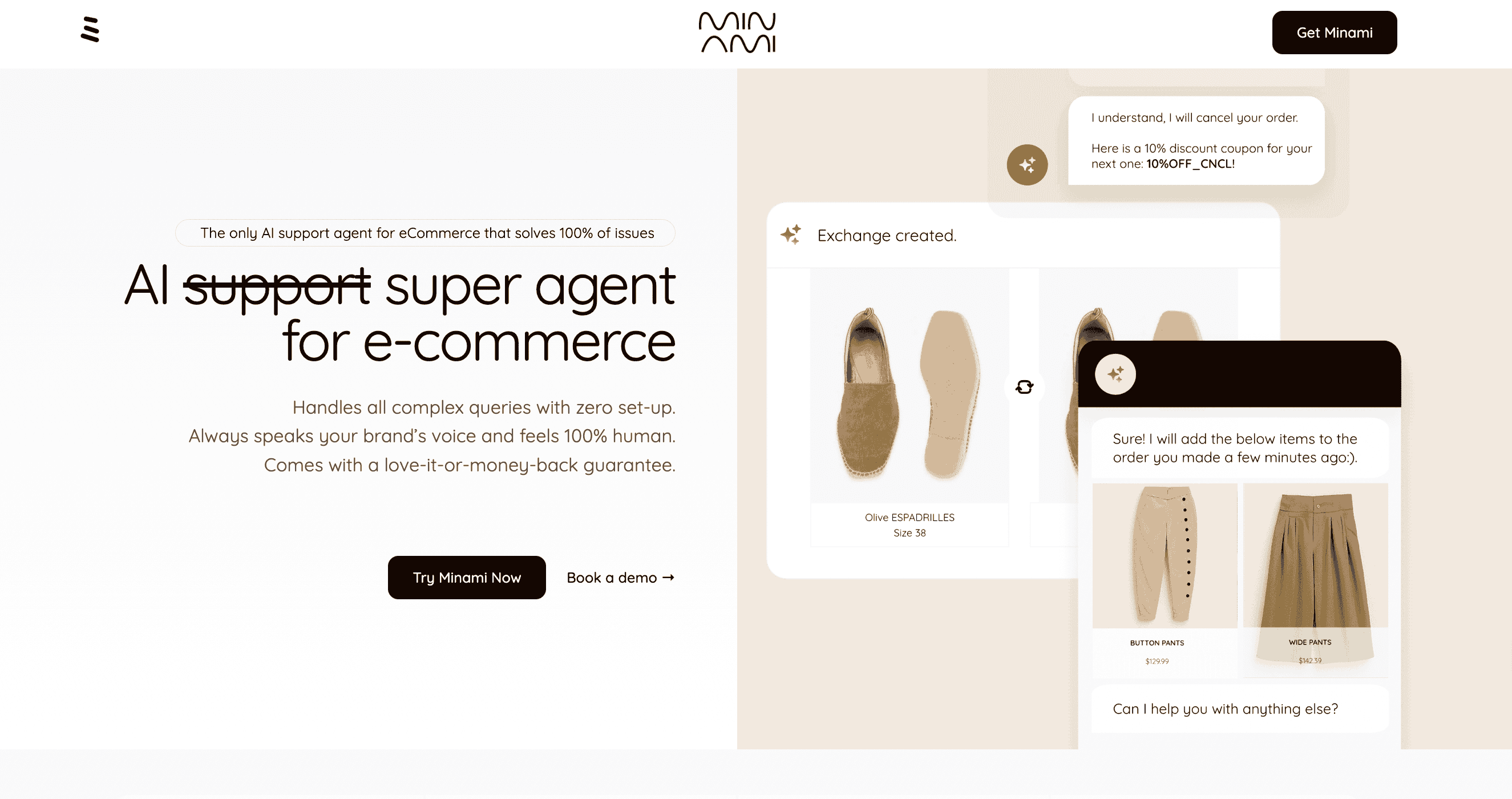
Minami AI is an autonomous operations platform built for ecommerce brands that sell physical products online, including jewelry, luxury goods, and high-value items.
When a customer contacts your store about an issue, Minami identifies the request, checks it against your configured rules, and resolves it directly in your backend without human intervention. Return approvals, exchange processing, delivery incident resolution, and carrier follow-ups are all handled automatically.
Key features
-
Autonomous return approval and policy enforcement
-
Exchange and order modification without agent involvement
-
Delivery incident detection and carrier resolution
-
Post-purchase customer communication automation
-
Reverse logistics workflow automation
-
Product recommendations during the shopping experience
-
Shopify native execution across orders and shipments
Pros
-
Reduces support and returns operational workload
-
Executes real backend operational actions
-
Handles support and logistics in one platform
Cons
-
Focused mainly on ecommerce operations
-
Better suited for mid-market and enterprise brands
Pricing
-
Talks directly with carriers to change addresses, reroute parcels and open delivery incidents, then executes the change in the store or CMS end to end.
2. Helpwise
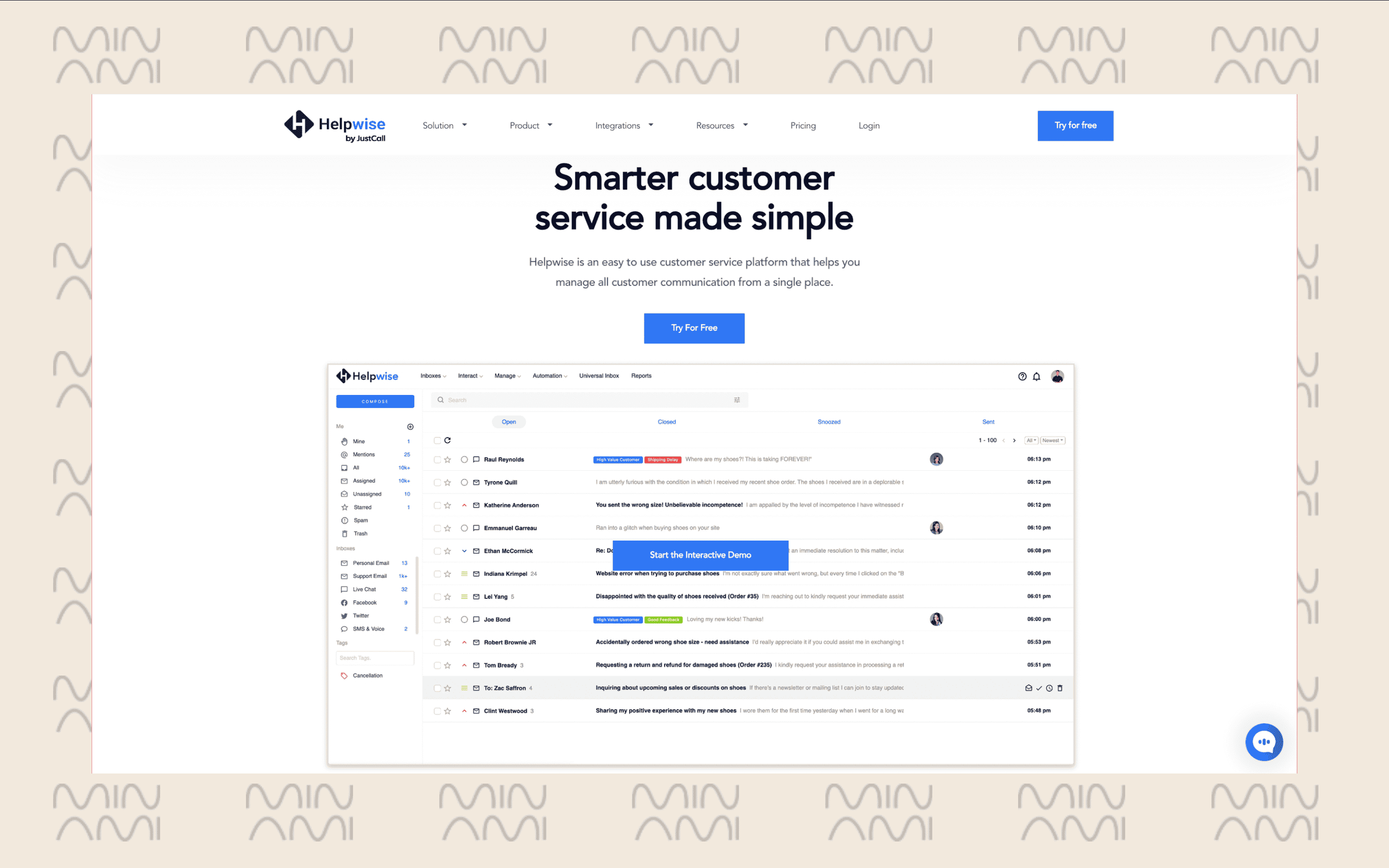
Helpwise solves one specific problem: your support team is managing the same customer across four different channels and losing track. Email, WhatsApp, SMS, and chat land in one shared inbox, assigned to the right agent, with Shopify order context already pulled in. The tool does not automate resolution. It makes sure the right person sees the right conversation at the right time.
Key features
-
Shared inbox across email, WhatsApp, SMS, and chat
-
Shopify order context inside conversations
-
Conversation assignment and internal notes
-
Basic automation and routing rules
Pros
-
Simple multi-channel consolidation
-
Low per-seat cost for small teams
-
Fast setup with no complex configuration
Cons
-
No backend execution or order modification
-
Limited post-purchase automation depth
-
Shopify integration is read-only
Pricing
- Standard: From $15/user/month
- Premium: From $29/user/month
- Advanced: From $49/user/month
3. Smartsupp
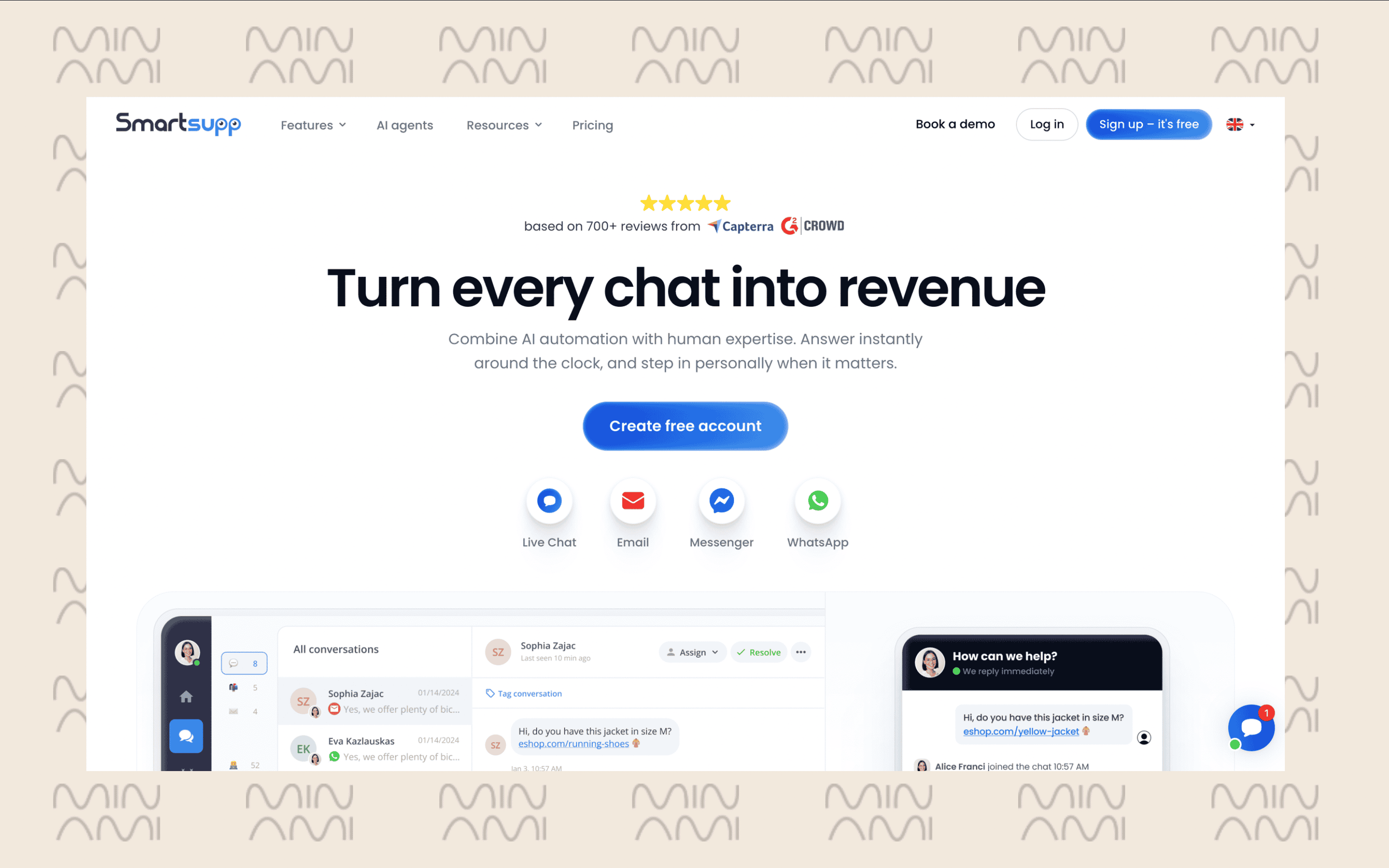
Smartsupp is the only tool in this list that lets you watch how customers behave on your store before they contact support. The session recording feature shows you exactly where visitors drop off, hesitate, or abandon, which is useful context when a customer follows up about an order or a return. The chatbot handles basic queries. The recording is what makes it different.
Key features
-
Live chat widget for Shopify storefronts
-
Visitor session and behavior recording
-
FAQ chatbot with basic automation
-
Agent routing and conversation handoff
Pros
-
Session recording adds useful pre-support context
-
Affordable entry point for small stores
-
Easy to deploy on Shopify without development
Cons
-
No order modification or return processing
-
Chatbot logic is limited to FAQ-style flows
-
Not built for post-purchase operations
Pricing
-
Alone: From $24/month
-
Growing: From $35/month
-
Larger: From $117/month
4. Reamaze
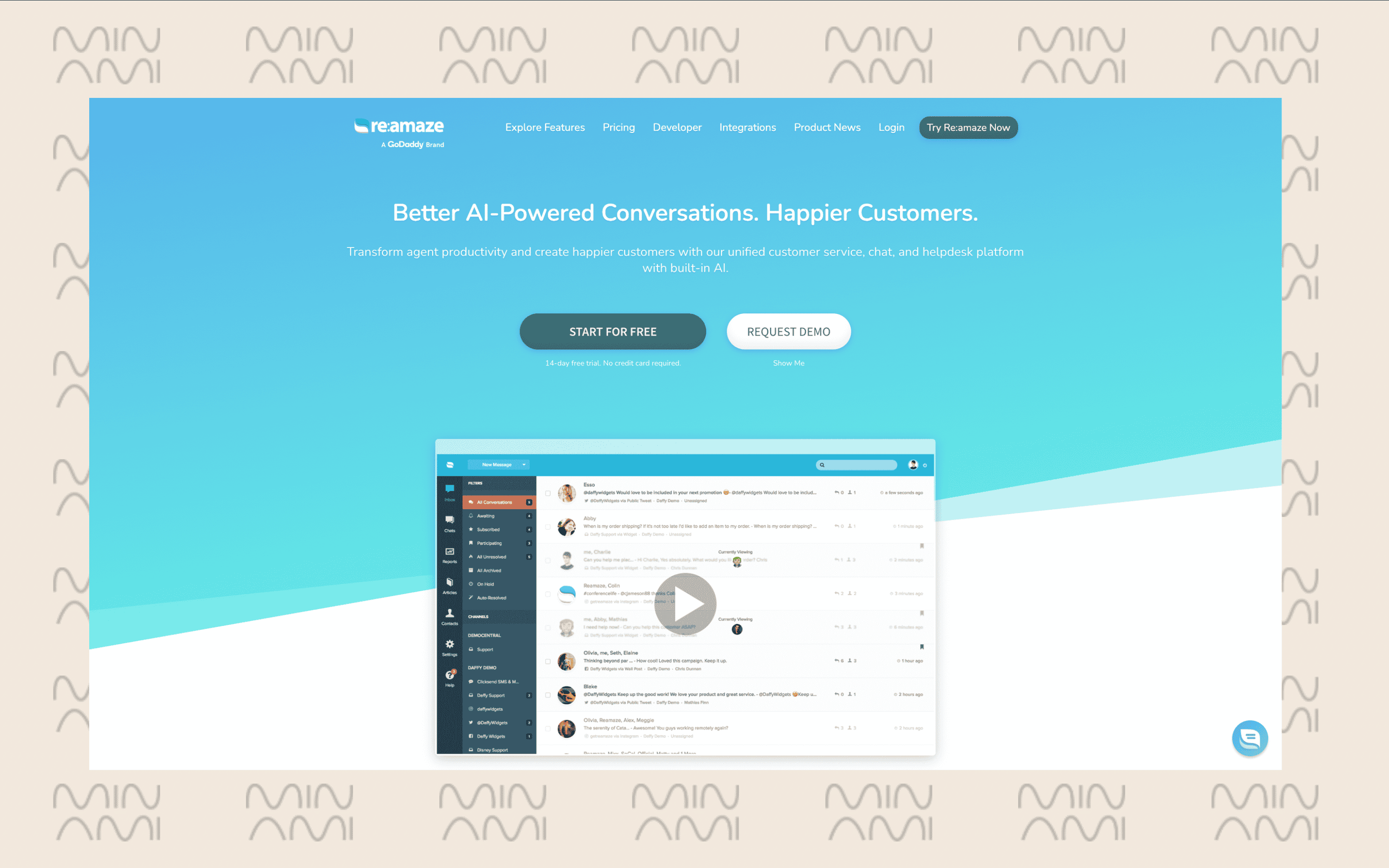
Re:amaze is built for small support teams that need everything in one place without paying for separate tools. Inbox, live chat, and FAQ builder are included in one subscription. It is not the most automated option and it is not the most scalable, but for a jewelry store with a two or three person support team handling mixed inbound volume, it covers the basics without overcomplicating the setup.
Key features
-
Shared inbox across multiple channels
-
Shopify order data display for agents
-
Canned responses and FAQ automation
-
Basic workflow routing rules
Pros
-
All-in-one inbox, chat, and FAQ in one tool
-
Shopify order context reduces tab switching
-
Reasonable pricing for small teams
Cons
-
No autonomous backend execution
-
Resolution still requires agent action
-
Can feel limited at higher ticket volumes
Pricing
- Basic: From $29/month per team member
- Pro: From $49/month per team member
- Plus: From $69/month per team member
👉The best Chatgpt alternatives for ecommerce and retailer
5. Richpanel

Richpanel is built around one idea: give your support agents complete order visibility before they respond. Customer history, order status, previous interactions, and Shopify data are all consolidated in one view. It also includes a self-service portal so customers can check status or submit requests without contacting support at all. Agents only get involved when the self-service layer cannot handle it.
Key features
-
Customer self-service portal
-
Agent-facing order data view
-
Shopify and multi-platform sync
-
Reporting and performance dashboard
Pros
-
Self-service layer reduces inbound ticket volume
-
Clean agent interface with full order context
-
Good reporting for support team performance
Cons
-
No autonomous resolution or order modification
-
Self-service is limited to status and requests
-
Higher cost relative to tools in this category
Pricing
- From $500/month
How to choose an AI chatbot for your jewelry store
1. Response-only vs. backend execution
Some tools answer customers. Others resolve the issue directly in your system. For jewelry stores where returns and exchanges are frequent, the difference determines whether your team is still involved after the chatbot responds or not.
2. Return policy configurability
Generic return flows do not work for jewelry. You need a tool that can exclude engraved or custom pieces, apply different windows by product type, and enforce those rules automatically without a human reviewing each case.
👉 The most popular AI tools for returns management
3. Proactive vs. reactive communication
A reactive tool responds when a customer asks. A proactive tool sends delivery updates before the customer contacts you. For high-value orders, proactive communication reduces inbound volume more effectively than any automation rule.
4. Escalation quality
When the tool cannot resolve something, what transfers to the agent matters. Full order context and conversation history in one view is different from a forwarded message with no background. Poor handoff creates friction at the worst moment.
5. Total operational cost
Pricing per seat or per conversation adds up differently depending on your volume. Factor in setup time, ongoing configuration, and whether the tool actually reduces headcount need or just shifts where the work happens.
Automate your jewelry customer support with Minami AI
Every tool in this list solves a different problem. Some help your team respond faster. Some give customers a way to self-serve. Some consolidate your inbox. Those are all valid improvements depending on where your bottleneck actually is.
If the issue is that your team is spending too much time on repetitive post-purchase work, returns, exchanges, delivery follow-ups, it is worth looking at a tool that handles those operations directly rather than one that helps your team handle them more efficiently.
Already on Re:amaze and outgrowing it? Our list of Re:amaze alternatives looks at which tools can change orders and run exchanges on their own.
Minami AI agent
Automate 100% of your eCommerce support
Minami doesn't just chat. It takes the action inside your store and sells while it solves.
- Order edits and cancellations
- Address changes and delivery incidents
- Returns, exchanges and product recommendations