 Nobikage San
 Winchat AI: What it is, pricing and alternatives
Discover what Winchat AI offers, how its pricing is structured, and which alternatives might fit your ecommerce needs better.
Most eCommerce teams hit the same wall: traffic keeps coming in, but only a small part turns into real sales. And every brand tries the same playbook: nicer product pages, faster site speed, better pop-ups, but the conversion needle barely moves.
That’s why AI shopping assistants became a thing. Not the old FAQ bots or the “let me redirect you to a form” type. I’m talking about tools that actually talk to shoppers, guide them, and help them make a decision while they’re still on the site.
Winchat is one of the names you’ll hear a lot in that space. But before choosing anything, it helps to understand what it really does and what it doesn’t.
What is Winchat AI?
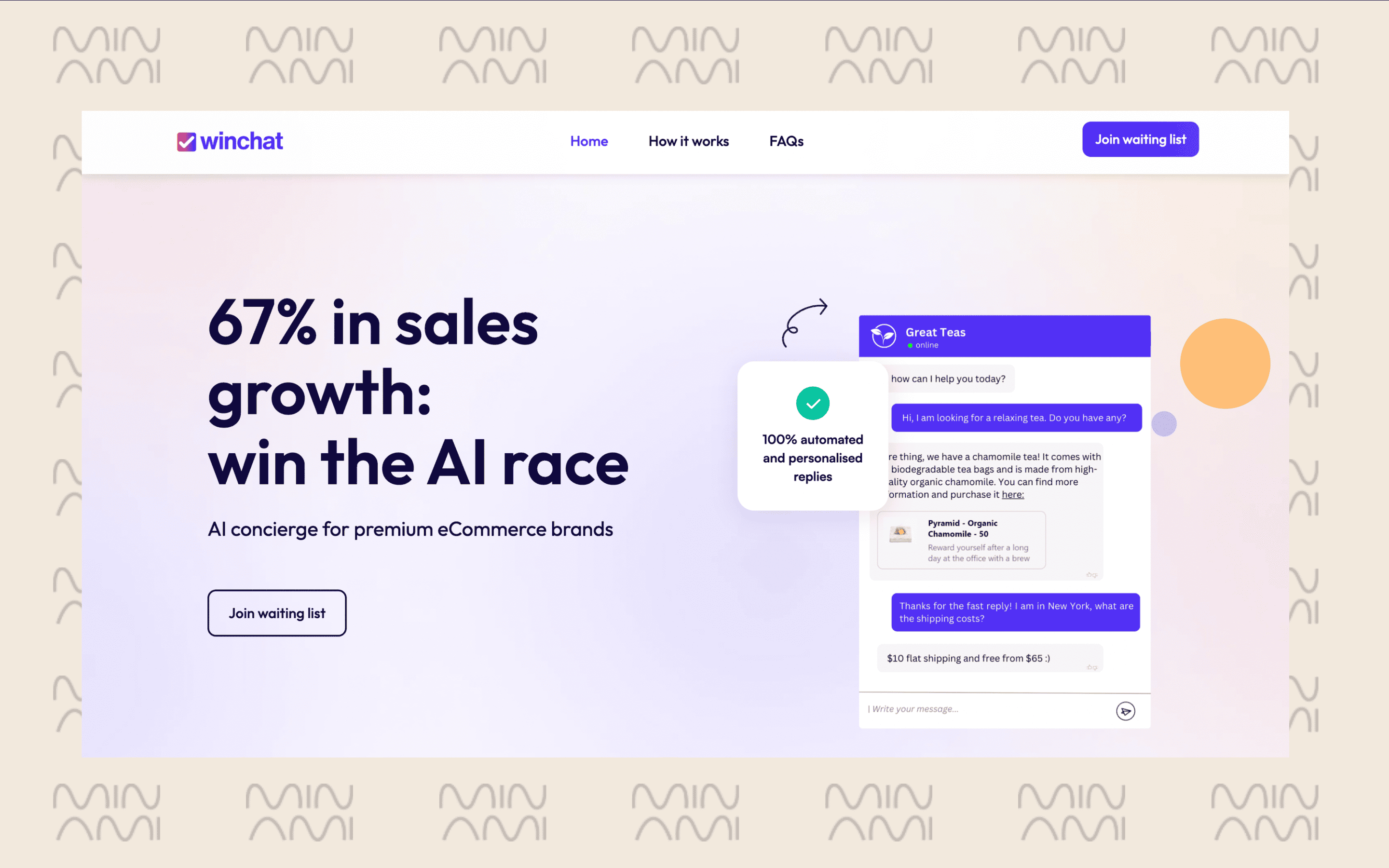
Winchat positions itself as an AI-powered sales assistant for eCommerce. The idea is simple: instead of letting visitors wander around your store, the chatbot jumps in, asks the right questions, and recommends products like a digital store associate.
It keeps the shopper inside the chat window, shows products there, and even pushes them toward checkout without forcing them to jump between pages, helping you boost ecommerce sales.
Winchat use cases
Winchat sits on your store and turns browsing into a guided conversation. It watches how visitors move, identifies when someone might need help, and jumps in to keep the purchase moving. These son los casos de uso más comunes:
1. Product discovery
Winchat helps shoppers figure out what to buy. It asks simple questions about preferences, sizes, colors or needs, and then shows a curated selection directly in the chat. The shopper doesn’t have to search or filter; the assistant does that work for them.
2. Conversion support
When someone hesitates — scrolling a product page, comparing options, or stopping before adding to cart — Winchat steps in to clarify differences, suggest alternatives or confirm small details. This keeps the shopper moving forward instead of leaving the site.
3. Lead capture
Winchat gathers emails or phone numbers as a natural part of the conversation. It doesn’t interrupt; it waits for the right moment in the chat and then asks for the contact information in a softer, more contextual way. That usually leads to higher-quality leads.
4. Personalized sales flows
As the conversation develops, Winchat adapts. If the shopper shows interest in a specific item, it can recommend complementary products, offer bundles or trigger targeted discounts. The funnel changes based on the shopper’s answers, creating a more personalized buying path.
Winchat pricing
Winchat doesn’t publish fixed pricing on its website, and that’s on purpose.
Tools like this usually change the cost based on how much traffic you get and how many automations or advanced features you want to activate.
Instead of a flat monthly fee, they follow a flexible “pay for what you use” model.
If your store has light traffic and only needs simple product recommendations, the plan stays small. If you want deeper funnels, upsell logic, lead capture, or more complex automations, the price scales with that setup.
It’s a pretty standard approach in the AI chat space
Minami AI, the best alternative to Winchat
If you only need a simple guided shopping flow, Winchat does the job. It recommends products, captures leads, and helps visitors move toward checkout. But its focus stays inside the chat window, without understanding much about the customer’s history, orders or what happens after the sale.
Minami goes further.
It uses real context — past purchases, delivery status, return patterns — to guide each shopper with more accuracy.
The result feels closer to a real store associate: faster decisions, fewer doubts and fewer support questions later. If you’re choosing between the two, Minami is the option that improves the whole shopping journey, not just the chat.
Get Started
Minami is available with zero setup
No integrations. No workflows. No dev time. Just power up Minami and let your AI agent cut refunds, manual labor, and losses