 Nobikage San
 Introducing
7 AI alternatives that genuinely outperform Zendesk for ecommerce stores
Still relying on Zendesk AI for ecommerce? See what newer AI alternatives can do. Which one fits your store best?
Many teams still rely on Zendesk AI simply because it’s been part of their setup for years. It’s familiar. It works well enough for basic tasks.
The challenge is that ecommerce has moved quickly, and a lot of stores now feel that Zendesk’s approach belongs to an earlier stage of customer service—one that doesn’t fully support modern post-purchase workflows or tasks that should operate without someone watching over them.
If you’re exploring alternatives, this breakdown will help you understand what Zendesk AI actually does, why some brands outgrow it, and which tools tend to offer stronger results for online retailers.
How we selected the best Zendesk AI Alternatives
We kept the process simple. Each tool was judged purely on what its AI can do for ecommerce, not on its wider helpdesk or CRM features.
We looked for AI that understands orders, returns, shipping problems, and product data, and skipped anything built for other industries. The goal was to compare real retail-focused intelligence—and only that.
The 7 best Zendesk AI alternatives for Ecommerce
| Tool | Summary | Best for | Strengths |
|---|---|---|---|
| Minami AI | Fully autonomous ecommerce agent | High-volume ecommerce teams | Order edits, carriers, returns automation |
| Gorgias | Ecommerce-native helpdesk platform | Gorgias-based operations | Refunds, edits, real-time sync |
| Alhena AI | AI layer for helpdesks | Zendesk-based operations | Ticket learning, omnichannel, conversions |
| eesel AI | Trains on internal knowledge | Accuracy-focused teams | Docs training, history, testing |
| Ada CX | Enterprise automation platform | Global multilingual brands | Language coverage, macros sync |
| Lyro (Tidio) | Simple AI + live chat | Small ecommerce stores | No-code setup, templates |
| Intercom Fin | AI for rich knowledgebases | Ecommerce with heavy content | Help articles, syncing, recommendations |
What does Zendesk offer for ecommerce businesses?
Zendesk gives ecommerce teams a few AI tools built around their help center content.
When a shopper asks something, the system pulls information from your public articles and turns it into a reply. It also checks every incoming ticket to figure out what the issue is about, which helps send it to the right person faster.
And when an agent opens a conversation, the AI suggests a draft response they can use or edit. If the thread is long, it creates a quick summary so the agent doesn’t have to read the entire exchange.
Why Ecommerce teams look for Zendesk alternatives
Zendesk AI covers the basics, but many online retailers begin to hit friction once their ticket volume grows or their operations get more layered.
-
Costs become tough to plan for. You pay for agents, then pay more once AI enters the mix, and every automated resolution adds another charge. During busy seasons, bills spike fast, which makes it hard to keep a steady budget.
-
The AI only pulls from your public help center. It doesn’t learn from past tickets, internal notes, or macros. The result is answers that miss context—especially in post-purchase scenarios where the details of how your store works matter.
-
Settings and analytics are scattered. Admin tools, reporting, and AI features sit in different areas, forcing teams to jump between screens and slowing down onboarding and daily work.
-
The AI feels bolted on. Platforms built around AI from day one tend to automate more parts of the workflow and feel more modern.
-
Its autonomy is limited. It can answer simple questions, but it can’t change orders, work with carriers, or resolve delivery problems on its own.
The best Zendesk AI alternatives for Ecommerce
1. Minami AI
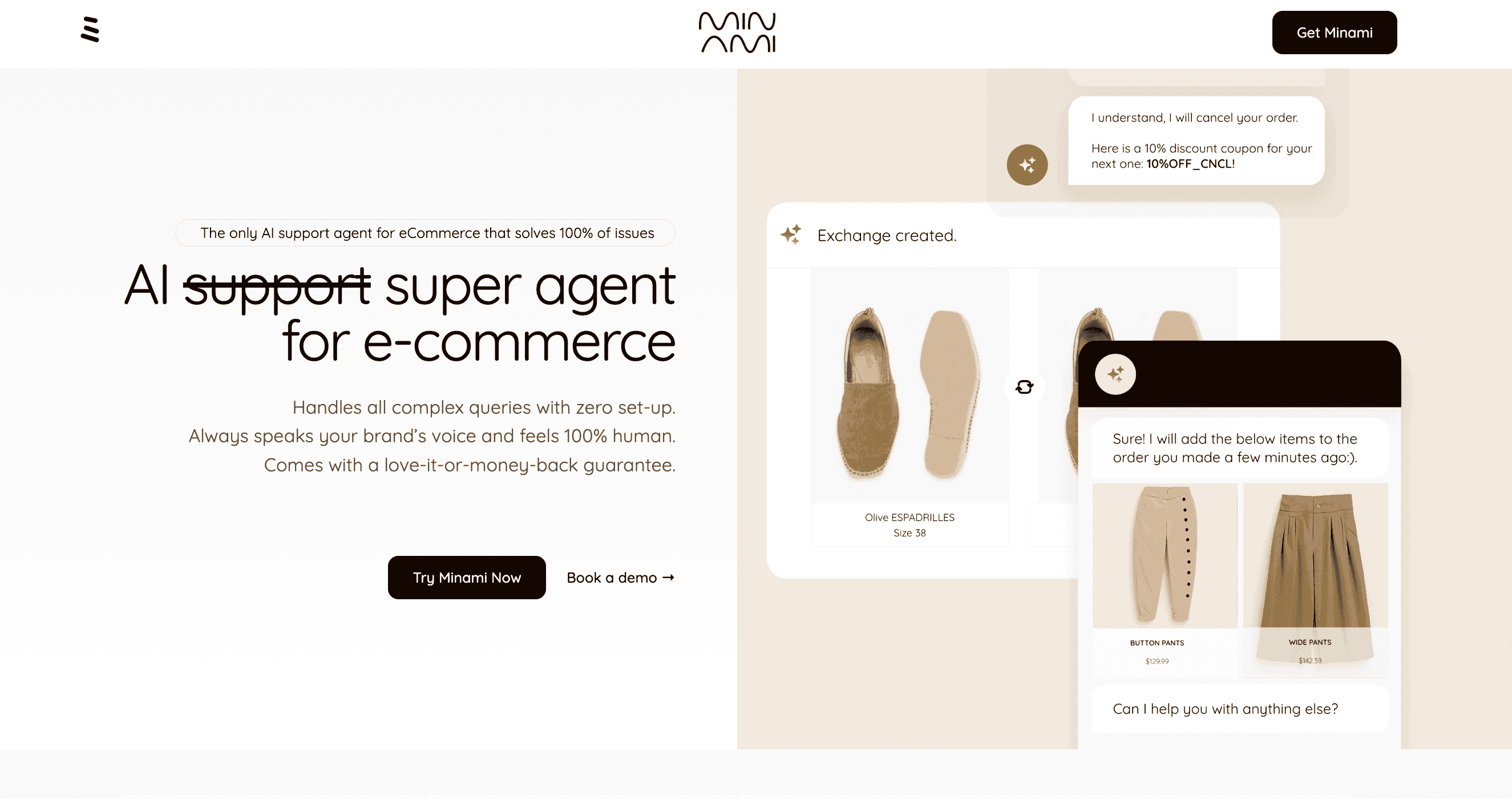
Minami works as a fully autonomous agent for ecommerce teams. It doesn’t stop at answering questions—it steps in and does the jobs your support team usually takes care of. It fixes order mistakes, deals with carriers, manages returns, and closes out problems from start to finish without sending anything back to your staff. Brands use it to bring support costs down by more than 90%, wipe out most of their tickets, and remove the day-to-day work that normally clogs up post-purchase operations.
Key capabilities:
-
Fixes orders instantly—refunds, cancellations, replacements, and address edits without needing agent approval
-
Talks directly to carriers to resolve delivery issues, file claims, update shipments, and close every WISMO case
-
Runs returns and exchanges end-to-end, handling eligibility, fees, labels, and store credit on its own
-
Applies your policies in real time, reasoning through refunds, warranties, deadlines, and fraud checks
-
Recovers revenue by offering smart exchanges and product alternatives before issuing refunds
-
Handles every channel—email, chat, SMS, social, WhatsApp—with the same autonomous execution
Pricing
Contact the sales team for pricing
2. Gorgias
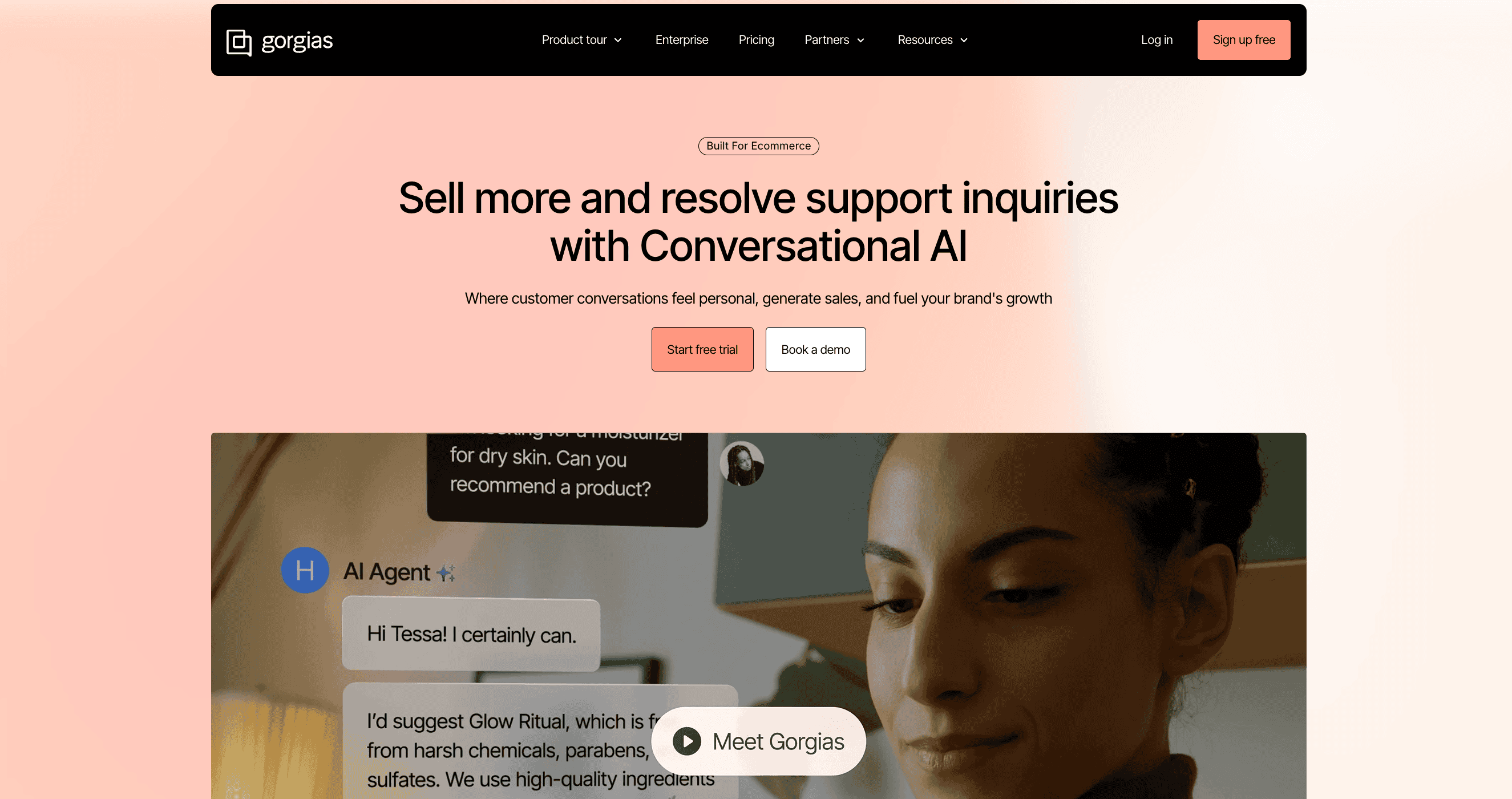
Gorgias is a helpdesk built for ecommerce from day one, with especially deep Shopify and Shopify Plus integrations. It offers an AI agent you can connect to the helpdesk to automate the most common ecommerce tickets.
Keep in mind that using the Gorgias helpdesk is necessary to access its AI features, and it requires a separate subscription.
Key strengths:
-
AI agent that handles common questions and order lookups
-
Manage refunds, cancellations, and order edits directly inside the helpdesk
-
Real-time inventory syncing
-
Works instantly with Shopify
-
Large app marketplace with ecommerce-focused extensions
-
Prebuilt macros and templates for Shopify-specific issues
Pricing
You pay the base help-desk plan plus around US $0.90–1.00 for each ticket the AI Agent resolves automatically.
3. Alhena AI
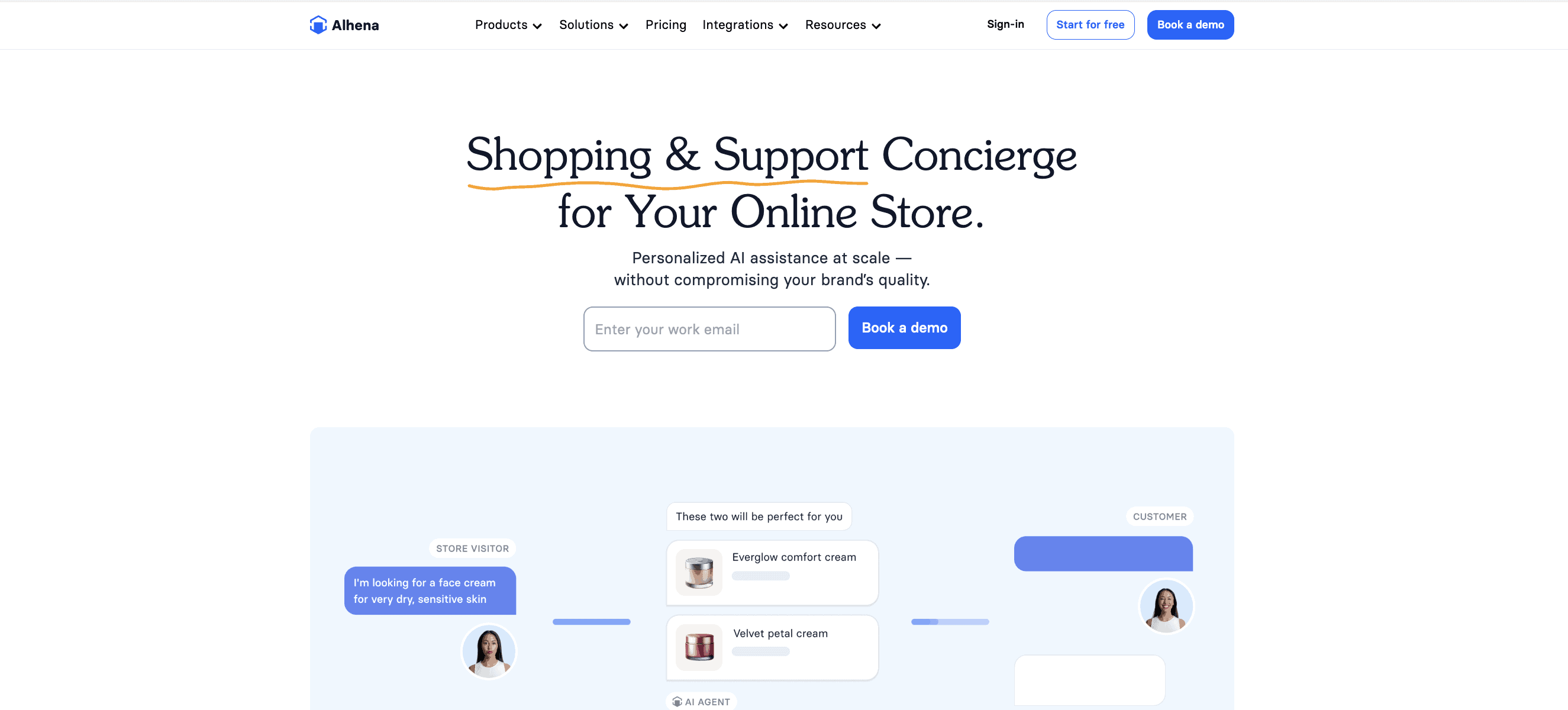
Alhena adds autonomous AI on top of your existing helpdesk. It integrates with Zendesk, learns from your past tickets, and boosts both support and sales conversations.
Key strengths:
-
Plug-and-play AI upgrade for Zendesk
-
Uses historical tickets to find automation opportunities
-
Supports chat, email, SMS, and social channels
-
Helps with both support and conversion workflows
-
Detects intent automatically and routes conversations
Pricing
Around $240 per month. They offer a free plan with a limit of 25 conversations.
4. eesel AI
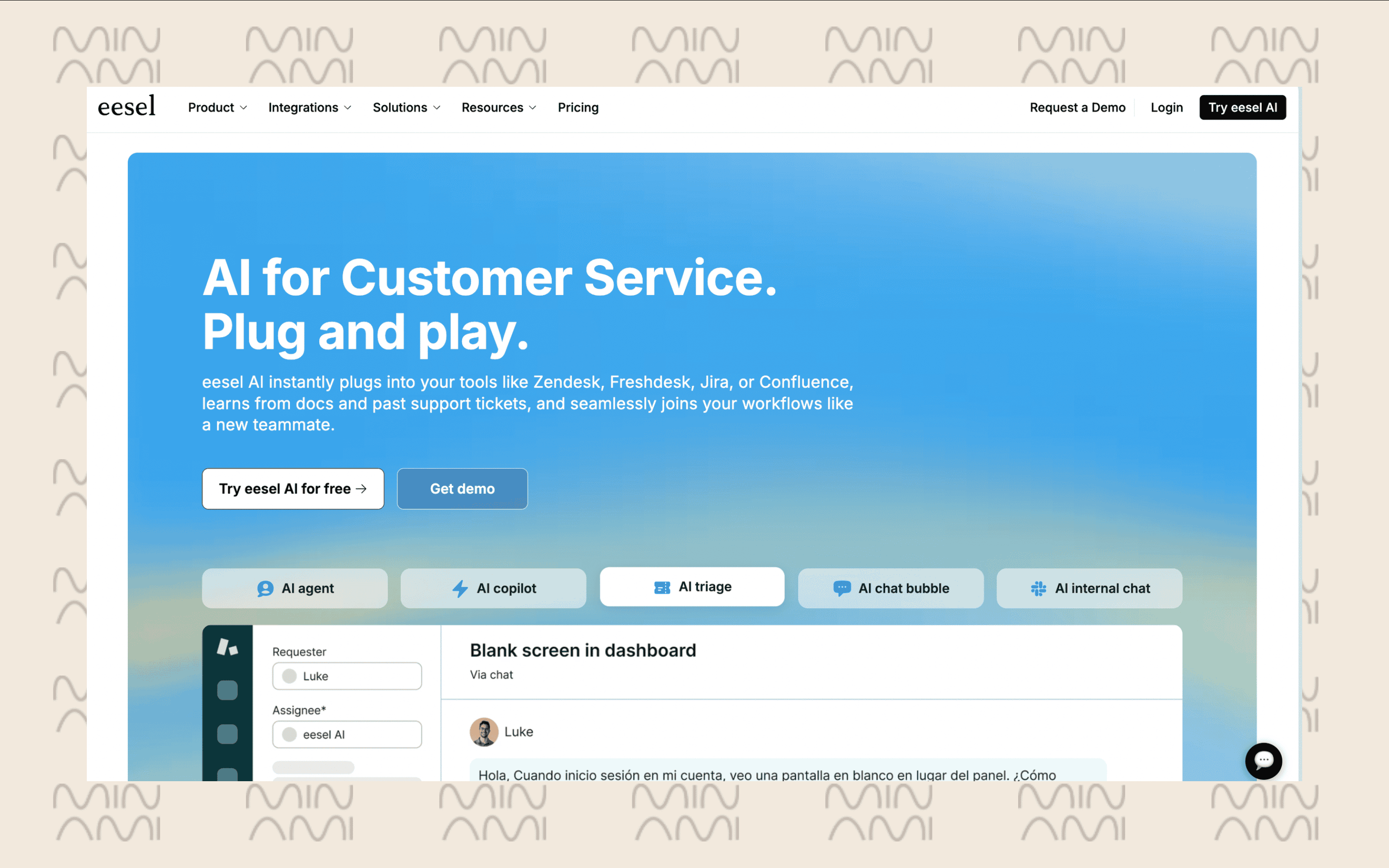
eesel connects to Zendesk, Gorgias, or Intercom and learns from your real internal knowledge—documents, ticket history, help articles, and catalog data.
Key strengths:
-
No migration required
-
Pricing based on interactions, not resolutions
-
Simulation mode to test automation safely
-
Trains on actual company knowledge, not just public content
-
Connects to Google Drive, Notion, Confluence, and internal docs automaticall
-
Detects outdated help articles and suggests fixes
Pricing
from $299 to 799 per month
5. Ada CX
Ada is a mature automation platform that integrates with Zendesk but can also operate on its own for high-volume, multilingual teams.
Key strengths:
-
Wide intent coverage and strong language support
-
Syncs with Zendesk tickets and macros
-
Solid content management for large catalogs
-
Built for global enterprise scale
Pricing
Custom pricing
6. Lyro AI, from Tidio
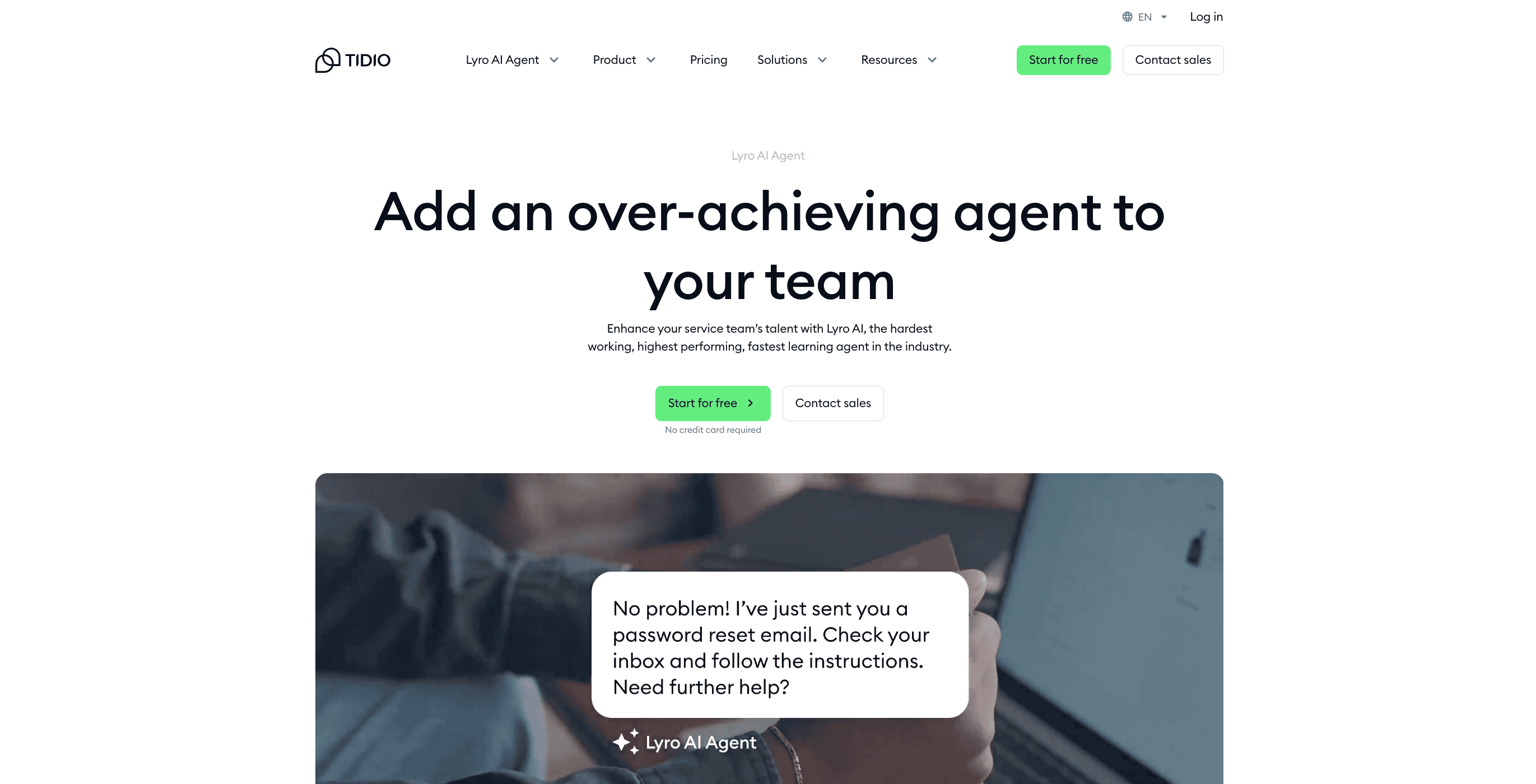
Lyro mixes live chat with visual chatbot builders and AI. It’s simple, affordable, and built for smaller ecommerce teams.
Key strengths:
-
Easy setup using ecommerce-ready templates
-
Learns from past conversations to improve accuracy
-
Built-in visual flow builder for custom logic
-
Supports multilingual chats automatically
-
Lets agents “take over” AI chats instantly
-
Tracks intent and FAQ performance
Pricing
From $32/month to 583/month + Tidio subscription
7. Intercom (Fin)
Intercom blends support automation with revenue-focused chat. Its AI, Fin, automates answers while also recommending products and triggering sales messages.
Key strengths:
-
Native AI automation inside the helpdesk
-
Proactive messages based on user behavior
-
Strong focus on upselling and product guidance
-
Deep integration with large knowledge bases and help centers
-
AI answers sourced directly from your articles, macros, and docs
Pricing
From 0.99 dollars per resolution
Why Minami AI may be a perfect fit for your eCommerce
If you’re running an online store, you’ve probably noticed how support is shifting. It’s no longer just about replying to questions; brands now expect their tools to actually do things.
And that raises a simple question: why stick with something that only answers when you could use something that solves problems for you?
That’s exactly where Minami AI fits in. It behaves much more like an extra team member than a chatbot. You set the rules, and it takes care of the rest—handling refunds, tweaking orders, resolving delivery issues, and managing returns at a volume no human team could match.
It’s also a strategic moment to adopt this kind of tech. Competitors are already automating tasks your team is still doing by hand. Bringing Minami AI into your workflow isn’t just swapping tools; it’s changing the way your entire operation runs as you grow.
Frequently Asked Questions
Have more questions? Fill this form and our team will be in touch to answer them!
-
What should an ecommerce brand look for in an AI alternative to Zendesk?
- Most teams focus on reply accuracy, but the real differentiator is whether the AI can do work, not just answer questions. Before choosing a tool, check if it can handle order changes, delivery issues, returns, and other post-purchase actions—things Zendesk AI doesn’t execute on its own.
-
How long does it take to train a new AI tool on ecommerce workflows?
- Training time varies from hours to weeks depending on the tool. The key question to ask vendors is: What sources does your AI learn from? If it only reads help articles, you’ll need more prep work. If it pulls from ticket history or catalogs, training can be much faster.
Get Started
Minami is available with zero setup
No integrations. No workflows. No dev time. Just power up Minami and let your AI agent cut refunds, manual labor, and losses