 Nobikage San
 Introducing
Ada CX Pricing: What We Learned About Its Plans, Costs & Real ROI After Testing It
Get a clear breakdown of Ada’s pricing, how its usage-based model works, what drives the final cost, and what you can expect to pay before speaking with sales.
If you’re trying to figure out how much Ada CX actually costs, you’ve probably noticed something right away: there’s no public pricing.
Ada targets mid-market and enterprise teams with heavy support volume, so you won’t find a cheap entry plan or a simple pricing page with fixed tiers.
This guide is for you if you’re comparing vendors and just want a straight answer. I’ll break down how Ada’s pricing works, what you’re really paying for, what’s included, and whether the cost makes sense for the type of results Ada promises.
How Ada CX’s pricing works
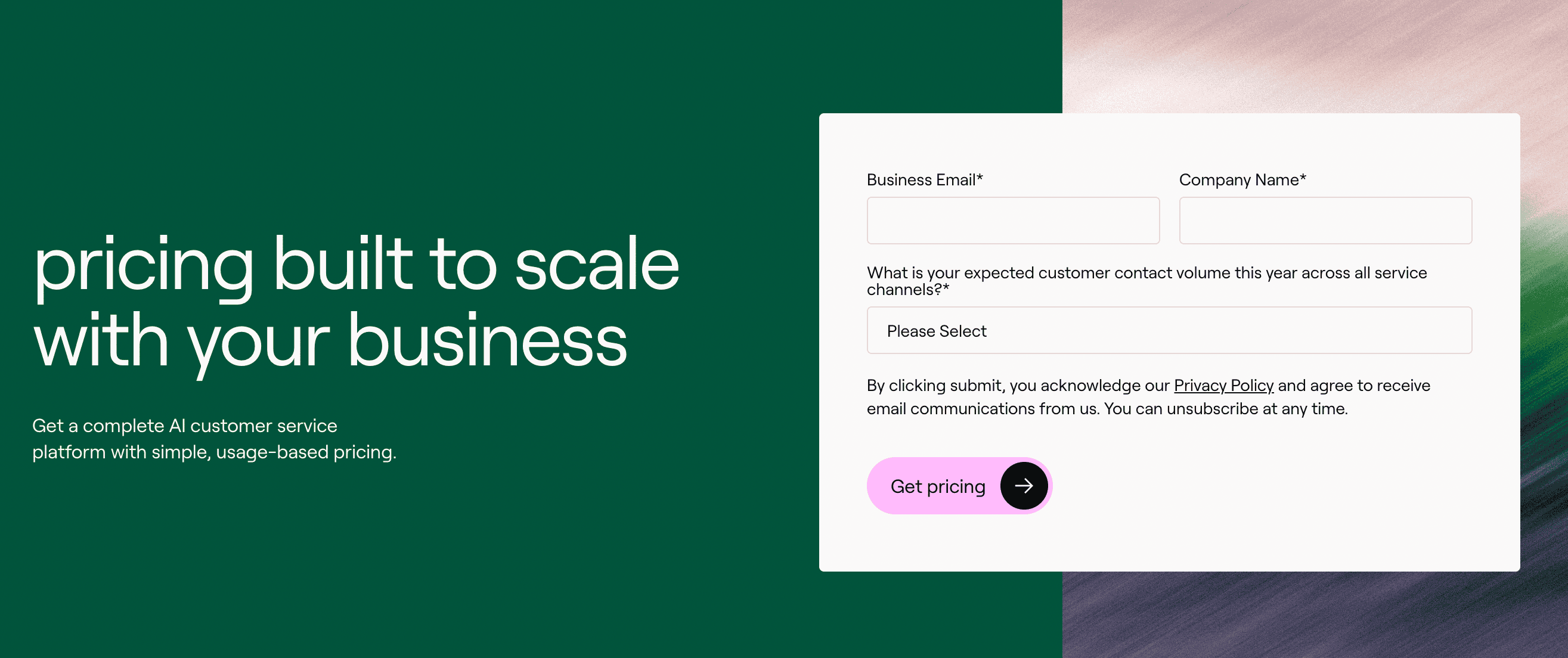
Ada doesn’t publish standard plans or simple per-seat pricing.
Instead, everything runs on a consumption model: what you pay depends on how many automated conversations, tickets, or interactions the bot manages for your team.
When you talk to their sales team, they’ll usually ask for details like:
-
Your expected monthly chat volume
-
How many support agents you have
-
The complexity of your workflows
-
The automation percentage you want to reach
With that information, they build a custom quote for your company.
There’s no way to sign up and see a price instantly. Almost every plan requires going through sales, sharing your projected usage, and receiving a tailored offer.
Discover the best altertives to Ada CX
Typical price ranges
Most mid-market teams report yearly contracts somewhere in the $$48K–$80K range.
That usually translates to around $$4K–$7K per month for a standard setup that handles moderate chat volume.
For larger organizations, the cost increases significantly.
Enterprise deployments—where the chatbot manages huge volumes, multiple regions, or more advanced workflows—can climb into the six-figure range per year. In short:
In short:
-
Mid-market: expect somewhere around $$50K–$70K per year on average
-
Enterprise: pricing can climb much higher depending on volume and compliance needs
-
Final number: depends on your monthly interactions, automation goals, peak traffic, and any custom integrations you require
Estimated Ada CX pricing by business type and volume
| Segment | Monthly conversations | Estimated annual cost | Rough monthly equivalent |
|---|---|---|---|
| Small / starter | 1,000 – 5,000 | $$20,000 – $40,000 | $1,700 – 3,300 |
| Mid-market | 5,000 – 30,000 | $$50,000 – $70,000 | $4,200 – 5,800 |
| Enterprise | 30,000 – 80,000 | $70,000 – 150,000 | $$5,800 – $12,500 |
| Large global | 80,000+ | $$150,000 – $300,000 | $12,500 |
How to get a better deal with Ada
If you want a better deal with Ada, don’t open the conversation with “what’s your price?” but with your reality: how many tickets or chats you handle, what you want to automate, and how many hires you’d like to avoid.
That lets you frame the price around outcomes and risk.
Propose a phased rollout (start with web chat and 1–2 key use cases, then add channels later), ask for two quotes with different contract lengths, and use a longer commitment to push for a lower annual fee, fixed pricing, and onboarding or training included.
From there, try to bundle channels and features into the main platform fee instead of paying for lots of add-ons later.
Make sure support and success are part of the package, not an afterthought.
If you can run a pilot, define clear success metrics first and then use good results to negotiate a better per-conversation rate or extra features at the same cost.
And before you sign anything, always ask if they have startup, growth, or partner programs—sometimes the “hidden” discounts only appear when you ask directly.
Minami AI as a strong alternative to Ada AI agent
Now, what if you like the idea of AI automation… but Ada feels too expensive, too broad, or too heavy for where you are right now?
That’s where Minami AI can come in as a serious alternative, especially if you’re an ecommerce brand that cares about post-purchase, returns, and revenue.
Where Minami AI fits best
Minami is built with ecommerce at the center, not as a generic “for every industry” bot. You can position it as your:
-
Post-purchase AI agent: order tracking, WISMO, delivery issues, shipping status.
-
Returns & exchanges agent: guides customers through returns, proposes exchanges, and protects your margins.
-
Shopping assistant: helps users pick products, compare options, and move faster to checkout.
Instead of trying to cover banking, telco, insurance and 20 other verticals, Minami focuses on the flows that actually move revenue for online stores.
Frequently Asked Questions
Have more questions? Fill this form and our team will be in touch to answer them!
-
Is Ada only worth it for very large companies?
- Not strictly, but it’s clearly built with bigger teams in mind. If you’re handling low volume and your support is manageable with a small team, Ada will feel expensive for what you get. If your monthly conversations are already high and support is a major cost center, the pricing model starts to make more sense.
-
Why doesn’t Ada just show prices like other tools?
- Because most of their deals are based on usage, channels, and complexity, a fixed public price would either scare smaller teams or underprice very large ones. Instead, they build quotes around your volume, automations, and integrations.
Get Started
Minami is available with zero setup
No integrations. No workflows. No dev time. Just power up Minami and let your AI agent cut refunds, manual labor, and losses